China's exports jump 25% in August as trade surplus widens ahead of Trump-Xi summit
Chinese customs data showed exports accelerating on strong demand for cars and semiconductors even as imports lagged forecasts, pushing the monthly trade surplus to $119.1 billion just weeks before Xi Jinping's planned visit to Washington.
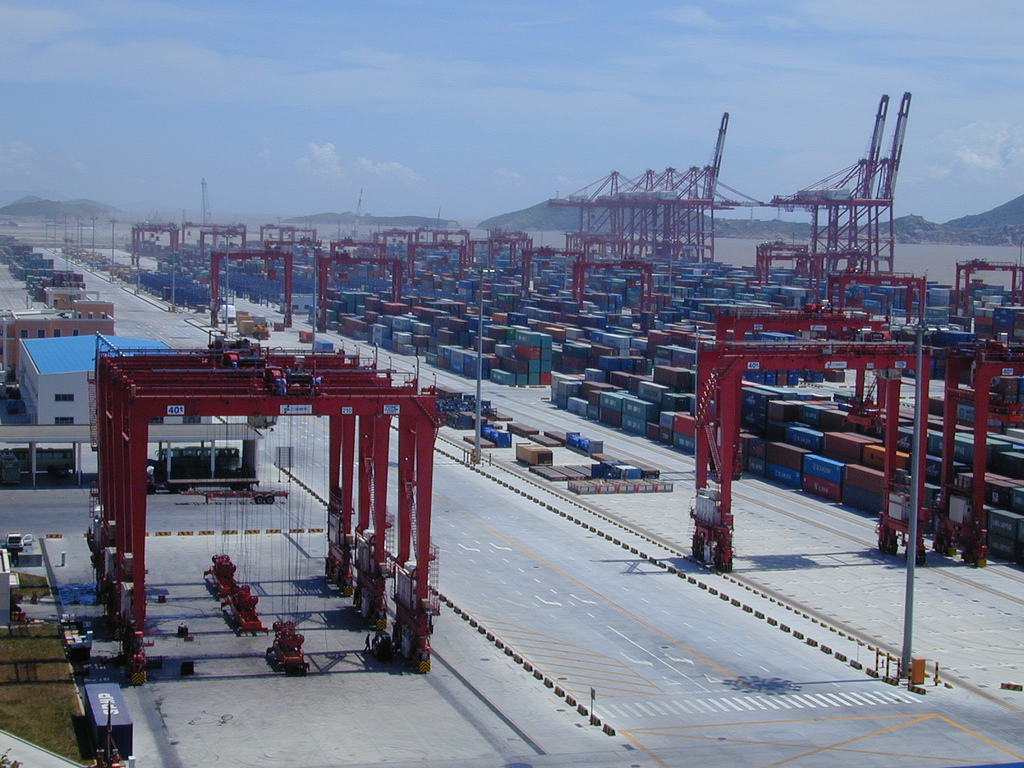
China's exports accelerated sharply in August, growing 25% from a year earlier in dollar terms, as surging demand for semiconductors, automobiles and other high-technology goods pushed the country's trade surplus to $119.1 billion, according to data released by the General Administration of Customs on Tuesday. The figures land three weeks before Chinese leader Xi Jinping is expected in Washington for his first visit to the United States since Donald Trump returned to office, with trade high on the agenda.
The numbers
Exports rose 25% year-on-year last month, matching the median forecast in a Reuters poll of economists and accelerating from July's 23.9% pace. Imports climbed 28.2%, an improvement on July's 27.5% gain but short of the 30% economists had expected, evidence that domestic demand inside China remains soft even as the country's factories keep shipping goods abroad. The gap between the two pushed the monthly trade surplus to $119.1 billion, up from $112.5 billion in July, extending a run that customs officials and independent economists now expect to produce a fresh record annual surplus.
The product mix behind the export gain was pointed. Automobile shipments rose 43% year-on-year, and semiconductor exports surged 129.8%, figures that China's customs agency attributed to strong overseas orders for electric vehicles, industrial machinery and chips. Regionally, exports to Southeast Asia climbed 30.2% and to Latin America 17.5%, while shipments to the European Union grew a more modest 6.6% — a pattern consistent with Chinese exporters continuing to diversify away from markets where tariffs bite hardest.
The US dimension
Exports to the United States totaled $42.5 billion in August, up 34.4% from a year earlier, while US exports to China came to $13.3 billion, leaving China with a bilateral surplus of roughly $29.2 billion for the month. Economists caution that the year-on-year US export jump partly reflects base effects — comparisons against a depressed August 2025, when higher American tariffs were freshly in force — rather than a clean read on underlying momentum.
The data arrives against a backdrop of a fragile truce between the two governments. Washington and Beijing have spent much of 2026 alternating between confrontation and accommodation: tit-for-tat restrictions on semiconductors and rare earths gave way in May to a deal struck at a Beijing summit under which China committed to buying at least $17 billion a year of American farm goods through 2028 and restoring market access for US beef and poultry. The Office of the US Trade Representative has separately kept a rolling set of exclusions from Section 301 tariffs in place while the two sides negotiate, covering categories from solar-manufacturing equipment to electric motors.
Why it matters now
The trade figures are the last major economic data point out of Beijing before Xi's planned trip to the White House, tentatively pegged to late September, though China has not formally confirmed a date. Officials on both sides have described the relationship since a truce reached last October as one of "constructive strategic stability," but analysts say Beijing has every incentive to enter the meeting showing an economy that does not need major concessions to keep growing.
"External demand significantly outpaced domestic consumption" in the latest data, said Lynn Song, chief economist for Greater China at ING, adding that exports were "set to lead to a new record-high trade surplus this year." China's trade surplus for 2025 already reached roughly $1.2 trillion, and the first eight months of 2026 have kept the country on a similar trajectory, with a cumulative surplus of $805.5 billion through August.
"China has moved aggressively up the value chain and become a major player in AI infrastructure and industrial automation," said Chi Lo, senior market strategist for Asia-Pacific at BNP Paribas Asset Management.
The semiconductor export surge is particularly notable given that Washington has spent much of the past year tightening controls on the sale of advanced chips and chipmaking equipment to Chinese buyers, while Beijing has retaliated with its own licensing requirements on rare-earth exports tied to chip manufacturing. That the value of China's own semiconductor exports has more than doubled even as those restrictions have tightened suggests Chinese firms are finding buyers for less-advanced or legacy chips abroad, and that the broader electronics supply chain running through China continues to expand regardless of the fight over frontier technology.
Who is affected
The numbers carry weight well beyond Beijing. A widening Chinese trade surplus feeds directly into the political friction Washington has cited in prior tariff actions, and it complicates the message the Trump administration has sent that tariffs would shrink the US goods deficit with China. European and Southeast Asian manufacturers competing with Chinese exporters in autos, solar equipment and electronics face fresh pressure as Chinese shipments to those regions keep growing at double-digit rates. Within China, the soft import figures are a reminder to policymakers that household and business demand has not kept pace with export strength, a structural imbalance Beijing has pledged, but repeatedly failed, to correct.
Hao Zhou, an economist at Guotai Haitong, said the trade data on their own do not strengthen the case for the kind of near-term interest-rate cuts some investors have been hoping the People's Bank of China might deliver, since exports remain the one part of the economy performing above target while domestic activity lags.
What happens next
China's National Bureau of Statistics is due to publish August inflation figures within days, which will show more directly whether domestic consumption is stabilizing or continuing to weaken. The bigger test comes later in the month: if Xi's Washington visit proceeds as expected around September 24, trade will be a central topic, with both sides under pressure to extend the truce reached last October rather than let tariff threats resume. Economists including Song expect the current export strength to persist through the rest of the year, keeping China on track for a second consecutive year with a trade surplus above $1 trillion — a milestone that is likely to feature prominently, for better or worse, when the two leaders sit down.

GE Aerospace to buy jet-engine castings maker CPP for $11.75 billion

Nvidia supplier Wistron raises $1.47 billion as AI server boom strains its balance sheet

Australian Confidence Slumps as Fuel Prices, Rate-Hike Fears Rattle Consumers and Businesses Alike
