London Stock Exchange Group to buy credit-data firm Octus for $3.5 billion
The exchange operator's largest acquisition since its 2019 purchase of Refinitiv adds a specialist in private and distressed-debt data, financed with new debt and announced alongside an upgraded earnings outlook.
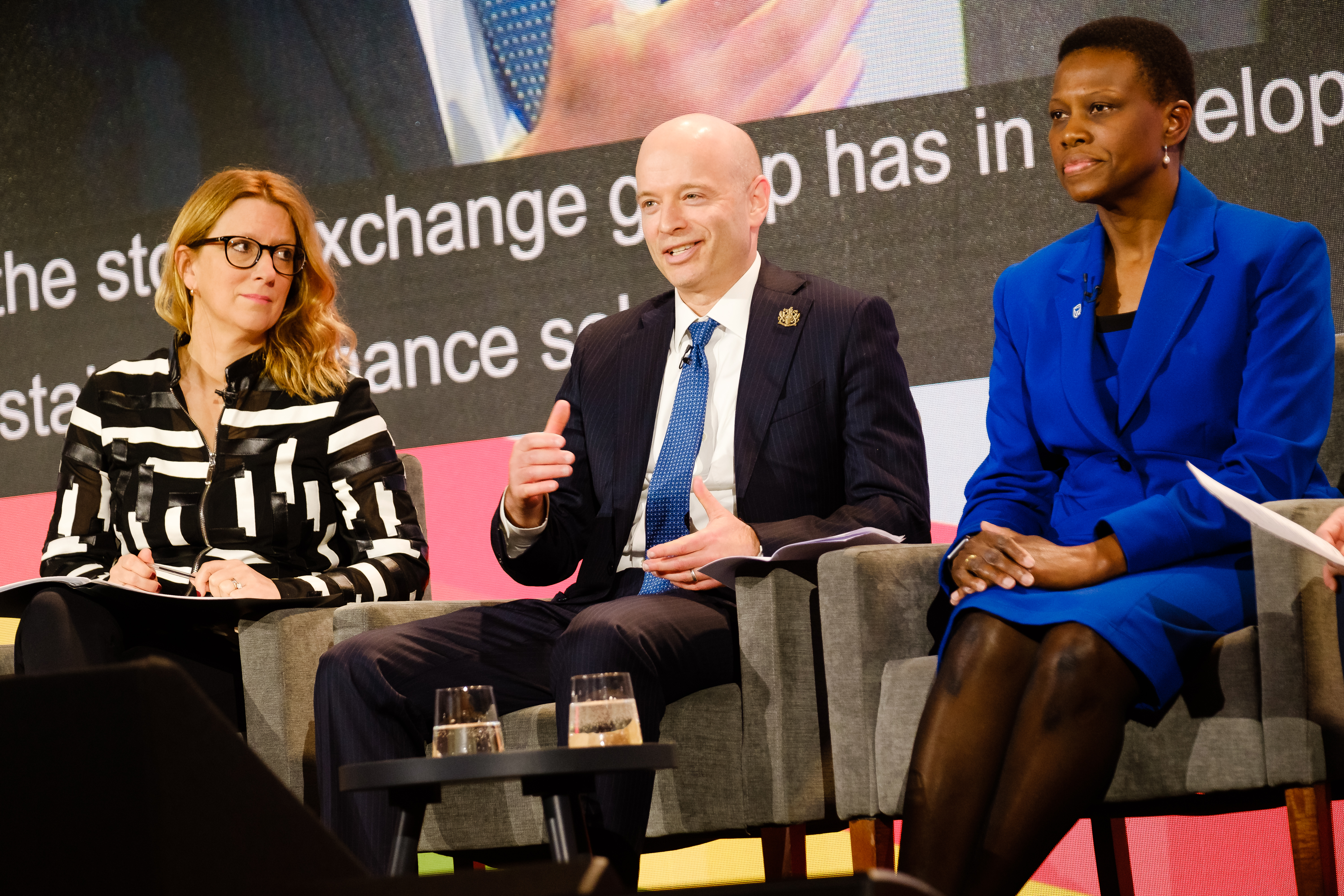
London Stock Exchange Group (LSEG) has agreed to buy Octus, a New York-based credit intelligence and data firm, for $3.535 billion in cash, the exchange operator's largest acquisition since it paid roughly $27 billion for Refinitiv in 2019. LSEG disclosed the deal on Thursday in a regulatory announcement, filed the same morning as its third-quarter trading update, which showed organic revenue growth running at its fastest pace since 2018.
The sellers are funds advised by the private equity firm Permira, together with Octus management, including founder and chief executive Kent Collier. LSEG said the purchase will be funded entirely with external debt and is expected to close in the first half of 2027, subject to regulatory approval. The company said the deal will be neutral to adjusted earnings per share in its first full year and accretive after that.
What Octus brings, in numbers
Octus, founded in 2013 and formerly known as Reorg, specializes in turning hard-to-obtain documents — loan covenants, deal terms, bankruptcy filings — into searchable data for banks, law firms, hedge funds and asset managers, with a particular focus on distressed and illiquid credit. According to LSEG's announcement, the firm employs more than 900 people, serves roughly 750 institutional customers and over 40,000 individual users, and is expected to generate more than $300 million in revenue this year with an adjusted EBITDA margin of about 40%. Permira took control of Octus from Warburg Pincus in 2022 at a valuation of roughly $1.3 billion, so Thursday's price marks a large uplift in three years, according to Reuters' reporting on the transaction.
On the LSEG side
The third-quarter trading update showed organic growth in total income, excluding recoveries, of 8.8% for the quarter, with the Markets division up 12.5% and FTSE Russell revenue up 10.2%. LSEG raised its full-year 2026 guidance to organic growth of "at least 8%," up from 7% to 7.5% at the half-year mark, and lifted its equity free-cash-flow target to at least £2.8 billion.
A bet on private credit
LSEG's own filing frames the deal as a wager on private credit, which it estimates at a $3.5 trillion market, with the addressable market for private-markets data, workflow and access tools put at $7 billion to $9 billion and growing at a double-digit rate. The company already owns liquid-credit tools such as LPC loan data and the Yield Book analytics platform; Octus is meant to extend that into illiquid and distressed debt, and to open up a buy-side client base of hedge funds and alternative managers where LSEG has historically had limited reach, according to coverage in FinTech Global.
The purchase follows a similar move by Tradeweb, the bond-trading platform in which LSEG holds a large stake, which agreed days earlier to buy electronic credit marketplace Trumid for about $1.75 billion — a pairing LSEG says positions it across the full credit lifecycle, from trading venue to underlying data.
Management's pitch, and who pays for it
LSEG chief executive David Schwimmer cast the deal as filling a specific gap in the company's fixed-income business:
"Acquiring Octus enables LSEG to deliver best-in-class credit data, intelligence and workflows," Schwimmer said in the company's announcement.
Octus's Collier, who will continue to run the business inside LSEG's Data & Analytics division, said he was "excited by the prospect and opportunity of Octus becoming part of LSEG," pointing to what he called Octus's "customer-first mindset and drive to deliver the absolute best products" as a natural fit with LSEG's own culture, according to the companies' joint announcement. Additional deal context, including the advisers and timeline, was covered by Dealroom.co.
The debt financing will push LSEG's leverage to the upper end of its 1.5-to-2.5-times target range by the end of 2027, easing back toward the middle of that range by the end of 2028, the company said. That is a notable commitment for a company that has also been returning cash to shareholders — it has bought back £2.6 billion of its own shares so far this year under a £3 billion program.
Word that LSEG was in talks for Octus first surfaced on October 13, when the company confirmed discussions in a statement responding to press speculation, cautioning at the time that "no final agreement has been reached and no transaction is guaranteed." PYMNTS reported that the market's reaction had firmed by the time the signed deal and the strong trading update were announced together nine days later.
What happens next
The deal is not yet closed. LSEG says completion is expected in the first half of 2027, pending regulatory approval; a cross-border transaction of this size involving a UK-listed acquirer and a US target would typically draw scrutiny from both UK and US antitrust regulators. LSEG has told investors the acquisition carries no change to its medium-term target of roughly 150 basis points of cumulative underlying EBITDA margin improvement between 2027 and 2029.
For now, Octus continues to operate as a standalone business under Permira's ownership until the sale closes, and LSEG's near-term priority will be winning the antitrust and regulatory clearances needed to complete the transaction, alongside the rest of its enlarged credit-market push through Tradeweb's pending Trumid purchase.

Corning's profit surges on AI data-center fiber demand, beating its own guidance

Boeing's Loss Narrows But Shares Slide as 737 MAX Ramp-Up Slips Again
