Oil tankers are now earning $1 million a day to run the gauntlet of the Strait of Hormuz
Seven months into the Iran war, so few vessels are willing to cross the world's most important oil chokepoint that freight rates have shattered every record, even as diesel prices hit an all-time U.S. high.
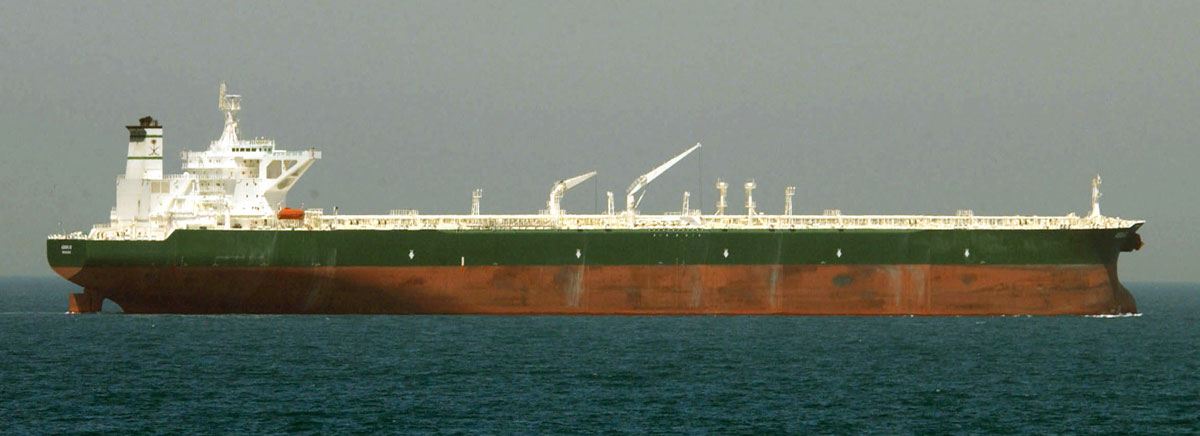
Chartering a supertanker to carry crude oil from the Persian Gulf to China now costs more than $1 million a day for the first time on record, as seven months of war between the United States, Israel and Iran leave shipowners unwilling to risk the Strait of Hormuz for anything less.
The benchmark VLCC rate on that route hit $1.035 million a day, according to Baltic Exchange data reported by Bloomberg and confirmed in subsequent coverage — roughly five times the pre-war rate of about $208,000 a day. A separate route from the Gulf of Oman to China, which avoids the strait itself, is fetching $644,000 a day.
What happened
The war, which began Feb. 28 with U.S. and Israeli airstrikes on Iran, escalated in March when Iranian forces began blocking the Strait of Hormuz and the U.S. launched an aerial campaign to reopen it. A ceasefire held from April to July before Iranian attacks on commercial shipping resumed. The strait carries roughly a fifth of the world's oil trade, and tanker owners now treat any transit as a live risk rather than a routine crossing.
The numbers
War-risk insurance for vessels transiting the strait has climbed to roughly 10% of a ship's asset value, up from well under 1% before the war, pushing many owners to route around Africa instead — a diversion that can add about 30 days to a single voyage. Those costs and delays are flowing straight into freight rates and, from there, into the shipping companies' earnings. Frontline plc reported its best-ever quarterly profit in the results it filed for the second quarter of 2026: $659.2 million, or $2.96 a share, on revenue of $943.3 million, with spot VLCC rates averaging $152,700 a day for the quarter, up from $103,500 in the first quarter. International Seaways reported record adjusted net income of $295 million for the same quarter, more than quadruple what it earned a year earlier, with its blended spot rate nearly tripling to $79,000 a day. The gains were not limited to the largest ships: Frontline's Suezmax rate averaged $111,500 a day in the quarter, up from $72,400, and its LR2/Aframax rate nearly doubled to $92,400 from $50,700, showing the premium extending across the smaller vessel classes that also make Gulf runs.
International Seaways chief executive Lois Zabrocky told investors on the company's second-quarter call that roughly 25 million barrels a day of trade normally move through the Hormuz and Bab-el-Mandeb chokepoints combined, and that releases from strategic petroleum reserves have been "doing much of the heavy lifting" to offset the disruption so far — alongside a pickup in U.S. refined-product exports and China's return to the export market in July. None of that has come close to fully replacing the volume that would normally transit the strait uninterrupted, which is why rates have kept climbing rather than easing as the war drags into its seventh month.
How we got here
Analysts say the pattern is a familiar one in shipping: instability that disrupts trade routes tends to reward the owners of the ships still willing to move cargo through it. "It's all about risk," said Ioannis Papadimitriou, a freight analyst at Vortexa, pointing to "the geopolitical risk and the risk of the assets — which is the ship in this case — which is increasing because of the tit-for-tat attacks that we saw from the U.S. and the territory attacks from Iran on ships," in comments reported by Fortune. "Every time there's more geopolitical instability that creates trading inefficiencies, it's the shipping players that actually benefit. And this time is no different."
"Tanker markets are said to thrive in unstable conditions," said Lars Barstad, chief executive of Frontline Management, adding that the closure of the strait "led to rapid shifts in trading patterns and owners' behavior."
Who is affected, and what happens next
The other side of the trade is landing on consumers and freight-dependent businesses. U.S. retail diesel hit an all-time nominal high around $6.29 a gallon in mid-September, according to the Energy Information Administration's weekly price survey, the highest level since the agency began tracking the figure in 1994 and up roughly 60% since the war began in late February. Prices range from about $6.03 a gallon on the Gulf Coast to more than $8 in California. Trucking, farming and any business that depends on diesel-fueled freight is absorbing that increase directly, even as crude itself trades above $100 a barrel.
Shipping-sector stocks have far outpaced the broader market this year: a Lloyd's List Intelligence basket of 35 U.S. and European shipping stocks is up roughly 68% year-to-date, more than five times the S&P 500's gain over the same period, according to gCaptain's shipping-industry coverage. Clarksons, the world's largest shipbroker, reported operating profit up 55% year over year, and an exchange-traded fund tracking tanker-shipping stocks, the Breakwave Tanker Shipping ETF, has posted gains numbering in the thousands of percent since the start of the year.
The Energy Information Administration's Short-Term Energy Outlook projects crude prices easing gradually into 2027 as non-OPEC supply grows, but that forecast assumes no further escalation in the Gulf — an assumption the war has already broken twice this year, first when the initial ceasefire collapsed in July and again as attacks on shipping resumed. With no resolution to the underlying conflict in sight and the strait still effectively a war zone for commercial shipping, analysts expect both the record freight rates and the elevated diesel prices they help produce to persist for as long as the fighting does.

AMD joins the trillion-dollar chip club as AI supply deals fuel a record rally

SpaceX's doubled weighting in the Nasdaq-100 forces a $22 billion trade in a single closing bell
AI cloud firm Nscale files for U.S. IPO, seeking valuation up to $35 billion
