Regeneron shares jump 13% as Dupixent and EYLEA HD drive earnings beat
Regeneron's third-quarter revenue and profit sharply outpaced Wall Street estimates, lifting shares more than 13 percent. The results landed alongside an expanded, $8 billion alliance with Sanofi meant to extend the franchise behind Dupixent, the companies' blockbuster immunology drug, into the next decade.
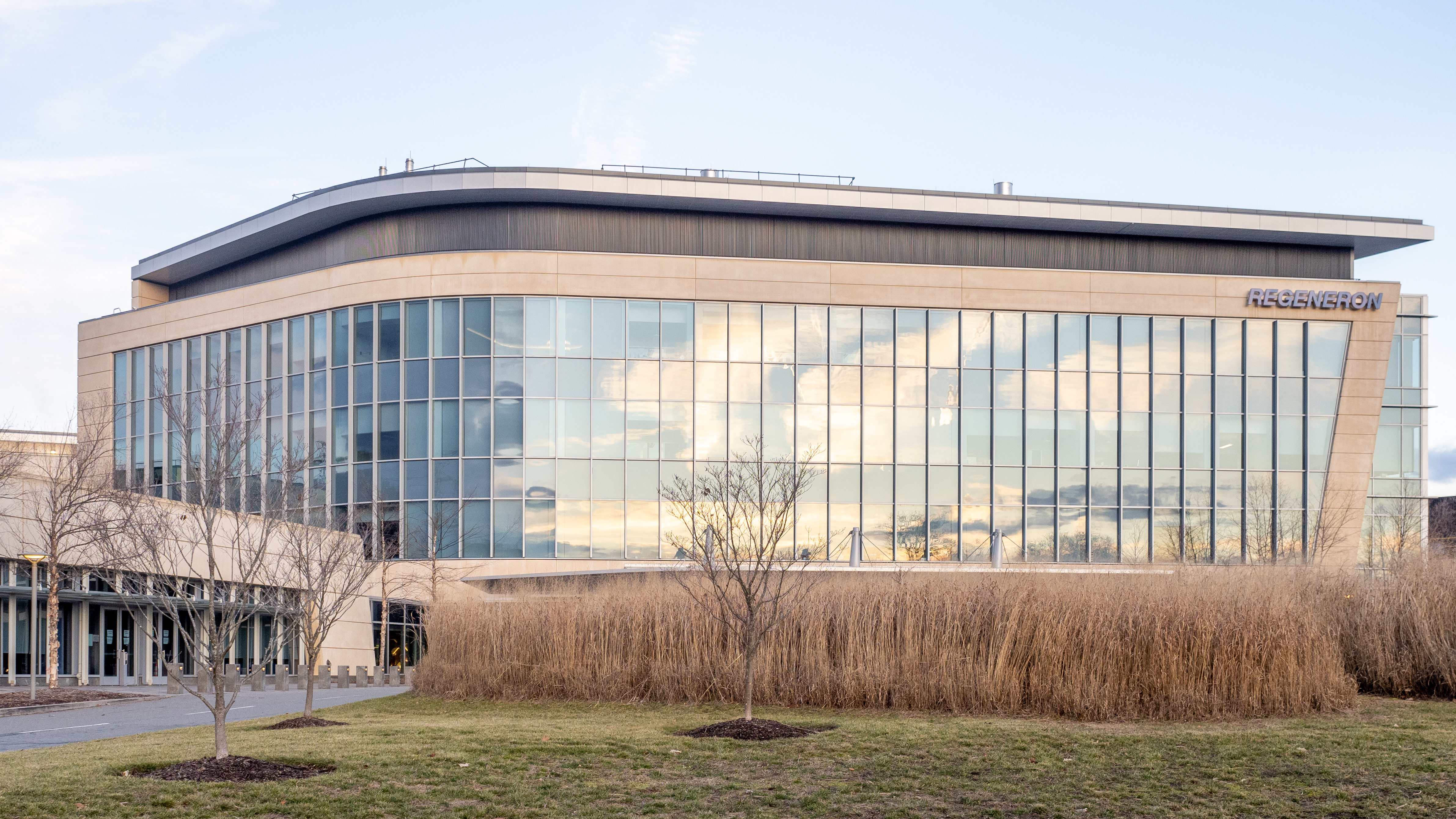
Shares of Regeneron Pharmaceuticals jumped more than 13 percent on Friday, closing at $927.89 and pushing the drugmaker's market value above $93 billion, after it reported third-quarter revenue and profit that far exceeded Wall Street's forecasts. The rally, among the largest single-day moves for a major biotech this year, came alongside an expanded $8 billion alliance with Sanofi aimed at extending the life of Dupixent, the companies' blockbuster immunology drug, well into the next decade.
Regeneron's third-quarter earnings release, filed with the Securities and Exchange Commission on Oct. 30, showed total revenue of $5.1 billion, up 36 percent from a year earlier and well above the roughly $4.56 billion analysts had expected. Non-GAAP earnings per share came in at $20.07, up 70 percent from $11.83 a year ago and sharply ahead of consensus estimates near $16.25. GAAP net income rose 33 percent to $1.95 billion. Several Wall Street analysts raised their price targets on the stock in the days that followed.
A Blowout Quarter Led by Dupixent and EYLEA HD
The quarter's strength was broad. Dupixent, the anti-inflammatory drug Regeneron developed with Sanofi and which Sanofi records in its own revenue, posted global sales of $6.5 billion, up 35 percent, as it continued to be prescribed for conditions including eczema, asthma and chronic sinus disease. EYLEA HD, Regeneron's newer eye-disease treatment, grew 62 percent in the United States to $699 million, while Libtayo, its cancer immunotherapy, rose 51 percent globally to $550 million. Collaboration revenue from Sanofi, tied mainly to Dupixent's profit-sharing arrangement, climbed 68 percent to $2.7 billion, in part because Regeneron finished repaying a development-cost balance it owed Sanofi earlier in the year, which had been reducing that revenue line.
"This was an outstanding quarter for Regeneron, with Dupixent, EYLEA HD, and Libtayo each achieving record net sales," said Leonard Schleifer, the company's co-chairman, president and chief executive.
Not every product line advanced. Legacy EYLEA, the original version of Regeneron's flagship eye drug, saw U.S. sales fall 41 percent to $400 million, as patients shifted to the higher-dose EYLEA HD and as biosimilar competitors began chipping away at the older product's market.
An $8 Billion Bet to Extend the Dupixent Franchise
The earnings beat landed alongside a separate, previously announced expansion of Regeneron's two-decade-old alliance with the French drugmaker Sanofi. Under terms disclosed in Sanofi's own announcement and reiterated in Regeneron's quarterly filing, Regeneron will receive a $1 billion upfront payment, to be recorded as revenue in the fourth quarter, plus the potential for up to $7 billion more in development, regulatory and sales-based milestones.
The deal covers four long-acting antibodies that Regeneron invented, targeting proteins involved in inflammatory disease, which the companies are positioning as eventual successors to Dupixent as that drug's patents begin expiring in 2031. One of the four, an antibody called REGN20423, is already in early-stage trials for atopic dermatitis; the other three are expected to enter clinical testing in 2027. The companies will split development costs and future profits evenly, according to a regulatory filing describing the agreement. Analysts at Citi described the expansion as "a step in the right direction" for Sanofi's pipeline, though they noted the broad shape of the deal had been anticipated.
Biosimilars and a Pending FDA Decision Loom
The quarter also illustrated the competitive and regulatory pressures facing Regeneron's pipeline. Original EYLEA's decline is expected to deepen through the end of the year as additional biosimilar versions reach the U.S. market. Amgen's Pavblu has been selling since late last year, and Regeneron has reached patent settlements clearing rivals, including Sandoz and a partnership between Alvotech and Teva, to launch their own lower-cost copies, with Celltrion cleared to enter on Dec. 31. For patients and insurers, the arrival of multiple biosimilars is expected to gradually lower prices for the injections, which are given regularly to treat wet age-related macular degeneration and other retinal diseases. Roche's competing drug Vabysmo has continued to take share in the broader eye-disease market even as EYLEA HD has gained ground against it, according to the trade publication Fierce Pharma.
On the pipeline side, Regeneron highlighted the Food and Drug Administration's August approval of Pasatru, a monoclonal antibody for the ultra-rare bone disorder fibrodysplasia ossificans progressiva, which in a phase 3 trial cut new abnormal bone lesions by as much as 94 percent compared with placebo, according to coverage of the approval by the medical news outlet Healio. It was the first FDA-approved treatment specifically aimed at reducing new lesions in the disease, which causes muscle and connective tissue to gradually turn to bone; an earlier drug, Sohonos, had been approved in 2023 as the first treatment for the condition overall. The company is also awaiting an FDA decision, which Schleifer said is expected this month, on cemdisiran, a twice-yearly injectable that would become the first short interfering RNA therapy approved for generalized myasthenia gravis, an autoimmune disease that causes muscle weakness.
- Regeneron raised its full-year 2026 guidance for non-GAAP gross margin on product sales to about 86 percent, up from a prior range of 84 to 85 percent.
- The company repurchased $2.3 billion of its own stock in the first nine months of 2026 and declared a quarterly dividend of $0.94 per share, payable in December to shareholders of record in late November.
- Guidance issued alongside the results does not assume completion of any further business-development deals beyond those already finalized.
What Comes Next
Investors are likely to focus in the coming weeks on the FDA's decision on cemdisiran and on how quickly biosimilar erosion of original EYLEA affects fourth-quarter results. The $1 billion Sanofi payment will show up in Regeneron's books in the current quarter, giving an additional lift to collaboration revenue even as the company works to determine how broadly its newer growth drivers, Dupixent, EYLEA HD and Libtayo, can offset declines elsewhere in its portfolio. The result also lands in a broader earnings season that has been kind to large pharmaceutical companies; rivals including AstraZeneca and Merck also topped Wall Street's profit estimates in their own third-quarter reports released the same week, suggesting the sector has so far weathered pricing and tariff pressures better than some investors had feared. Regeneron's next scheduled report, covering the fourth quarter and full year, is expected in February.

US Factories Post Fastest Growth in Years as Manufacturing Gauge Tops Forecasts

Marvell Agrees to Buy Lumentum in $115 Billion All-Stock AI Networking Deal

Eli Lilly Raises 2026 Revenue Forecast by $5.5 Billion as Mounjaro and Zepbound Drive 39% Sales Jump
