Pennsylvania's Measles Outbreak Tops 1,360 Cases as U.S. Nears a Historic Loss of Elimination Status
The state's seven-month-old outbreak, the largest in the nation, now accounts for nearly a third of all U.S. measles cases this year, as health officials await a decision on whether the country will lose the elimination status it has held since 2000.
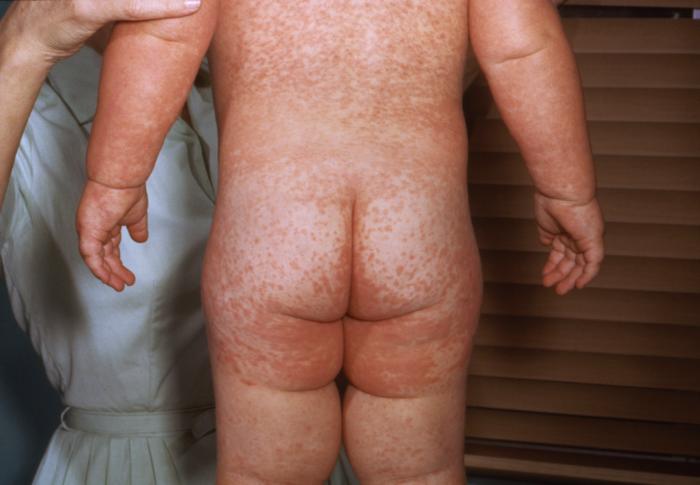
Pennsylvania's measles outbreak has grown to 1,360 confirmed cases across 44 counties, the state Department of Health said in a statewide update issued Monday, making it by far the largest single-state outbreak in the country this year. The update, the department's thirteenth since the outbreak began in late April, reported 22 new cases since the prior count on Friday and 258 hospitalizations, or nearly one in five patients.
The outbreak is now large enough that Pennsylvania alone accounts for close to 30 percent of the 4,588 measles cases the Centers for Disease Control and Prevention had confirmed nationwide as of October 22, according to the CDC's measles data page. That national total is more than double the 2,289 cases recorded in all of 2025 and the highest since the disease was declared eliminated in the United States in 2000.
A Fast-Moving Case Count
Pennsylvania's own count has accelerated through October: the state reported 1,078 cases on October 7, 1,260 on October 16, 1,338 on October 23 and 1,360 on October 26, according to successive releases from the Pennsylvania Department of Health. Lancaster County remains the epicenter with 478 cases, followed by Mifflin County with 194 and Chester County with 93, per reporting from ABC27 in Harrisburg. The state has recorded five measles-associated deaths; a sixth, in Franklin County, remains under review and had not been confirmed as of the latest update. The CDC has formally attributed three deaths to measles nationally this year, a discrepancy officials say reflects differing timelines for case confirmation between state and federal reviewers. Only four of Pennsylvania's cases, fewer than 1 percent, occurred in people who had been vaccinated against the virus.
A Disease the Country Had Eliminated
The scale of the current spread has revived a question public health officials have been tracking since a separate, large outbreak began in West Texas in January 2025: whether the United States will lose the "elimination status" it was awarded in 2000, when sustained domestic transmission of measles had been stopped for more than a year. Elimination status is reviewed by the Pan American Health Organization, whose Measles and Rubella Elimination Regional Monitoring and Re-Verification Commission is expected to issue a determination in November, according to reporting by the University of Minnesota's CIDRAP, which cited a letter in The Lancet concluding the U.S. has already missed four of seven indicators used to measure elimination and is unlikely to meet the remaining three. The CDC has said it has not yet found epidemiological evidence that outbreaks in Texas, Utah, Arizona and South Carolina form a single, continuous 12-month chain of transmission, the threshold that would formally trigger a loss of status.
Behind the numbers is a decline in routine childhood vaccination. Kindergarten coverage with the measles-mumps-rubella (MMR) vaccine fell from 95.2 percent in the 2019-2020 school year to 92.4 percent in 2025-2026, according to CDC data, leaving an estimated 280,000 kindergartners without documented protection. The herd-immunity threshold for measles, one of the most contagious viruses known, is generally put at 95 percent.
"Measles is a serious illness. We are going to see the consequences for years to come," said Andrew Pavia, a pediatric infectious disease epidemiologist at the University of Utah, in a presentation covered by CIDRAP at the IDWeek conference in Washington.
Who Is Affected, Beyond Pennsylvania
While Pennsylvania's outbreak is concentrated in Lancaster and Mifflin counties, which include large Amish and Mennonite communities with historically lower vaccination rates, measles activity has spread to dozens of other jurisdictions. Wisconsin has confirmed 310 cases across nine counties; Ohio has reported 262 cases, including a potential exposure flagged by Akron Children's Hospital after a patient with measles passed through the hospital's Golisano campus on October 20, according to News 5 Cleveland. Kentucky has reported 199 cases, New York 162, and Indiana 65. Nationally, 58 percent of cases this year are in people under 20, and the CDC says 10 percent of all confirmed patients have required hospitalization, rising to 16 percent among children under 5. In Pennsylvania, Penn State Health separately flagged possible exposures at hospital facilities in Dauphin and Lancaster counties tied to an infected individual's visits.
The Response, and What Comes Next
Pennsylvania has mounted one of the largest state-level vaccination pushes of the outbreak. About 300 Department of Health staff are working with residents, community organizations and health care providers, and state health centers have administered nearly 6,700 MMR doses at 228 pop-up clinics since late April, according to the department's July announcement establishing its public measles dashboard. Providers statewide gave more than 39,000 MMR doses in the first three weeks of October alone, compared with a typical monthly pace of about 25,000, the department said.
Current guidance from the department recommends that infants between 6 and 11 months old who live in or travel to counties with sustained community transmission receive an early, supplemental MMR dose, which does not replace the standard two-dose series given at 12-15 months and 4-6 years. Children 12 months and older who have never been vaccinated should receive a first dose immediately and a second at least 28 days later. The vaccine is roughly 97 percent effective against measles infection after two doses, and officials emphasize that people with documented two-dose histories do not need additional shots.
- Pennsylvania's measles dashboard updates Mondays, Wednesdays and Fridays at pa.gov/measles
- Residents with suspected exposure or symptoms are urged to call the state's hotline, 877-PA-HEALTH (877-724-3258)
- The CDC's national case count updates weekly, typically reflecting data through the preceding Thursday
The Pan American Health Organization's elimination-status review in November will be the next formal milestone in the broader national picture. A loss of elimination status would not change clinical guidance or vaccine recommendations, but public health specialists say it would be a symbolic marker of how far routine childhood immunization has fallen since the pandemic disrupted vaccination schedules nationwide. For now, state and federal officials are continuing weekly reporting as case totals in Pennsylvania and several other states continue to climb.

Single-Dose Psychedelic Nasal Spray Shows Rapid Relief in Hard-to-Treat Depression, Trial Finds

FDA warns pet owners after Salmonella is found again in Darwin's raw cat food

Natural Grocers Recalls Organic Mung Beans Sold in 22 States Over Glass Contamination
