Opinion: A tariff truce renewed by proclamation shows Congress has given up its trade power
China's decision this week to extend its tariff truce with Washington by two more months is the latest sign that U.S.-China trade policy now runs almost entirely on rolling executive proclamation — a pattern the Supreme Court's February ruling against the president's tariff authority was supposed to disrupt, and did not.
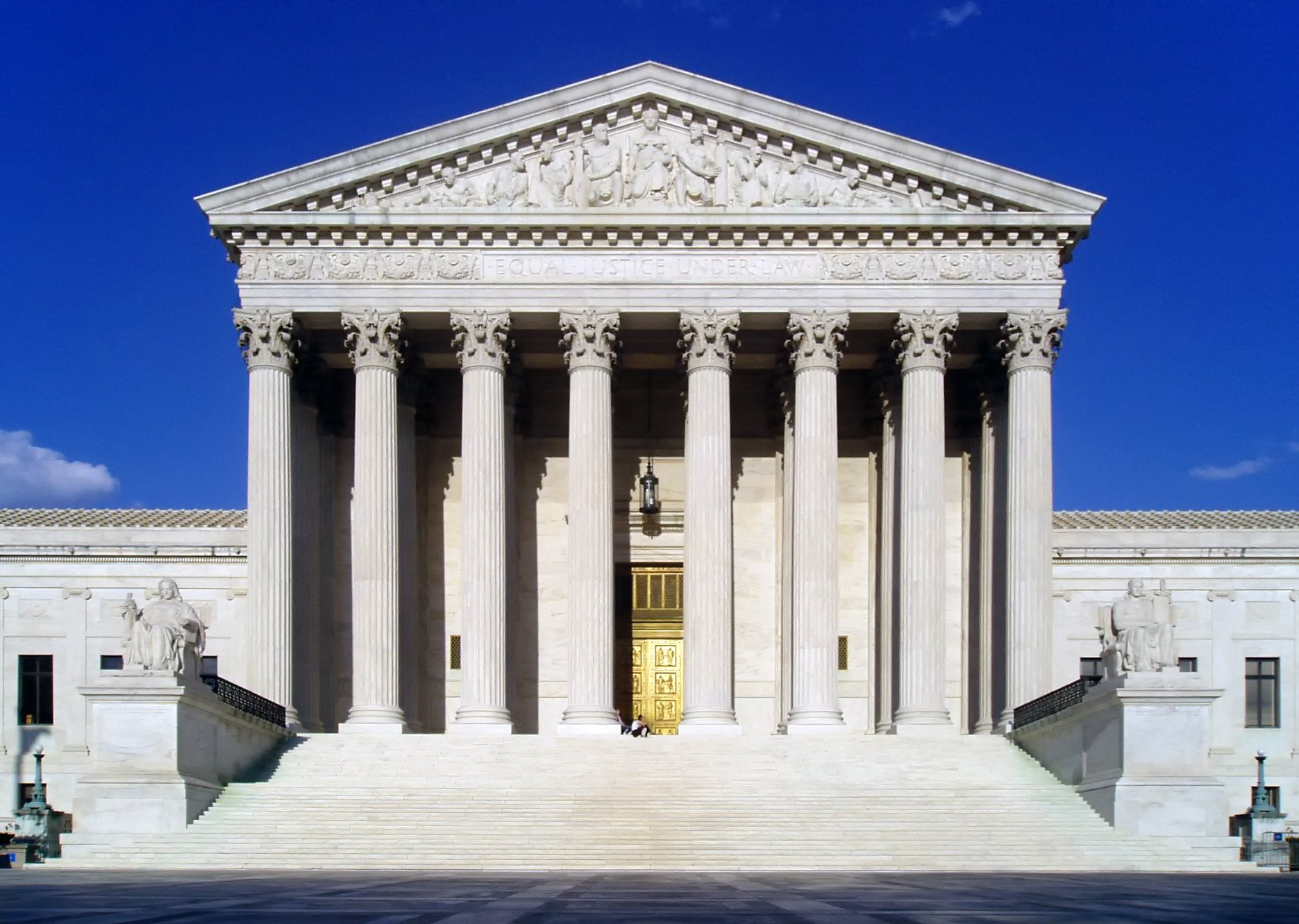
Late Monday in Beijing, China's Customs Tariff Commission of the State Council announced that it would keep a 24 percent additional tariff on American goods suspended for two more months, pushing the expiration date to January 10, 2027. A 10 percent levy stays in place. Washington's mirror-image suspension of its own "heightened reciprocal tariffs" on Chinese goods, set by presidential order last November to lapse at 12:01 a.m. Eastern on November 10, 2026, has likewise rolled forward without incident. No treaty was signed. No vote was taken. Two governments simply agreed, again, not to raise tariffs for a little while longer.
That this now counts as trade policy is itself the story. The renewal is at least the fourth extension of the truce struck after the Trump-Xi meeting in Busan a year ago, and each round has been shorter than the last — successive 90-day extensions have given way to this two-month patch. It arrives, moreover, nine months after the Supreme Court told the president in unambiguous terms that he had exceeded his authority in constructing the very tariff regime this truce keeps suspended. Rather than prompting Congress to write durable rules, that ruling mainly taught the executive branch which other statutes to use instead.
A truce renewed by proclamation, not statute
The architecture is worth stating plainly. The China arrangement exists because the president periodically signs orders suspending tariffs he previously imposed by proclamation, and Beijing periodically mirrors the move through its own tariff commission. The November 2025 order setting up this week's deadline ties the suspension explicitly to whether "the PRC fail[s] to implement its commitments," with the president free to "modify this order as necessary" on his own judgment, informed by periodic updates from Treasury, Commerce and the U.S. Trade Representative. This week's Chinese extension, covering not just the 24 percent tariff but suspended export-control measures against 27 American companies and port fees on U.S.-linked vessels, was explicitly pitched as implementing the outcomes of September's Trump-Xi meeting in Washington, according to trade-press reporting on the announcement. The two leaders are expected to meet again next week at the APEC summit, where the next extension, or lack of one, will presumably be decided in person.
There is nothing inherently illegitimate about an executive branch managing tariffs through delegated statutory authority — Congress has been delegating exactly that kind of authority since the 1930s. What is unusual is the compression of the planning horizon to sixty days, decided bilaterally between two heads of government with no legislative or judicial check in between, for a tariff regime that determines import costs across the entire American economy.
A ruling the executive mostly worked around
The backdrop here matters. On February 20, 2026, the Supreme Court ruled 6-3 in Learning Resources v. Trump, consolidated with Trump v. V.O.S. Selections, that the International Emergency Economic Powers Act does not authorize the president to impose tariffs at all. Chief Justice Roberts, writing for the majority, held that IEEPA's authorization to "regulate... importation" does not extend to taxing imports — a straightforward statutory reading that nonetheless unwound the legal foundation of the "reciprocal tariffs" program at the heart of the China arrangement and dozens of other country-specific orders.
The practical effect of that ruling has been smaller than its scale might suggest, because the administration did not need IEEPA to keep tariffs in place. Within weeks it had shifted to Section 122 of the Trade Act of 1974, a 150-day, 15-percent stopgap surcharge authority, while the U.S. Trade Representative leaned more heavily on Section 301, which the office itself has called the more "legally durable" tool precisely because Congress wrote it with an investigation requirement built in. The Office of the U.S. Trade Representative had already extended a set of Section 301 exclusions on Chinese imports through November 10, 2026 — the same date now superseded by this week's two-month rollover — and the underlying suspension published in the Federal Register shows how thoroughly these authorities have been layered on top of one another. China's own tariff commission, for its part, said this week it would "closely monitor" the administration's plans to substitute Section 301 duties for the IEEPA tariffs the courts invalidated, and adjust its countermeasures accordingly — Beijing, in other words, is now tracking the legal mechanics of American tariff law as closely as any U.S. trade lawyer, because the mechanism matters more to the truce's durability than the headline rate does.
"In my view, this truce is very fragile," said Wendy Cutler, a vice president at the Asia Society Policy Institute and a former acting deputy U.S. trade representative, after the leaders' September meeting in Washington. "I think they're testing each other."
Congress has the remedy in hand
None of this is happening because lawmakers lack options. Since the Supreme Court's ruling, members of both parties have introduced several bills to reclaim the tariff-setting power that Article I assigns to Congress in the first place:
- The Trade Review Act, sponsored by Senators Maria Cantwell and Chuck Grassley, would require congressional approval of new unilateral tariffs within 60 days or see them automatically expire, with the president obligated to justify a new tariff within 48 hours — a structure its sponsors have explicitly modeled on the War Powers Resolution.
- The Congressional Trade Powers Reform Act, pushed by Senator Ron Wyden and detailed in a Senate Finance Committee summary circulated this month, would go further, narrowing or eliminating several of the statutory delegations — Section 122 among them — that the administration has used to rebuild the tariff regime the courts struck down.
- A separate measure targets Section 122 specifically, seeking to repeal the 150-day surcharge authority the administration used as its first bridge after the February ruling.
None of these bills has reached a floor vote in either chamber. That inaction, nine months after the nation's highest court found the executive's primary tariff tool unlawful, is the more consequential failure here than any single truce extension. The court resolved a narrow statutory question; it did not, and could not, force Congress to decide how tariff power should actually be exercised going forward. Lawmakers have the text of a remedy sitting in committee and have chosen, so far, not to move it.
What continues to drift
The counterargument for the status quo is not frivolous. A rolling truce, however improvised, has kept both economies from a sudden tariff shock that would have raised costs on American importers and Chinese exporters alike with no notice period at all. Executive flexibility in trade negotiations has real diplomatic value, particularly when talks are ongoing and a rigid statutory deadline could hand either side an incentive to walk away rather than extend. And Section 301, whatever its political uses, does come with procedural guardrails — an investigation, a comment period — that IEEPA never required.
But flexibility bought at the cost of predictability has a price that falls on businesses making multi-year sourcing and investment decisions around a tariff schedule that can change, lawfully, every sixty days at a single meeting's outcome. The next cliff edge is January 10, 2027; the one after that is whatever the leaders agree to at APEC next week, or do not. A Supreme Court ruling that should have forced a reckoning over who actually sets tariff policy in this country has instead produced a more elaborate version of the same arrangement, with Congress watching from the sidelines it has, so far, declined to leave.

Opinion: Voters delivered a historic rebuke. The White House promoted its hardest-liner anyway.

Opinion: Trump picked a pliable Fed chair. Inflation picked the policy instead.
Opinion: Congress keeps condemning the Iran war. It won't defund it.
