Opinion: ICE told a federal court one thing about courthouse arrests, then the opposite. The ruling that followed matters beyond immigration.
A Manhattan federal judge has struck down the government's policy of arresting immigrants at their own court hearings nationwide, after officials admitted in court filings that the legal basis they cited for seven months did not exist. The episode is a case study in agency candor, not just immigration policy.
On September 30, a federal judge in Manhattan issued a 36-page order that, on its face, resolves a narrow administrative-law dispute: whether U.S. Immigration and Customs Enforcement followed proper procedure when it expanded its authority to arrest noncitizens inside and around immigration courthouses. On its merits, though, the ruling in African Communities Together and The Door v. Venturella is less a story about immigration enforcement than about what happens when a federal agency tells a court one thing for the better part of a year, then tells it the opposite, and expects the first version to still count.
U.S. District Judge P. Kevin Castel's order, released publicly by the American Civil Liberties Union on October 1, vacates ICE's 2025 courthouse-arrest policy nationwide as applied to immigration courts and restores a narrower 2021 policy that limits such arrests to a handful of defined emergencies. The practical effect is to tell the government, again, that it cannot detain people inside the very buildings where the law requires them to show up. The deeper effect is to put on the public record an unusually blunt account of an agency that misrepresented its own legal authority to a federal court, got caught, and is still contesting the consequences.
A policy built on a memo that, it turns out, said something else
The case began in August 2025, when the New York Civil Liberties Union, the ACLU, Make the Road New York and the law firm Emery Celli Brinckerhoff Abady Ward & Maazel sued on behalf of two immigrant-services organizations, African Communities Together and The Door. Their complaint challenged two linked practices: an Executive Office for Immigration Review policy that let government attorneys get removal cases dismissed on an oral motion, without giving the noncitizen a chance to respond in writing, and a parallel ICE policy expanding the circumstances in which officers could make arrests in or near immigration courts. Plaintiffs argued the two worked in tandem — a case gets dismissed on the spot, and the person who came to court expecting a hearing is arrested on the way out and placed into fast-track deportation proceedings instead.
In a first ruling in September 2025, Judge Castel stayed the dismissal policy but declined to block the courthouse-arrest policy, concluding the plaintiffs had not shown they were likely to prevail on the claim that it was arbitrary and capricious. That conclusion rested on the government's own representations about what its 2025 guidance said. Seven months later, the government told the court that those representations were wrong. As the judge's opinion recounts, two Assistant U.S. Attorneys wrote to the court on March 24, 2026, to disclose that ICE now took the position its 2025 courthouse-arrest memorandum "never applied to arrests at or near immigration courts" — and that the government's own lawyers acknowledged they had, "in consultation with ICE, embraced a contrary position throughout the litigation."
That reversal is what moved the case. Once the 2025 policy was conceded to have never covered immigration courthouses, ICE's legal authority there reverted by default to the policy it had ostensibly replaced: an April 2021 memorandum issued under then-Secretary Alejandro Mayorkas that confines civil immigration enforcement at or near courthouses to four narrow circumstances: a national-security matter, an imminent risk of death or serious physical harm, hot pursuit of a public-safety threat, or an imminent risk that evidence in a criminal case will be destroyed. Judge Castel's September 30 order found that the government's attempt to simply let that 2021 policy lapse, without any reasoned explanation for abandoning it, was itself arbitrary and capricious under the Administrative Procedure Act — and ordered it restored, nationwide, as applied to immigration courts.
The dilemma the policy created
The opinion is notably specific about why this mattered beyond legal technicality. Removal proceedings are, under federal statute, the "sole and exclusive procedure" for deciding whether someone may stay in the country, and a noncitizen who simply skips a scheduled hearing faces a mandatory order of removal issued in absentia. Judge Castel's order describes the bind this created: a person could attend a hearing as required and risk having the case dismissed without notice and being arrested on the spot, or stay away out of fear and be ordered deported anyway for failing to appear. There was, in the court's framing, no way to comply with the system that did not carry a serious risk of being punished for complying with it.
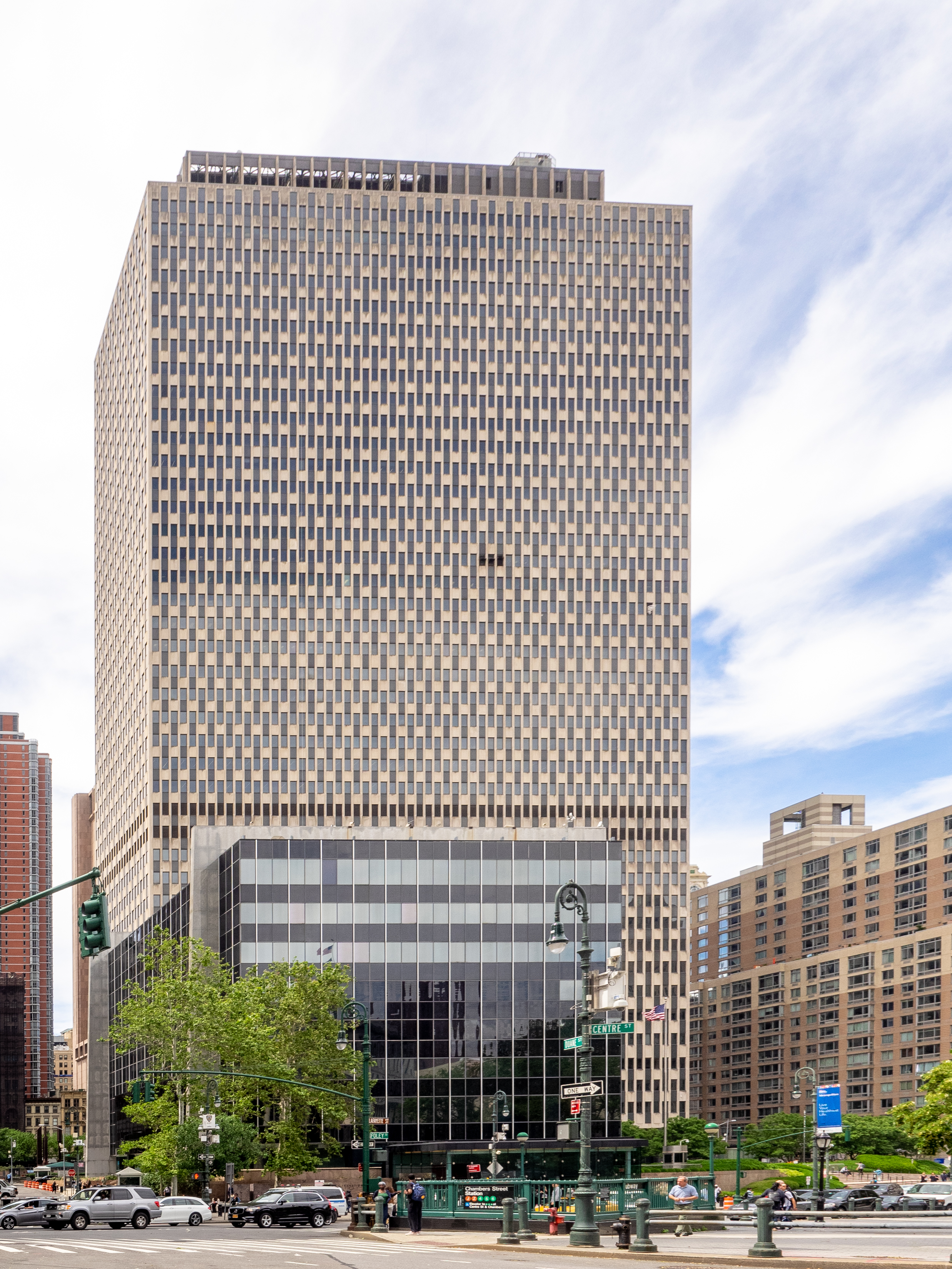
That is not an abstraction in the case record. The NYCLU's account of the litigation includes a 16-year-old Bronx high school student, identified only as Dylan, detained at a routine hearing, and Oliver Mata Velazquez, a 19-year-old asylum seeker from Buffalo who was held and fast-tracked for deportation before being released after the suit was filed. Reporting on the enforcement itself, at ICE's New York field office in the Jacob K. Javits Federal Building and at nearby immigration courts, described what amNewYork reported as hundreds of people detained over more than a year, with double-digit arrests on some days during the summer of 2025.
"People should not be arrested for doing exactly what the legal system requires of them."
That is Oscar Sarabia Roman, a staff attorney with the ACLU's Immigrants' Rights Project, in the organization's statement on the ruling. It is also, more or less, the proposition Judge Castel's order vindicates: that a government seeking to remove people from the country is not entitled to lure them into compliance with its own hearing system and then use that compliance as the mechanism of arrest, at least not without the reasoned policy justification the Administrative Procedure Act requires.
Compliance, not the ruling, is now the real question
None of this means the legal fight is over, and a fair accounting of the ruling has to reckon with what it does not do. The restored 2021 policy still permits courthouse arrests in genuine emergencies, and the government retains broad authority to arrest people with serious criminal records anywhere it finds them, including, under the narrow exceptions, near a courthouse. The Department of Homeland Security has argued publicly that courts should not second-guess where an agency chooses to make a lawful arrest, and reasonable people can disagree about how much deference an enforcement agency deserves on operational judgments like arrest location, as opposed to substantive judgments about who gets deported.
But that deference argument is harder to sustain once an agency's operational judgment turns out to rest on a legal premise it already told a federal court was false. And there is real reason to doubt the September ruling alone will end the practice it addresses. Reporting from Courthouse News Service in July found that ICE made at least five arrests at Manhattan immigration courts in the two months after Judge Castel's earlier, narrower stay took effect in May, each one justified under the policy's public-safety exception — in one instance because ICE characterized a protest outside the courthouse itself as a public-safety threat. One of those detained, according to court filings, had no criminal convictions at all. If that pattern continues after the broader, final ruling, the practical dispute will shift from what the policy says to whether the agency bound by it is prepared to follow it, which is a different and in some ways harder fight than the one just decided.
That is the standard against which the next several months should be judged. The September 30 order is not a verdict on immigration enforcement generally, and it does not stop the government from deporting people who are, in fact, removable. What it does is reaffirm a narrower but still consequential principle: that an agency changing a long-standing practice has to say why, honestly and on the record, rather than relying in litigation on an account of its own policy that its own lawyers later admit was not true. Whether that principle holds in practice, at 26 Federal Plaza and in immigration courts nationwide, will depend less on what Judge Castel wrote than on whether anyone is prepared to enforce it against the agency that was found to have gotten it wrong.

Opinion: Washington is purging Obamacare rolls just as premiums hit a breaking point

Opinion: The Fed is leaning toward another rate hike. The data behind it has rarely been weaker.

Opinion: Oregon wrote one of the nation's toughest gun-storage laws. It still couldn't stop Bend.
