Opinion: Oil companies want blanket immunity from climate lawsuits. The Supreme Court should say no.
In the first case of its new term, the Supreme Court is weighing whether Boulder, Colorado can sue Suncor and ExxonMobil over climate deception — a ruling for the companies would not just end that case, it would foreclose roughly five dozen similar suits nationwide before a single jury hears the evidence.
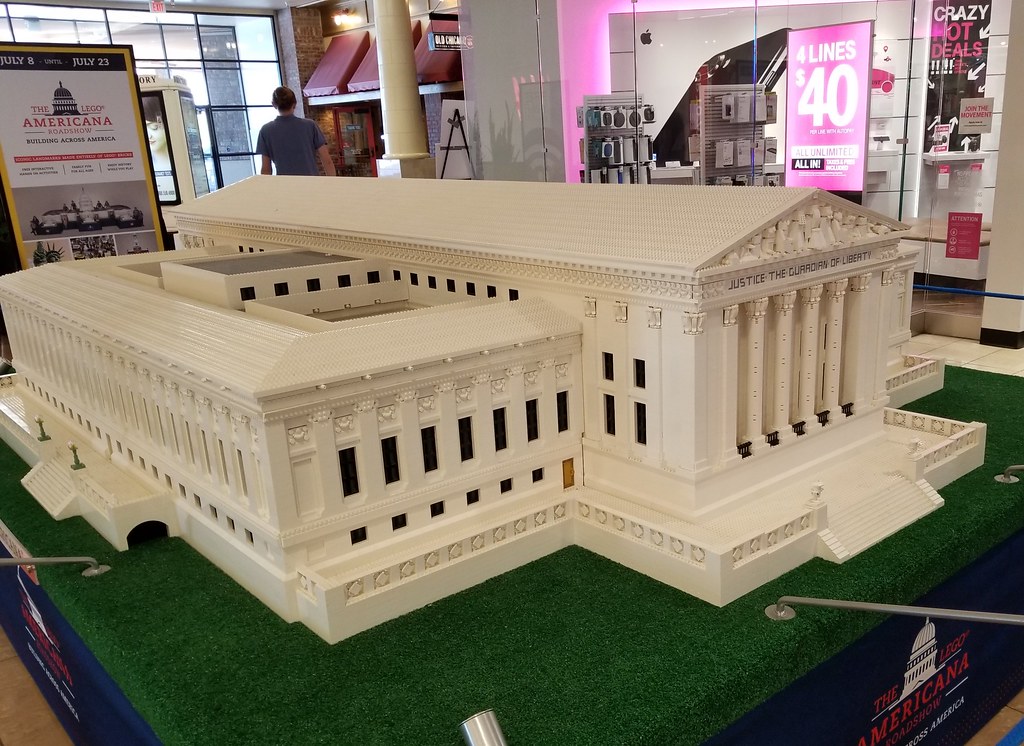
The Supreme Court opened its new term on Monday the way it rarely opens anything: with a case that could decide, in one stroke, whether an entire industry can be held accountable in any American court for the costs of a warming planet. Suncor Energy (U.S.A.) Inc. v. County Commissioners of Boulder County looks, on its surface, like a dispute over a few million dollars of road repair and wildfire mitigation in a single Colorado county. It is not. It is a bid by two of the world's largest oil companies to persuade nine justices that no state, anywhere, may ever use its own courts to assign them responsibility for climate damage. The Court should refuse.
A test case with nationwide stakes
Boulder's city and county governments sued Suncor and ExxonMobil in April 2018, not for emitting carbon dioxide, but for allegedly concealing what they knew about the consequences of doing so while marketing fossil fuels to the public. The complaint rests on ordinary state tort theories — public and private nuisance, trespass, unjust enrichment, civil conspiracy — the same kind of claims Colorado courts have long allowed against polluters, manufacturers and, in an earlier generation, tobacco companies. The Colorado Supreme Court ruled 5–2 in May 2025 that none of it is preempted by federal law, clearing the way for the case to proceed toward trial. Suncor and Exxon asked the justices to overturn that judgment, and in February the Court agreed to hear them.
The stakes extend far beyond Boulder. By most counts, dozens of similar deception-based suits have been filed by cities, counties and states against fossil-fuel companies, seeking damages for flood control, heat-related public health costs, drought and wildfire response. A ruling for the companies would not just end Boulder's case; it would likely end all of them, before a single jury hears the evidence. As Boulder's own statement on the case frames the question, the issue is "whether these companies should pay their fair share of the rising costs of climate impacts on Colorado, or whether Boulder taxpayers must bear these costs alone."
"Whether these companies should pay their fair share of the rising costs of climate impacts on Colorado, or whether Boulder taxpayers must bear these costs alone."
The preemption theory does not hold up
Suncor and Exxon's central claim is that federal law — chiefly the Clean Air Act — forecloses Boulder's suit before it can even be tried. That argument runs into an immediate problem: the Clean Air Act says the opposite. Its savings clause, codified at 42 U.S.C. § 7416, expressly preserves the authority of states and localities to adopt or enforce their own standards and remedies for air pollution, so long as they are not less stringent than federal ones. There is no clause in the statute saying Congress meant to extinguish state tort remedies for climate-related harm. Express preemption, on this record, is simply absent.
The companies lean instead on American Electric Power Co. v. Connecticut, the 2011 decision in which the Court held, unanimously, that the Clean Air Act displaces federal common-law nuisance claims over greenhouse-gas emissions because Congress delegated that regulatory authority to the EPA. But that case was about federal common law — judge-made rules with no statutory basis — not state tort law, which rests on each state's own long-settled civil-liability statutes and precedents. The Court in 2011 did not reach, let alone decide, whether state-law claims survive. Suncor's argument asks the justices to leap from "federal common law is displaced" to "all 50 states' tort systems are displaced too," a conclusion the Clean Air Act's text does not support and that ordinary conflict-preemption doctrine, which requires a genuine clash between state and federal law, cannot supply on this record.
There is also a more basic asymmetry worth naming. Boulder is not asking a judge to cap emissions, set a national fuel standard or regulate anyone's smokestack — the kind of relief that might plausibly intrude on the EPA's turf. It is asking for damages tied to alleged deception in marketing, a claim about what the companies said and knew, not what they emitted. Courts routinely allow state-law fraud and failure-to-warn claims against nationally operating industries — tobacco and opioid manufacturers chief among them — without anyone arguing that federal regulation of nicotine or pharmaceuticals preempts the underlying deceit claims. The County Commissioners of America, representing county governments nationwide, makes exactly this point in its amicus filing, warning that a ruling for the oil companies would gut the same state-law tools counties currently use against opioid makers and PFAS polluters.
The fallback argument — and why it still fails
Anticipating that the statutory case is thin, the companies and their allies, including the U.S. Solicitor General, have pressed a second theory: that the Constitution's structure and the federal government's exclusive foreign-affairs power bar any state from assigning liability for emissions that are, by nature, interstate and international in origin. Allow Boulder to sue, the argument goes, and nothing stops every county in the country from suing, each under a different state's law, producing fifty inconsistent verdicts that amount to judicial regulation of a global atmospheric commons — effectively conscripting state juries into setting national energy policy.
This has rhetorical force but little legal traction. Taken seriously, it would make any claim touching an interstate pollutant — acid rain, cross-border water contamination, emissions from a coal plant in one state fouling the air of another — constitutionally off-limits to state courts, a position far more sweeping than anything Congress or the Court has previously endorsed. The Court has consistently required a clear statutory or constitutional hook to displace state tort remedies; it does not infer sweeping immunity merely because a defendant's conduct has effects beyond one state's borders. If it did, no state could sue an out-of-state manufacturer, pipeline operator or chemical company for much of anything. A doctrine broad enough to immunize an entire industry from fifty states' worth of common law in a single case is one the Court should be reluctant to invent from the bench.
What the Court should do
The justices should affirm the Colorado Supreme Court and let Boulder's case proceed to discovery and trial on its merits, where the companies can contest the facts rather than seeking a categorical shield from scrutiny. That outcome would not resolve climate policy — it would simply preserve the ordinary tools of state tort law that every other industry answers to, leaving it to a jury, not a blanket immunity ruling, to decide whether the deception claims hold up.
The case also arrives trailing a smaller but corrosive problem of its own. Justice Samuel Alito recused himself in late September after advocacy groups flagged his holdings in ConocoPhillips and Phillips 66, companies that face similar suits elsewhere even though they are not parties here; reporting on his recusal noted that other justices with comparable industry ties have not followed suit. Whatever the outcome on the merits, a Court that applies its own ethical standards unevenly in the case that will decide whether an entire industry can be sued at all invites exactly the kind of public distrust it can least afford. The justices do not need a new rule to fix this; they need only apply the one they already have, consistently, to every member of the bench facing a comparable conflict — including in future cases, not just this one.
The law here is not actually close. Congress preserved state authority over pollution harms in the statute itself; the Court's own 2011 precedent addressed federal common law, not state tort claims; and no principle of constitutional structure has ever stripped states of the power to punish deception simply because the deceiver's conduct crossed state lines. Ruling for Suncor and Exxon would not merely end one lawsuit. It would tell every state and county in the country that when an industry causes nationwide harm while concealing what it knew, no court — state or federal — is open to hear the claim. That is not restraint. It is the quiet creation of the broadest industrial immunity in modern American law, and the Court should decline to grant it.
Opinion: The AI boom needs a power grid. Ratepayers shouldn't pay for it alone.
