Senate Democrats borrow $15 million as both parties' campaign arms burn through cash before Election Day
A new federal filing shows the Democratic Senatorial Campaign Committee took out a $15 million loan in early October to sustain a spending surge across an expanding map of competitive races, mirroring a similar move Republicans made weeks earlier.
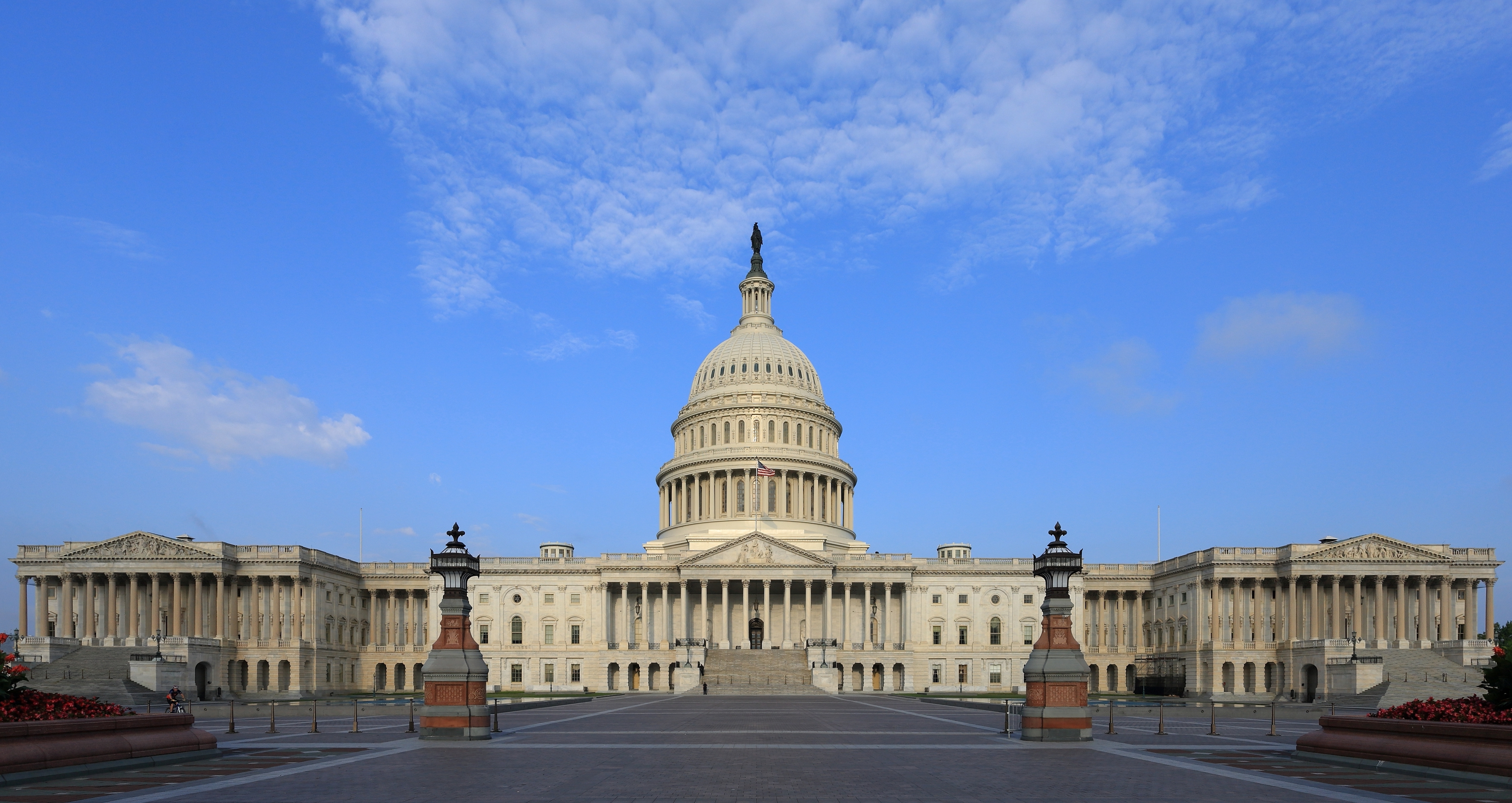
The Democratic Senatorial Campaign Committee borrowed $15 million in early October to keep pace with a surge of spending across an expanding map of competitive Senate races, according to a report the committee filed with the Federal Election Commission on Oct. 22, 2026. The loan leaves the Democrats' Senate campaign arm carrying debt for the first time this cycle, after it reported no outstanding loans at the close of September.
The move mirrors one made weeks earlier by the National Republican Senatorial Committee, which took out a $20 million loan in September, according to the committee's own FEC filings. Both parties' Senate campaign committees now enter the final stretch before the Nov. 3 midterms carrying tens of millions of dollars in debt even as they report healthy fundraising totals, a sign of how aggressively each side is spending on what strategists in both parties describe as an unusually wide battlefield.
What the filings show
The Democratic committee's summary financial disclosure, covering the Oct. 1-14 reporting period, shows the committee raised just over $28 million and spent roughly $32.3 million over those two weeks, outspending its intake by more than $4 million. It began the period with nearly $24.9 million on hand and ended it with $20.7 million, while reporting $15 million in debts owed by the committee and none owed to it. The underlying Form 3X filing shows the committee has raised $136.5 million for the cycle through mid-October.
The Republican committee's cash position looks similar in scale but different in trajectory. It raised $9.9 million over the same two weeks, according to Roll Call's review of the filings, and ended the period with $25.2 million on hand against $20 million in debt, figures that match the committee's own FEC disclosures. Unlike the Democratic loan, which appears for the first time in this reporting period, the Republican committee's debt was already on the books from its September borrowing.
A familiar late-cycle tactic
Neither loan is unusual by historical standards. Party committees routinely borrow against future fundraising in the closing weeks of an election cycle to cover advertising reservations and get-out-the-vote spending that outpaces incoming cash. The Democratic committee took out a $20 million loan at a similar point in the 2024 cycle, according to Political Wire's report, which cited Politico's initial account of the new loan.
What distinguishes this cycle, according to the filings, is the gap in how the two committees are deploying money. Roll Call's analysis found the Democratic committee funneled roughly half of its October spending into coordinated expenditures with campaigns in ten states, led by $4.7 million in Ohio and more than $1 million apiece in Iowa, Michigan, Kansas, Alaska and Maine, with additional money flowing to Texas, Georgia, North Carolina and New Hampshire. The Republican committee's coordinated spending over the same stretch was a fraction of that: roughly $4.8 million total, according to reporting in the Epoch Times on the same filings, compared with the Democratic committee's roughly $16 million.
Who is affected
The disparity in party-committee spending comes against a backdrop of wide swings in individual candidates' fundraising. Per the filings:
- In Texas, Democrat James Talarico raised $17.6 million over the two weeks, against $2.8 million for Republican incumbent Ken Paxton, though heavy spending left Talarico's cash on hand down to $9.9 million from $14.6 million.
- In Georgia, Democratic Sen. Jon Ossoff has raised $130.2 million for the cycle and had $15.1 million on hand as of Oct. 14.
- In Maine, Democrat Troy Jackson outraised Republican Sen. Susan Collins nearly five to one over the period, $5.2 million to $1.1 million, yet ended with less cash on hand than Collins, $1.6 million to her $2.7 million, and carries about $700,000 in debt that Collins does not have.
- In Ohio and Michigan, Democratic Senate candidates Sherrod Brown and Abdul El-Sayed raised $6.7 million and $8.7 million, respectively, over the same stretch.
Roll Call reported that all 14 Democratic candidates in competitive Senate races raised more than $1 million over the two-week period, compared with six Republican candidates. The pattern has held through most of the cycle: Democratic candidates have generally outraised their Republican opponents at the individual level, while Republican-aligned outside groups retain a large cash advantage, with the Senate Leadership Fund reporting roughly $88 million on hand as of mid-October against the Senate Majority PAC's $32.7 million.
Reaction and what's next
An NRSC spokeswoman, Joanna Rodriguez, said the committee intended to deploy every resource available to protect the Republican majority through Election Day, according to the Epoch Times' account of the filings; neither committee's public statements addressed the loans directly in material reviewed for this report.
Republicans currently hold 53 Senate seats to Democrats' 47, counting two independents who caucus with Democrats. Of the 35 seats on the ballot Nov. 3, Democrats need a net gain of four to take control of the chamber, a math that keeps both parties' spending concentrated on a relatively short list of competitive states, including Maine, Ohio, Texas, Michigan, Georgia and North Carolina. The next scheduled FEC disclosures covering the campaigns' final full weeks will be due after Election Day, meaning the Oct. 22 filings are the last full public accounting of either side's financial position before voters go to the polls.

Trump signs executive order aimed at cutting mortgage and housing costs

Obama and Trump to campaign in Michigan on back-to-back days in race that could decide the Senate
Judge blocks DHS from questioning suspected U.S. citizens in nine-state voter sweep
