Senate Democrats split over Schumer's bid to lead the majority
Sanders, Slotkin and a major union are among those breaking publicly with Chuck Schumer just weeks before Senate Democrats vote on who leads their new majority.
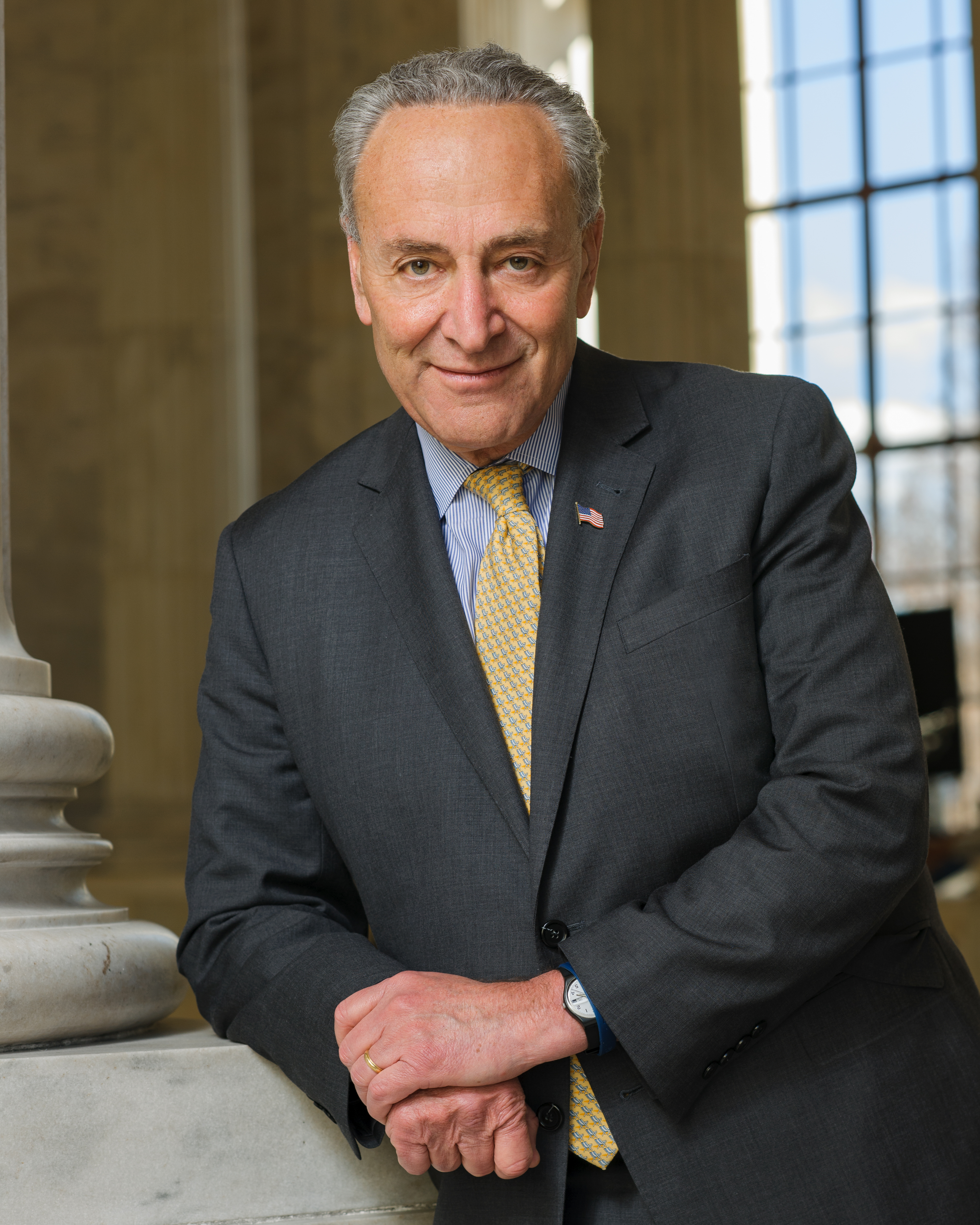
Fresh off reclaiming the Senate majority in last week's midterm elections, Democrats are now engaged in an open fight over who should lead them, with Senate Minority Leader Chuck Schumer facing public opposition from incumbent senators, incoming freshmen and a major labor union just weeks before the caucus votes on its next leader.
At a Tuesday news conference, Senator Bernie Sanders, the Vermont independent who caucuses with Democrats, said he will not back Schumer for another term. "The time is now for change, and I will not be supporting Chuck to be reelected as the Democratic leader," Sanders said, adding later that he did not believe Schumer had been leading the party toward "an economy that works for all, not just the people on top." Senator Elissa Slotkin of Michigan, appearing at the same event, said she was "seeking change" and that Democrats should withhold a quorum to block a leadership vote if Schumer runs unopposed. "Whoever wants my vote is gonna have to show me a concrete plan that's definitively different," she said.
The remarks, reported by Newsweek, mark the most direct public break yet between Schumer and members of his own conference since Democrats flipped seven Senate seats on Nov. 3, a result that put them on track to hold between 54 and 56 seats depending on the outcome of still-contested races in Mississippi and Alaska. Senate Democrats are scheduled to meet behind closed doors in early December to elect their leadership team by secret ballot, ahead of the new Congress convening on Jan. 3, 2027.
A widening list of holdouts
Schumer, who has led Senate Democrats since 2017, needs only a simple majority of the caucus to win another term, and he has said repeatedly that he expects to prevail. "I'm confident I will be elected majority leader," Schumer said this week. "And our caucus is really united on bringing down costs, on ending the corruption, on ending the chaos."
But the list of senators declining to commit to him has grown steadily since Election Day. Senators Raphael Warnock of Georgia and Mark Warner of Virginia have both withheld support without formally calling for a change in leadership; Warnock told CNN, "I think we're at an inflection point in our country," while Warner credited Schumer with raising "an enormous" amount of campaign money even as he declined to back him. Senator Chris Van Hollen of Maryland, who has been floated by some colleagues as a potential challenger, has called for the caucus to hold a full debate before any vote. "There should be no coronation of the next Democratic leader," Van Hollen said, according to Newsweek. "Nobody should get a blank check without a full understanding of the caucus as to where we're going to go."
Several Democrats elected for the first time this month have gone further, saying outright they will not vote for Schumer. Those include Senators-elect Adam Hamilton of Kansas, Troy Jackson of Maine, Annie Andrews of South Carolina, Peggy Flanagan of Minnesota and Abdul El-Sayed of Michigan, several of whom ran as sharper critics of party leadership than the candidates Schumer's campaign arm had originally recruited. Representative Alexandria Ocasio-Cortez of New York, who does not have a vote in the Senate race, said the frustration "is seen in a lot of places" and that how the chamber resolves it "is up to their decision," according to the same report.
Labor weighs in
Adding to the pressure, the International Association of Machinists and Aerospace Workers, a union representing roughly 600,000 members at companies including Boeing, Lockheed Martin and United Airlines, sent an open letter to the full Senate Democratic Caucus on Monday urging Schumer "not to seek another term." IAM International President Brian Bryant told HuffPost the union's executive council had based its position on conversations with members during the campaign. "There comes a time when people need to step aside for the betterment of the country," Bryant said, in remarks reported Wednesday by HuffPost. Bryant added that he would like to see other unions weigh in as well; the AFL-CIO, the federation that includes the IAM, has not taken a public position on Schumer's bid.
Not every senator has broken with Schumer. New York Senator Kirsten Gillibrand, Rhode Island Senator Sheldon Whitehouse and Ohio Senator-elect Sherrod Brown have all publicly backed him. Whitehouse said the midterm results "certainly justifies another term" for the incumbent leader. Connecticut Senator Richard Blumenthal, while calling for "new energy and ideas" in a conversation with Fox News, said he still expects Schumer to be reelected because no rival has formally entered the race.
What the fight is really about
The dispute reflects longer-running tensions inside the party over how aggressively to confront President Trump's administration. Critics have pointed to Schumer's vote to advance a Republican-written funding bill during last year's government shutdown fight and to his handling of several Trump Cabinet confirmations as evidence he has been too accommodating. His allies counter that Senate Democrats' expanded majority this year, built in part on candidates Schumer personally recruited and helped fund in states including North Carolina, Ohio and Iowa, is itself a vindication of his strategy. Schumer's recruits in Maine and Michigan, by contrast, lost their primaries to more progressive candidates who have since declined to commit to him.
"There should be no coronation of the next Democratic leader. Nobody should get a blank check without a full understanding of the caucus as to where we're going to go."
No senator has yet formally announced a challenge to Schumer. Van Hollen has said he is in "listening mode" and has not ruled out a bid, while Schumer's office has maintained that he already has commitments from a majority of the incoming caucus. Because the vote will be held by secret ballot, the public tally of senators withholding support may not reflect how the closed-door vote ultimately unfolds.
What's next
The outcome will shape how Senate Democrats approach the final two years of Trump's term, including confirmation fights, spending bills and any further efforts to use the chamber's rules to check the administration. Senate Democrats are expected to hold their leadership elections in early December, before the new Congress — in which Democrats will control the chamber for the first time since 2025 — is sworn in on Jan. 3. Until then, both Schumer's supporters and his critics are expected to continue making their case directly to the incoming class of senators, several of whom have not yet said publicly which way they will vote.

White House warns Democrats that oversight subpoenas could be investigated as crimes

House votes to shelve impeachment effort against Defense Secretary Hegseth

Kansas governor's race hangs on hand count as state runs its largest-ever election audit
