Supreme Court weighs whether Air Force must study impact of bombing Guam beach
Justices heard arguments Wednesday over whether a 1976 hazardous-waste law lets the Air Force skip a full environmental review before continuing to detonate munitions on a Guam shoreline that sits above the aquifer supplying most of the territory's drinking water.
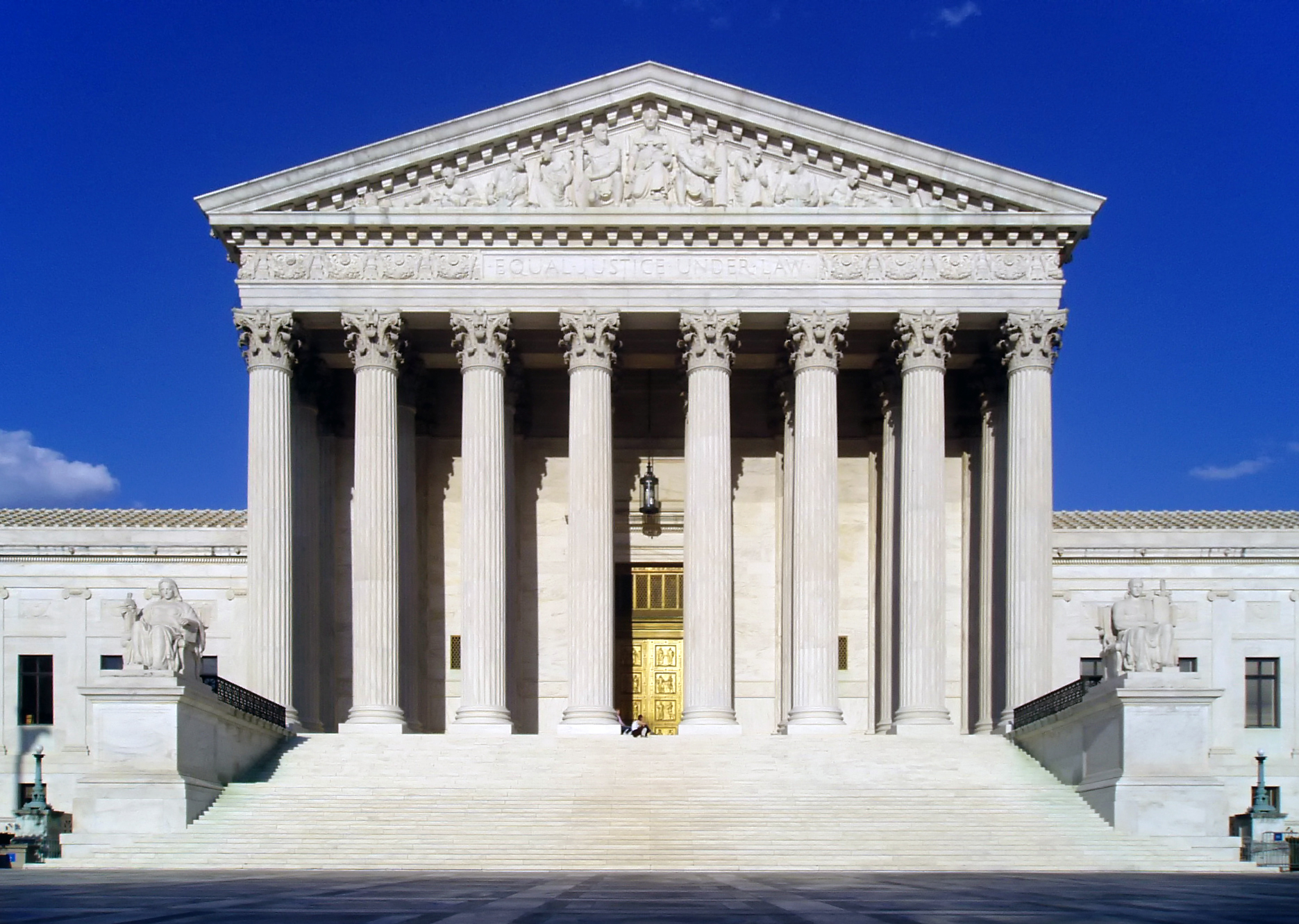
The Supreme Court heard oral argument Wednesday over whether the Air Force must complete a full environmental review before continuing to destroy surplus and unstable munitions by detonating them in the open air on a Guam beach that sits atop an aquifer supplying most of the territory's drinking water. The case does not turn on whether the practice is wise, but on a narrower and more technical question: whether a 1976 hazardous-waste law lets the military sidestep the broader environmental-review requirements that apply to most other federal projects.
The dispute, Department of the Air Force v. Prutehi Guåhan, No. 25-579, was one of several cases the justices set down for argument on the Court's October sitting. Sopan Joshi, an assistant to the solicitor general, argued for the Air Force, while Caroline A. Flynn argued for Prutehi Guåhan, a Guam-based group represented by the environmental law organization Earthjustice, according to the court's electronic docket. No recording of the justices' questioning had been made public as of Thursday morning.
A Permit Stuck in Place Since 2021
The Air Force has disposed of ordnance, propellants and other hazardous munitions at Tarague Beach, next to Andersen Air Force Base in northern Guam, under open-burning and open-detonation permits dating to 1982. Open burning stopped two decades ago, but open-air detonation has continued. In May 2021, the Air Force asked Guam's territorial Environmental Protection Agency to renew its hazardous-waste permit for the site. Guam's EPA has never granted or denied that request; five years later, the Air Force is still operating under the terms of its expired permit while the renewal sits pending, a detail central to the legal fight now before the justices.
Both sides agree on the basic geography at stake. Earthjustice says the shallow aquifer beneath the detonation site supplies drinking water to more than 80 percent of Guam's population, and that contaminants from detonation, including compounds linked to cancer and neurological harm, can migrate into groundwater and the ocean. A 2019 report from the National Academies of Sciences, Engineering, and Medicine concluded that alternative disposal technologies exist for nearly all of the munitions the military currently treats through open burning or detonation, and that those alternatives carry lower emissions and less public-health risk, a finding both Earthjustice's statement on the case and the group's underlying lawsuit cite repeatedly.
How a Permit Application Became a Supreme Court Case
Prutehi Guåhan sued the Air Force in federal court in Guam in January 2022, arguing the service was required to prepare a detailed environmental impact statement under the National Environmental Policy Act before seeking to keep detonating munitions at Tarague Beach. The district court dismissed the case, ruling the suit was premature because Guam's EPA had not yet acted on the permit and that the Air Force owed no NEPA duty at that stage. A divided three-judge panel of the U.S. Court of Appeals for the Ninth Circuit reversed in February 2025, reviving the lawsuit and holding, as Earthjustice summarized it in a statement after the ruling, that the Air Force cannot avoid environmental review simply because the activity also requires a separate hazardous-waste permit.
The Trump administration petitioned the Supreme Court to take up the case, and the justices agreed in March to hear it. The government's briefs, filed by the solicitor general's office, argue two things: that a pending permit-renewal application is not yet "final agency action" subject to judicial review under the Administrative Procedure Act, since Guam's EPA has not ruled on it, and that the Resource Conservation and Recovery Act's own detailed permitting process for hazardous waste effectively substitutes for NEPA's general review requirements. The solicitor general's merits brief warns that the Ninth Circuit's ruling, if left standing, would have consequences well beyond Guam for how federal agencies handle hazardous-waste permitting nationwide. Prutehi Guåhan counters that the Air Force has effectively already decided, irreversibly, to keep detonating at Tarague Beach, making that decision reviewable now, and that Congress would have had to say explicitly that RCRA displaces NEPA if that were its intent, which the statute does not do.
A Guam Community, and a Broader Fight Over Oversight
The immediate parties affected are residents of a U.S. territory home to roughly 150,000 people, many of them Indigenous CHamoru, who already live alongside a military footprint that covers close to a quarter of the island's land. Nearly 10 percent of Guam's population died under Japanese occupation during World War II, and the territory has one of the highest rates of military enlistment of any U.S. jurisdiction, a history invoked repeatedly in filings and commentary around the case. Endangered green sea turtles nest on Tarague Beach and migratory seabirds use the shoreline, concerns raised in the environmental groups' briefs.
The case has also drawn a wider coalition of outside interests. According to the docket, the U.S. Chamber of Commerce and a 21-state coalition led by West Virginia filed briefs supporting the Air Force, generally warning against an expansive reading of NEPA that could slow federal permitting decisions. On the other side, a coalition of community-based organizations in Guam, the Virgin Islands Bar Association, the Guam law firm Blue Ocean Law, and several members of Congress, including Rep. Jared Huffman of California, filed briefs backing Prutehi Guåhan. An essay published alongside SCOTUSblog's coverage of the case argued that the dispute also reflects a longstanding asymmetry facing U.S. territories, whose residents have no vote for president or senator, even as military activity there continues largely without the same consultation requirements applied elsewhere.
"We continue to carry many scars of war and war games that remain in our landscape, our bodies, and in our hearts and minds," said Monaeka Flores of Prutehi Guåhan, after the Supreme Court agreed to take up the Air Force's appeal.
What the Two Sides Are Saying
Earthjustice, representing Prutehi Guåhan, has framed the case as a test of whether federal law lets the Air Force "conduct less environmental review and community consultation" when disposing of hazardous munitions on a sensitive shoreline than it would for building roads or other facilities, a framing laid out in a preview of the argument published by SCOTUSblog. David Henkin, an Earthjustice attorney on the case, has said federal law gives the group's clients a path to force the Air Force "to take a hard look" at the consequences of its disposal method and at less destructive alternatives before deciding to proceed.
The Air Force and the Justice Department have made their case almost entirely through written briefs rather than public statements, consistent with the government's general practice in pending litigation; neither has issued a public comment responding directly to Earthjustice's characterization of the health risks. In its filings, the government maintains that its legal position is narrower than its critics suggest: it is not arguing that the detonations are exempt from all environmental law, only that Guam's territorial hazardous-waste permitting process, rather than a separate NEPA review, is the appropriate vehicle for assessing them, and that the Ninth Circuit's contrary reading would force agencies into duplicate, overlapping environmental processes across the country.
What Happens Next
The justices typically take several months to issue opinions in argued cases, and a ruling is expected before the Court's current term ends in late June 2027. Whatever the Court decides on the "final agency action" question could resolve the case without reaching the NEPA merits; if the justices instead side with Prutehi Guåhan on both questions, the case would return to the Ninth Circuit and then the district court in Guam, where the group would get the chance to argue for an injunction and a full environmental impact statement. If the Court sides with the Air Force, the service could continue to operate under its 2021 renewal application, and effectively its expired permit, without having to prepare the broader environmental review the group has sought since 2022. In the meantime, Air Force detonations at Tarague Beach are expected to continue under the existing permit terms while the case remains pending, as they have throughout the litigation.

DNC and Common Cause sue Trump administration over taxpayer-funded ad campaign

Rubio Declines to Address Guilfoyle Misconduct Allegations

Trump pitches his Florida golf club as a future "presidential retreat"
