Amoeba Found Dividing at Record 145-Degree Heat, Redrawing Limits of Complex Life
A newly described species pulled from a California hot spring completes cell division at 63 degrees Celsius, forcing biologists to raise the known ceiling for eukaryotic life and giving NASA a fresh benchmark for habitability elsewhere in the solar system.
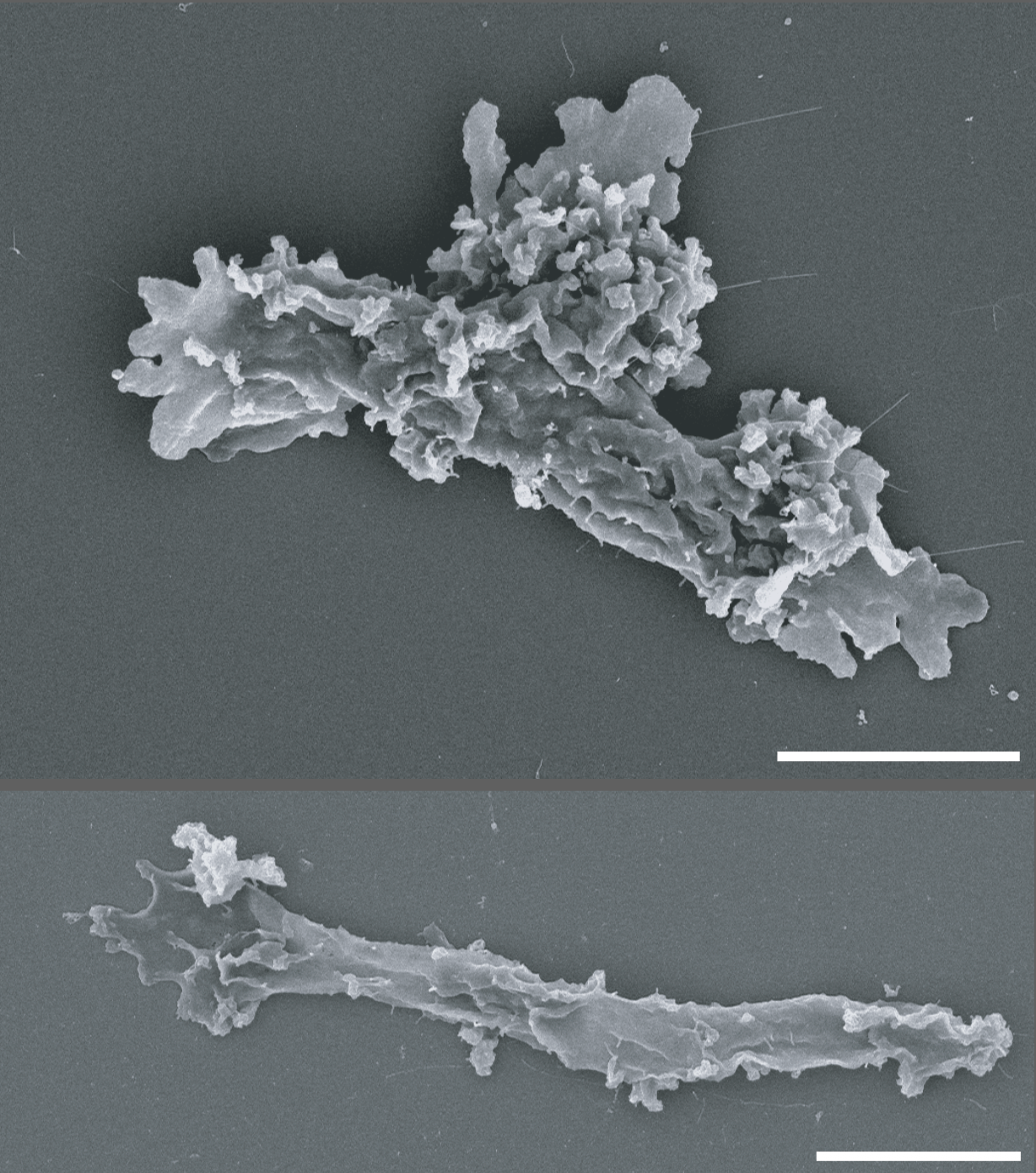
A single-celled organism pulled from a scalding creek in Northern California has completed cell division at a higher temperature than any other complex cell ever recorded, a discovery that biologists say forces a rewrite of long-held assumptions about how hot life can get. Researchers at Syracuse University described the newly identified species, an amoeba named Incendiamoeba cascadensis, in a paper published this week in the journal Cell, with the fieldwork supported by NASA-funded astrobiology research.
Until now, no eukaryote — the broad category of complex, nucleus-bearing cells that includes everything from amoebas to animals — had been shown to divide above roughly 60 degrees Celsius (140 degrees Fahrenheit). The new amoeba, nicknamed the "fire amoeba," breaks that mark by several degrees, a difference that researchers say is biologically significant because it had been treated for decades as close to a hard physical limit.
The numbers
I. cascadensis completes full cell division, including visible mitosis, at 63 degrees Celsius (145 degrees Fahrenheit). It remains motile and continues hunting for food at 64 degrees Celsius (147 degrees Fahrenheit). Under brief exposure to water as hot as 70 degrees Celsius (158 degrees Fahrenheit), the organism survives by retracting into a protective, cyst-like outer coat, according to the Syracuse team's findings; at 80 degrees Celsius (176 degrees Fahrenheit), it dies. The previous record for a heat-loving amoeba, held by a species called Echinamoeba thermarum, topped out closer to 57 degrees Celsius. Researchers collected samples from geothermal streams in the park over roughly three years, from 2023 through 2025, in water ranging from about 47 to 64 degrees Celsius, before isolating and culturing the new species in the lab.
How researchers found it
The amoeba turned up in a tributary of Hot Springs Creek inside Lassen Volcanic National Park's hydrothermal areas, a landscape of boiling pools, mud pots and steam vents in Northern California fed by a body of hot rock beneath Lassen Peak. Angela Oliverio, an assistant professor of biology at Syracuse University and the paper's corresponding author, and H. Beryl Rappaport, a doctoral student in Oliverio's lab and the study's first author, led the effort to sample the creek repeatedly and then coax the organism to survive, and eventually divide, at progressively higher laboratory temperatures. Genetic sequencing and protein analysis followed, turning up extra genes tied to protein maintenance and DNA repair, along with proteins carrying an unusually high positive surface charge that appears to help them keep their shape under heat stress. Those adaptations echo strategies already documented in heat-loving bacteria and archaea, evidence, the researchers say, of convergent evolution toward the same molecular solutions in organisms that are otherwise only distantly related. Related heat-tolerant amoebae have also been documented in geothermal features in New Zealand and in Yellowstone National Park, suggesting the fire amoeba's tolerance is not a one-off fluke of a single Californian creek.
The finding matters most immediately to microbiologists and astrobiologists who study the outer edges of where life can exist on Earth, since those boundaries are used to calibrate the search for life elsewhere in the solar system. It also has a bearing on how NASA and other space agencies define "habitable" conditions when assessing icy moons, geothermally active planets and other environments once assumed too hot or too extreme for anything but the simplest microbes. For that reason, the study's authors and NASA both frame the result as relevant well beyond microbiology departments, touching planetary scientists and mission planners who set the temperature thresholds used in habitability models.
Reaction
Oliverio said the discovery reshapes what biologists thought was achievable for a complex cell. "This finding pushes the bounds of what we thought was possible, which is incredibly exciting," she said in a statement distributed by Syracuse University's College of Arts and Sciences.
"We need to rethink what's possible for a eukaryotic cell in a significant way."
Rappaport, who spent three summers sampling the park's hot springs, pointed to the deeper pattern behind the result. "Even though these organisms are so different, there's convergence in how protein properties are selected for stability under high temperatures," she said. She cautioned that heat tolerance alone does not make an environment livable: "It's not just about temperature. An environment also needs the right acidity, oxygen levels, pressure, water, and food." Alison Olcott, a program scientist for exobiology at NASA Headquarters who was not part of the study team, said the result feeds directly into the agency's search for life beyond Earth. "This information helps guide NASA's search for life as it expands the range of conditions we think life could potentially be inhabiting elsewhere," she said, according to NASA's release. Outlets including NPR and Phys.org also covered the publication this week, both noting that the finding overturns a long-standing assumption that cell membranes and internal machinery in nucleus-bearing organisms simply could not hold together much above 60 degrees Celsius.
What happens next
The Syracuse team says it plans further genomic and biochemical work to pin down exactly which proteins and repair mechanisms allow I. cascadensis to keep functioning as its cellular machinery approaches temperatures that would denature proteins in most other eukaryotes. Researchers also intend to survey other geothermal sites for related organisms, building on the scattered sightings already reported in New Zealand and Yellowstone, to determine whether extreme heat tolerance among amoebae is more widespread than previously assumed. For NASA, the immediate use is narrower but consequential: mission scientists who model habitability on worlds such as Jupiter's moon Europa or Saturn's moon Enceladus, where subsurface oceans meet hydrothermal vents, now have a documented terrestrial precedent for complex cellular life persisting closer to the boiling point than textbooks allowed. The paper itself, now available through Cell's website, is expected to draw scrutiny and follow-up experiments from other extremophile researchers in the coming months, the usual next stage for a finding that resets a widely cited biological limit.
Rappaport, H.B., Oliverio, A., et al., "A geothermal amoeba sets a new upper temperature limit for eukaryotes," Cell (2026), doi.org/10.1016/j.cell.2026.08.043.
NASA Science, "NASA-Funded Research Finds Complex Life Defying Record Heat," Sept. 22, 2026.
Syracuse University College of Arts and Sciences, press statement, Sept. 2026.
NPR and Phys.org, coverage published Sept. 22, 2026.

Japanese Researchers Trace Memory's Molecular Switch to a Single Protein

Stanford Physicists Watch Sound Take Its First Quantum Jump
Experimental Blood Test Catches Early Pancreatic Cancer 87% of the Time