Arctic sea ice melt season stops lengthening after decades of growth, NASA-led study finds
A 45-year satellite record shows the Arctic melt season grew about 40 days longer since 1979, then unexpectedly leveled off around 2010, even as the region keeps warming nearly four times faster than the global average.
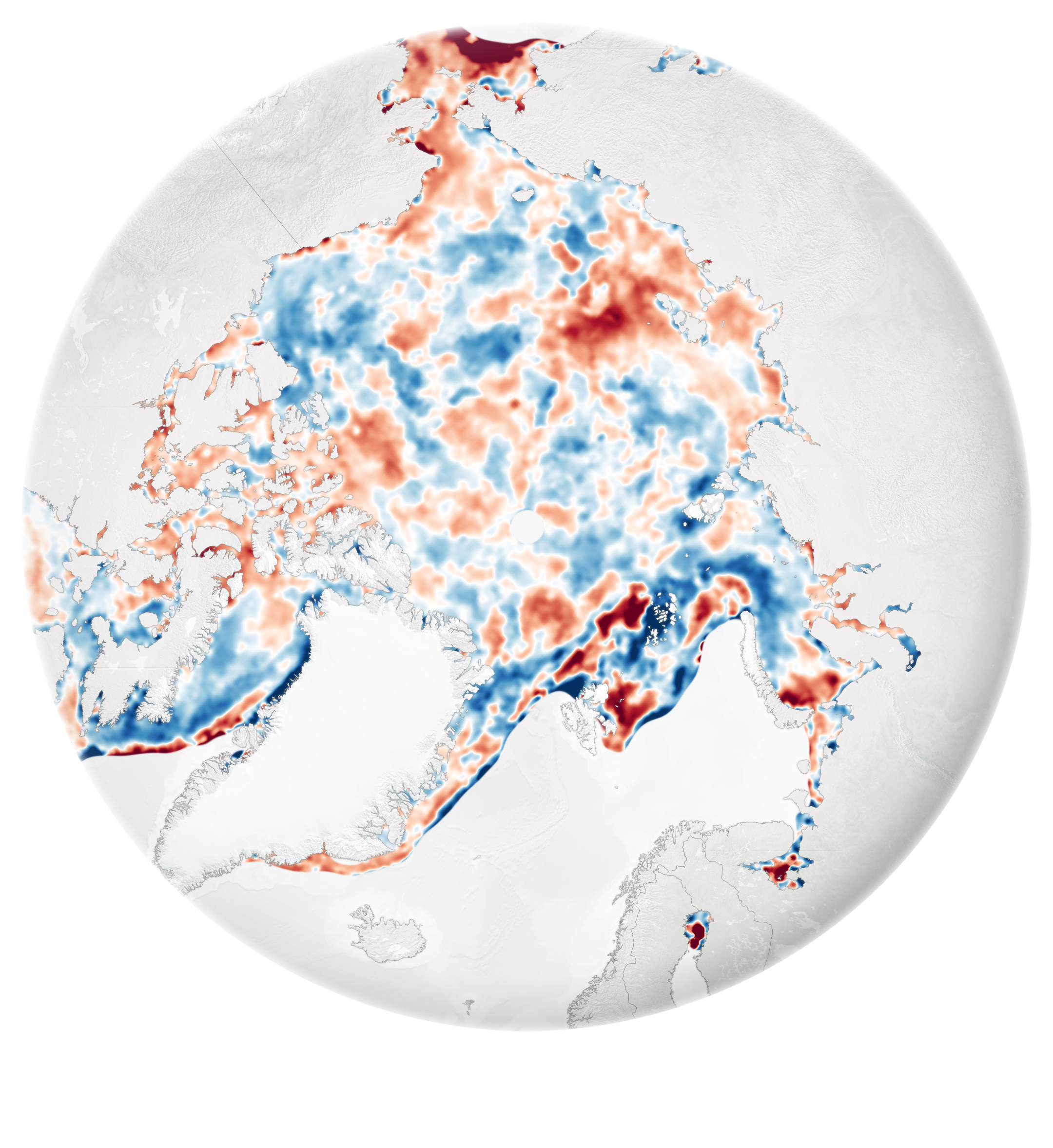
The Arctic sea ice melt season, which grew dramatically longer over the final decades of the twentieth century, has stopped lengthening, according to a NASA-led analysis of 45 years of satellite records. The season is now roughly 40 days longer than it was in 1979, but nearly all of that increase happened before 2010. Since then, the average length has held roughly steady even as the region continues to warm faster than almost anywhere else on Earth.
The study, led by ice scientist Linette Boisvert of NASA's Goddard Space Flight Center, was published this week in the journal Communications Earth & Environment, under the title "A recent stabilization in the lengthening of the Arctic sea ice melt season into a highly variable regime." The finding does not suggest Arctic warming has paused. Instead, the researchers argue that one specific measure of that warming, the number of days each year that sea ice is actively melting, has entered what they describe as a more variable but no longer steadily expanding phase.
Four decades of satellite records
Boisvert and her co-authors, Chelsea Parker, Elina Valkonen and Rachel Tilling, used passive microwave data collected continuously since 1979 by the DMSP SSM/I and SSMIS sensors and the earlier Nimbus-7 SMMR instrument to pinpoint, for each year and location across the Arctic Ocean, when spring melt began and when autumn freeze-up resumed. That record, described in detail on NASA's Earth Observatory, let the team separate the melt season's overall length from the timing of its two endpoints.
The distinction turned out to matter. Most of the lengthening recorded before 2010 traced to ice forming later in the fall, not to melt beginning earlier in the spring. In some regions during the 2000s, melt season length grew by as much as five days a year. After 2010, the trend essentially flattened: the melt season across the Arctic has averaged about 108 days, fluctuating by roughly plus or minus 11 days from one year to the next rather than showing a consistent upward or downward trajectory.
Thinner ice, more variable weather
The researchers' explanation ties the two eras together through energy balance rather than contradiction. During the earlier period of rapid decline, shrinking summer ice cover exposed increasing areas of dark, open ocean water, which absorbs far more solar radiation than reflective ice. That extra stored heat delayed the autumn freeze, stretching the melt season year after year. As the Arctic's thick, multiyear ice has given way to thinner, more seasonal ice, the system has become less predictable and more sensitive to short-term atmospheric conditions, including cloud cover, storm tracks and wind patterns, than to the steady decline in ice extent alone.
"Melt season length is much more dependent on atmospheric effects. They seem to be playing a bigger role because the ice is generally thinner and more vulnerable to begin with," said Linette Boisvert, the study's lead author.
She noted that the loss of older, thicker ice has made the system noisier from year to year. Previously, more multiyear ice survived each summer, damping variability; now, with thinner ice covering more of the Arctic Ocean, small shifts in cloud patterns or storm frequency can swing the freeze-up date substantially, the researchers found.
A warming Arctic, an uneven picture
The Arctic as a whole continues to warm at close to four times the global average rate, and the melt season plateau does not represent a reversal of that trend. Sea ice extent, a related but distinct measurement of how much ocean surface is ice-covered rather than how long melting lasts, remains on a long-term downward path. The National Snow and Ice Data Center reported that this year's summer minimum, reached in mid-September, tied for the tenth-lowest in the nearly 48-year satellite record, part of a run in which every one of the past twenty years ranks among the lowest ever recorded.
The findings matter to researchers who build climate and sea ice projections, since many earlier models assumed the melt season would keep lengthening in step with warming. They also carry practical stakes for Arctic shipping operators, coastal communities in Alaska, Canada, Greenland and Russia that plan around the ice-free season, and biologists tracking species such as polar bears and ice-dependent seals whose hunting and breeding cycles are tied to when ice forms and disappears. A melt season that is long and variable, rather than long and steadily lengthening, complicates seasonal forecasting for all of those groups.
What happens next
Boisvert and her colleagues describe the plateau as a possible transition into what they call a "highly variable regime" rather than a settled new normal, and they caution against reading it as a sign that Arctic ice loss has stabilized more broadly. Thick, multiyear ice still persists north of Greenland and across the Canadian Arctic Archipelago; continued thinning there, the authors write, could reintroduce the kind of rapid, sustained lengthening seen before 2010. The team plans to keep extending the satellite melt-onset and freeze-up record and to incorporate atmospheric variables, such as cloud cover and storm frequency, more directly into future projections of how the melt season will behave.
Outside coverage of the study, including from ScienceDaily and Phys.org, has framed the result as a reminder that Arctic change does not proceed on a single, uniform curve. Melt season length, ice extent and ice thickness are related but separate indicators, and the new analysis shows at least one of them can level off for more than a decade even as the region's underlying warming continues unabated.

CERN Physicists Find Quantum Entanglement in Heavy Z Bosons

NASA Advances New $1.2 Billion Infrared Telescope Toward 2033 Launch

Japanese Researchers Trace Memory's Molecular Switch to a Single Protein