Asian Games open in Nagoya with fanfare — and a cruise-ship housing crisis
Emperor Naruhito declared the 20th Asian Games open Friday before 11,000 athletes from 45 nations, but skipping a traditional athletes' village has left thousands bunking on a docked cruise liner and in container huts.
Emperor Naruhito formally opened the 20th Asian Games in Nagoya on Friday, sending more than 11,000 athletes from 45 nations into two weeks of competition — even as organizers scramble to manage an accommodation crisis created by their decision to skip building a traditional athletes' village.
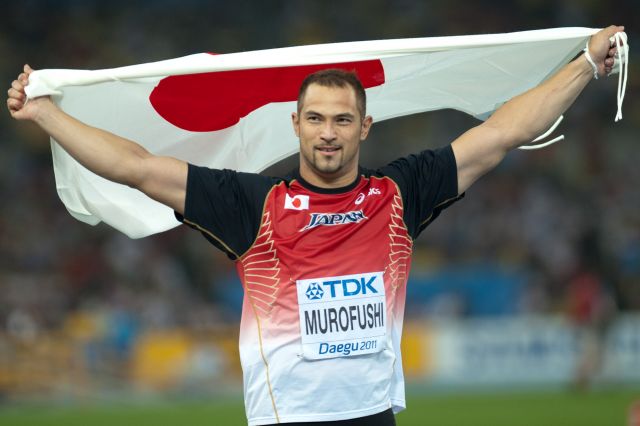
Father and son former Asian Games hammer-throw champions Shigenobu and Koji Murofushi jointly lit the Games cauldron inside Nagoya's Mizuho Park Athletic Stadium, under a ceremony built around a heart-shaped main stage that mixed a Kabuki-style set with an industrial robot arm, a nod to Aichi Prefecture's manufacturing base as the home of Toyota. Competition runs through Oct. 4, spanning 43 sports and 469 events across 54 venues, many of them repurposed from the Tokyo 2020 Olympics, which organizers have cited as a way to hold down costs for a Games roughly double the size of a typical Olympics.
That cost-consciousness runs through nearly every part of these Games, and nowhere more visibly than in how organizers chose to house the athletes.
What happened
Rather than build a dedicated athletes' village, the standard approach at a multi-sport Games of this scale, organizers opted to lodge competitors in local hotels, temporary container-style huts and aboard a docked cruise ship, in an effort to hold down costs. That plan was already tight when it was built around an expected 15,000 athletes and officials; it has since had to absorb roughly 17,000 after newly added sports, including surfing, freestyle BMX, mixed martial arts, padel and teqball, expanded the field. The Italian cruise liner Costa Serena, moored in Nagoya's port, is now housing about 4,000 athletes and officials at a time, rotating delegations in and out as their events conclude, while roughly 2,000 more are in newly built container-style huts.
The numbers
The strain has produced a string of specific complaints. South Korea's basketball delegation said beds in its Garden Pier containers are too small for its players. "Athletes who are over two metres tall cannot even stretch their legs out on the beds," said Jung Jae-yong, vice president of the Korea Basketball Association, in comments carried by Al Jazeera. "The organisers have still not said anything." Japan's own delegation has flagged a more serious logistical problem: "There have been cases where coaches, team officials and athletes have been assigned to the same room," said Hisashi Mizutori, Japan's deputy chef de mission, in the same report. The Philippine Olympic Committee said it had to shift some of its staff elsewhere entirely. "Some officials, like coaches, were moved to different hotels and Airbnb," said its president, Abraham Tolentino.
How we got here
Record rainfall in the week before the opening ceremony briefly forced the evacuation of some athlete housing, adding to the pressure on an already strained system. The organizing committee, chaired by Aichi Prefecture Governor Hideaki Omura, has defended the arrangement, saying it consulted with delegations before finalizing it. "We explained everything to them and had them take a look around, and they said it looked functional and good," Omura told Al Jazeera. "If there are different opinions, then we will respond to them appropriately."
"There have been cases where coaches, team officials and athletes have been assigned to the same room," said Hisashi Mizutori, Japan's deputy chef de mission for the Games.
Who is affected, and what's next
India's cricket federation had to independently book 18 extra hotel rooms, and was seeking 10 more, after the official housing allocation fell short, according to reporting compiled by the National ahead of Friday's opening. Japan's own cricket association, by contrast, said its teams were being placed in conventional hotel accommodation rather than the container housing or cruise ship, an inconsistency delegations say has made it hard to know in advance what to expect on arrival. Political friction has layered onto the logistical one: Taiwan's delegation briefly boycotted its own welcome ceremony after its sports minister was blocked from attending, and South Korea's field hockey team protested after North Korea's anthem was mistakenly played at one of its events instead of South Korea's. The official Games organizing committee and the Olympic Council of Asia, which sanctions the Games, have not announced any change to the venue or housing plan for the remainder of the competition.
The first gold medals are expected to be awarded Saturday, with triathlon among the earliest finals, and swimming events getting underway at venues in Tokyo that are serving as a co-host city for select sports. Organizers say they are resolving individual room complaints as they arise, even as delegations continue to rotate through the cruise ship and container housing for the remainder of the two-week Games. A separate dispatch from opening day, tracking the record field of competitors against a typhoon watch now hanging over the first week of events, is available from another outlet covering the Games.
The accommodation strategy is a departure from recent editions of the Games. Hangzhou, which hosted in 2023, built a purpose-made athletes' village with more than 30 residential buildings; Jakarta-Palembang in 2018 likewise relied on a dedicated village complex. Nagoya's organizers have instead argued that reusing Tokyo 2020's Olympic infrastructure and leaning on commercial hotels and a chartered cruise ship will leave a smaller, less expensive footprint once the Games end — a trade-off that is now playing out in real time as delegations arrive and discover the housing does not match what they were told to expect. Whether the approach holds up as the more physically demanding second week of competition begins, with basketball, wrestling and combat sports moving into full swing, is likely to shape how organizers of future editions weigh similar cost-cutting.

Braves clinch playoff berth with three home runs in win over Astros

Aaron Judge lands back on injured list with calf strain days before playoffs

Rhyne Howard sets WNBA 3-point record as Angel Reese notches record 30th double-double in Dream rout
