Adobe names Anil Chakravarthy CEO, ending Shantanu Narayen's 18-year run
Adobe's board named enterprise-software veteran Anil Chakravarthy as the company's next chief executive, succeeding Shantanu Narayen, as investors weigh whether new leadership can defend Adobe's creative-software franchise against a wave of AI competitors.
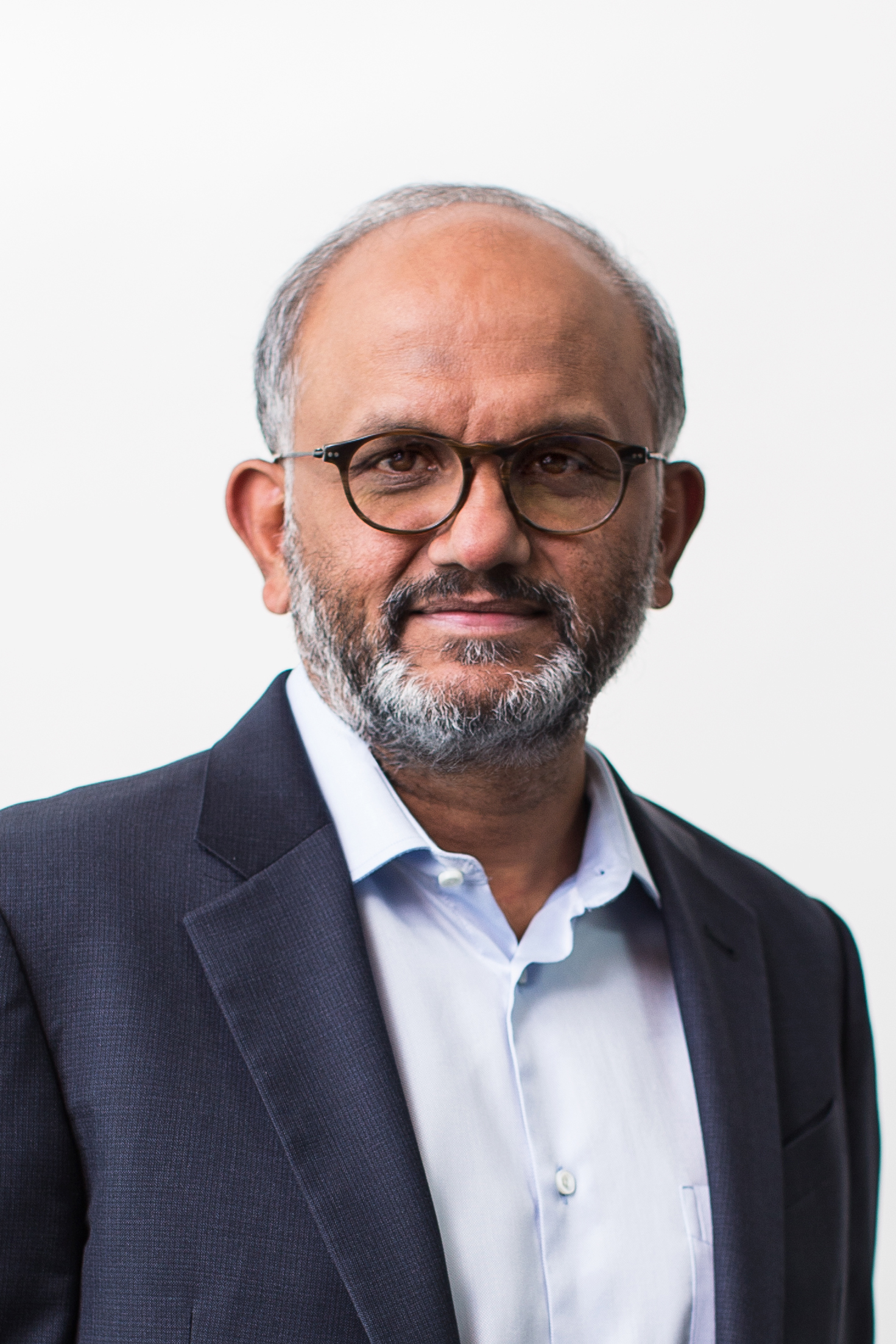
Adobe's board of directors said Thursday that Anil Chakravarthy, the executive who has run the software company's enterprise and customer-experience business since 2020, will become president and chief executive officer on December 1, ending an 18-year run at the top for Shantanu Narayen. Narayen, who has led Adobe since December 2007, will move into the newly created role of executive chair rather than leave the company outright.
The announcement, made in a release on Adobe's newsroom, formalizes a succession plan the company first disclosed in March. Adobe shares slipped about 1 percent in after-hours trading following Thursday's news, a muted reaction compared with the roughly 7 to 8 percent single-day decline the stock suffered in March when Narayen first told the board he intended to step aside once a successor was chosen.
A tenure that rebuilt Adobe, now facing an AI reckoning
Narayen took over as chief executive in December 2007, before the iPhone had an app store and before Adobe had begun its shift from selling boxed copies of Photoshop and Illustrator to the subscription-based Creative Cloud model that now anchors its business. Under his leadership, Adobe's market capitalization grew from roughly $20 billion to more than $240 billion at its peak, and the company crossed $100 billion in market value for the first time in 2018. According to Adobe's filing with the Securities and Exchange Commission disclosing the succession plan, Narayen notified the board of his intention to transition out of the CEO role on March 9, 2026.
That announcement landed awkwardly. It came alongside Adobe's first-quarter results, which beat Wall Street's estimates — revenue reached $6.4 billion, up 12.1 percent year over year, and the company said annualized revenue tied to its artificial-intelligence-first products, led by the Firefly image and video generator, more than tripled from a year earlier. But investors focused instead on what the leadership change signaled about Adobe's ability to defend its creative-software franchise against a wave of generative-AI competitors, including OpenAI, Midjourney and Canva, that can produce images and video from a text prompt without a Creative Cloud subscription. Adobe's stock has fallen in each of the past several years even as revenue kept climbing, a divergence that has become a recurring theme on its earnings calls.
Who takes over, and what changes
Chakravarthy joined Adobe in January 2020 to run its Digital Experience business and was given oversight of worldwide field operations later that year; he was promoted to president of that combined unit, now called Customer Experience Orchestration, in December 2021. He will join Adobe's board when he becomes CEO. Before Adobe, he spent four years as chief executive of Informatica, the cloud data-management company, after joining it in 2013, and earlier held senior roles at Symantec and VeriSign; he holds a bachelor's degree in computer science from the Institute of Technology in Varanasi, India, and a master's and doctorate from MIT.
In the announcement, Narayen praised his successor as "an experienced transformational leader who leads with values, integrity and a deep knowledge of our business." Frank Calderoni, Adobe's lead independent director, said "the board has unanimously determined that Anil is the right leader for Adobe's next chapter of growth." Chakravarthy, for his part, called the appointment an honor, saying he was "deeply honored to have been chosen to lead Adobe during this pivotal moment." Narayen will remain Adobe's board chair and is expected to work alongside Chakravarthy through the transition, focusing in particular on the company's push into agentic AI tools for enterprise customers.
The change affects far more than Adobe's executive suite. The company's more than 30,000 employees now have their first new chief executive in nearly two decades, and enterprise customers who have built workflows around Adobe's Experience Cloud and Creative Cloud platforms will be watching for continuity in product direction. Wall Street analysts, many of whom have grown more cautious on Adobe over the past two years, will be reassessing price targets given Chakravarthy's background running Adobe's business-to-business software arm rather than its consumer-facing creative tools — a background some read as a signal the board wants sharper enterprise execution alongside the AI defense.
The backdrop to the handoff is a creative-software market that looks very different from the one Narayen inherited in 2007. Adobe built its modern business on the assumption that professional-grade image, video and design tools required expensive, specialized software; that assumption has been challenged by a wave of AI products, from OpenAI's video-generation tools to Canva's browser-based design suite to independent image generators such as Midjourney, that let non-specialists produce polished creative work cheaply. Adobe's answer has been to fold generative tools directly into Creative Cloud through Firefly, marketed in part on the promise that its output is trained on licensed content and safe for commercial use, a distinction the company has used to court brand-conscious enterprise customers wary of copyright exposure elsewhere.
What happens next
The transition period between now and December 1 gives Adobe roughly three months to manage the handoff without a change in day-to-day leadership; Narayen remains CEO until then. Chakravarthy inherits a company that has leaned heavily on partnerships to bolster its AI credibility, including a strategic partnership with Nvidia announced in March to build future versions of Firefly and related agentic workflows, and will be judged in the near term on whether that strategy translates into revenue growth that outpaces the AI-native startups nibbling at Adobe's creative-software base. Adobe's next scheduled earnings report will be an early test of whether the market believes the new leadership can arrest the stock's multi-year slide, and analysts are likely to press Chakravarthy on capital allocation, including whether Adobe pursues further acquisitions to accelerate its AI product line.
For now, as early coverage of the appointment noted, Adobe has avoided the kind of activist-investor pressure or board upheaval that has accompanied CEO transitions at some peers, and the succession process — a monthslong, board-run search following Narayen's voluntary March disclosure — was orderly by the standards of large technology companies. Whether that orderliness translates into investor confidence will depend less on the transition itself than on what Chakravarthy does with the company's AI strategy once he formally takes the reins in December.

Nvidia Pushes Open AI Models Deeper Into Corporate Servers and Home PCs

Apple Tightens App Store Rules to Block 'Nudify' Apps and Bait-and-Switch Tricks

Microsoft ends data-centre deal with Nscale after UK grid delays, report says
