Amazon Opens Up Its Nvidia Alternative, Betting Developers Will Follow
Amazon Web Services is giving away, free and open-source, the software that lets AI developers run their existing code on its Trainium chips with a single line changed, a direct attack on the software advantage that has kept Nvidia's hardware the default choice for building artificial intelligence.
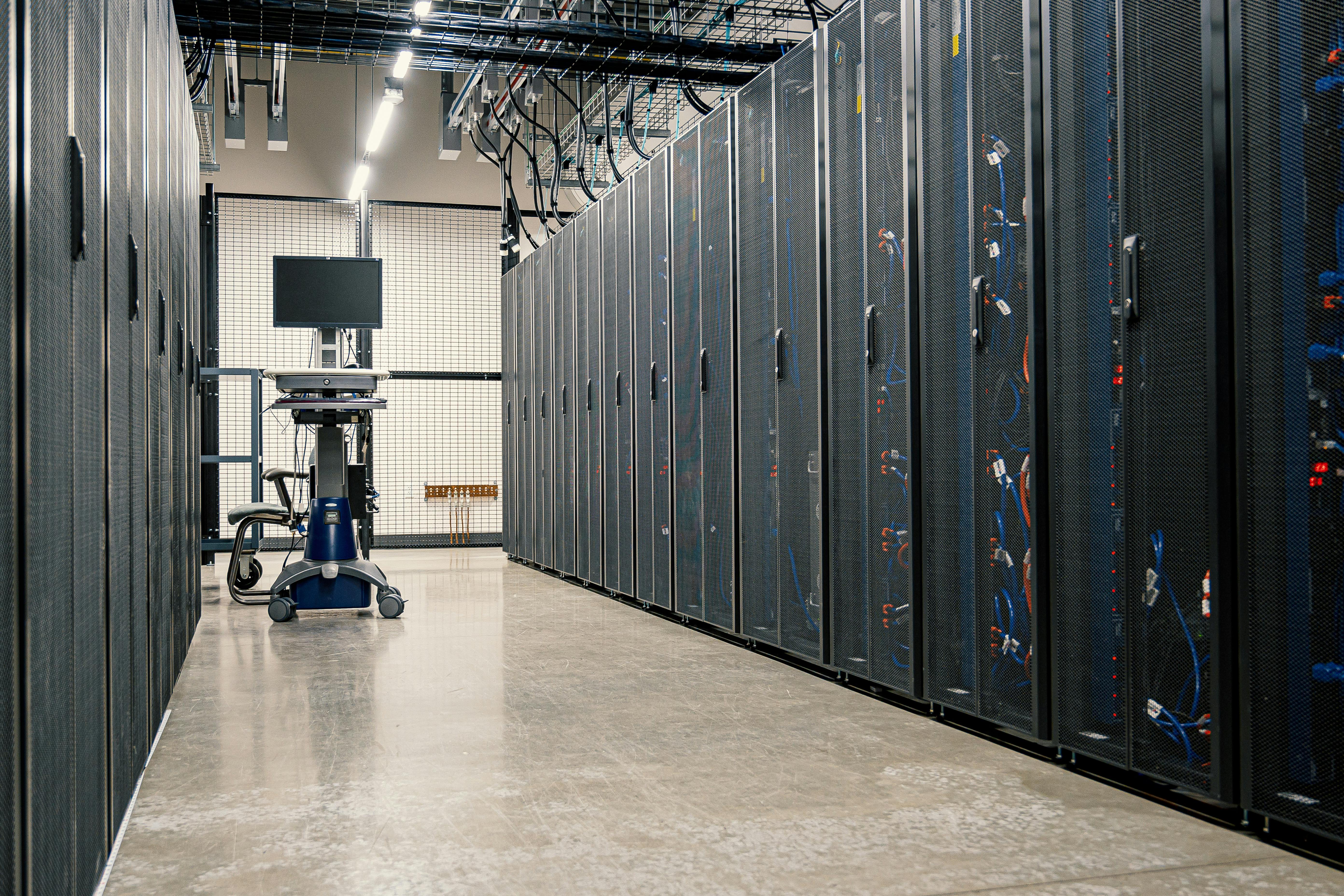
Amazon Web Services on Tuesday released the software it hopes will finally loosen Nvidia's grip on how artificial intelligence gets built. The tool, called TorchNeuron, lets developers take AI code written for Nvidia's graphics processors and run it instead on Amazon's own Trainium chips by changing a single line of configuration, with no need to rewrite the underlying program.
Amazon unveiled TorchNeuron as open-source software, released under the permissive Apache 2.0 license, in a public beta that went live Tuesday at the PyTorch Conference North America in San Jose, according to Amazon's own announcement. The timing is deliberate: the conference is the largest annual gathering of developers who use PyTorch, the open-source framework that has become the default language for building and training AI models since Facebook, now Meta, created it and later handed its stewardship to the Linux Foundation in 2022.
A Direct Challenge to Nvidia's Software Moat
Nvidia's dominance in AI chips rests on more than raw hardware performance. Its CUDA software platform has for more than a decade been the default, best-supported path for running PyTorch code, which Amazon says is used by roughly 85 percent of AI researchers and developers. That software familiarity, more than chip benchmarks alone, is widely credited with keeping customers locked into Nvidia's ecosystem even as rival chips from Amazon, Google and AMD have closed the raw performance gap.
TorchNeuron is Amazon's attempt to erase that advantage. It plugs Trainium into PyTorch's own extension points for new hardware, the same mechanisms the PyTorch community built to let the framework work with any chip. In practice, Amazon says, that means existing debugging tools, profilers and distributed-training code written against PyTorch's standard interfaces now run on Trainium without modification, switching hardware becomes a one-line change rather than a hardware-specific rewrite.
Colin Brace, vice president of technology and software at AWS's chip design unit, Annapurna Labs, cast the move in blunter terms to TechCrunch, arguing that AWS's case extends beyond Nvidia to the broader field of "neoclouds," specialized AI data-center providers such as CoreWeave, Nebius and Firmus that are themselves heavily reliant on Nvidia hardware.
"The real story is removing the lock-in that kept developers from having a real choice at all."
The Numbers Behind the Bet
Amazon's custom-silicon business, which designs Trainium and its companion Inferentia chips through Annapurna Labs, acquired in 2015, has surpassed a $25 billion annual revenue run rate, the company said in its announcement. TorchNeuron supports Amazon's current Trainium2 chips as well as the newer Trainium3 generation.
To back its compatibility claims, Amazon says it continuously tests TorchNeuron against roughly 100,000 publicly available Hugging Face models, covering what it estimates is 99.9 percent of real-world usage by download count, checking whether each one loads, trains and compiles correctly on the new backend. Separately, running PyTorch's own upstream test suites in August produced about 154,000 test outcomes; of those, roughly 39,000 were skipped specifically because Trainium does not yet support certain operators or features, a gap Amazon says it is working through in sequential releases, with floating-point-8 and some quantization support still confined to a private beta.
Early Adopters Report Cost Savings
Several companies said they had already ported workloads to Trainium using the new native PyTorch path. Voice-AI company Deepgram, which Amazon says processes quadrillions of audio tokens annually for more than 200,000 developers, worked with AWS engineers over several months to move its speech-to-text model. According to the AWS engineering blog's account of the project, the batch-transcription workload ultimately ran with no fallback to conventional processors and delivered as much as 70 percent more processed audio per dollar than Deepgram's prior infrastructure, depending on the benchmark.
Deepgram's chief technology officer, Adam Sypniewski, put a somewhat more conservative figure on the gains in comments carried on the PyTorch Foundation's own blog, saying that "in the benchmarks we evaluated, Trainium processes about 60% more input audio seconds per dollar than our existing GPU baselines, which helps us bring better models to customers at lower prices." Voice-AI startup Cartesia and Hugging Face, whose open-model libraries now treat Trainium as a supported device, also contributed endorsements to the same post. Hugging Face's Jeff Boudier framed the integration as "a practical expression of our commitment to silicon neutrality."
Meta's own PyTorch engineering team, which still oversees much of the framework's core development despite no longer owning it outright, offered a measured welcome. Jana van Greunen, Meta's director of PyTorch engineering, said in the same blog post that native Trainium support "expands that choice, enabling researchers and engineers to experiment and iterate using the eager execution and distributed APIs they already know," without requiring teams to leave the PyTorch ecosystem.
- TorchNeuron is open-sourced under the Apache 2.0 license and entered public beta on October 20
- Amazon says about 85 percent of AI developers already write code in PyTorch
- AWS's custom-chip business has passed a $25 billion annual revenue run rate
- Deepgram reported roughly 60 to 70 percent more processed audio per dollar after switching workloads to Trainium
What Happens Next
Amazon says it will go further than simply releasing its own tool: it plans to contribute changes directly to PyTorch's core codebase to strip out code written with only Nvidia's CUDA platform in mind, pushing the framework toward genuine hardware neutrality rather than Nvidia-first design with other chips bolted on afterward. Several of those changes have already been proposed as pull requests to the main PyTorch project.
Whether that effort meaningfully dents Nvidia's position is far from settled. Amazon's own documentation acknowledges real gaps still to close, including thousands of PyTorch operators without a native Trainium implementation and features such as sparse tensors and arbitrary attention masks that remain unsupported in this first release. Nvidia's chips also retain performance advantages for some workloads, and switching a production AI system to new hardware carries engineering risk even when the code itself does not need rewriting.
Still, the stakes extend well beyond any one product launch. If large developer teams come to see Trainium as a credible, low-friction alternative rather than a niche option requiring specialized engineering, the effect on Nvidia's business could ultimately prove larger than competition from any single rival chipmaker, because it would weaken the software lock-in that has made switching away from Nvidia hardware costly in the first place. For now, AWS is betting that free, open-source software, more than silicon alone, is the fastest way to find out.
Amazon — Introducing TorchNeuron: native PyTorch support for AWS Trainium chips
PyTorch Foundation Blog — Introducing TorchNeuron: Native PyTorch backend for AWS Trainium
TechCrunch — Amazon is taking its biggest shot at Nvidia yet with new TorchNeuron dev tool
AWS Machine Learning Blog — How Deepgram optimized voice AI at scale with AWS Trainium

Nvidia Pushes Open AI Models Deeper Into Corporate Servers and Home PCs

Apple Tightens App Store Rules to Block 'Nudify' Apps and Bait-and-Switch Tricks

Microsoft ends data-centre deal with Nscale after UK grid delays, report says
