Anthropic mathematician says he and an AI model may have solved a 167-year-old prime-number puzzle
Levent Alpöge says he and Anthropic's Claude produced a machine-checked proof of the Riemann hypothesis, one of mathematics' seven Millennium Prize problems. The claim is drawing both astonishment and caution, in part because almost no one, including its author, has read it in full.
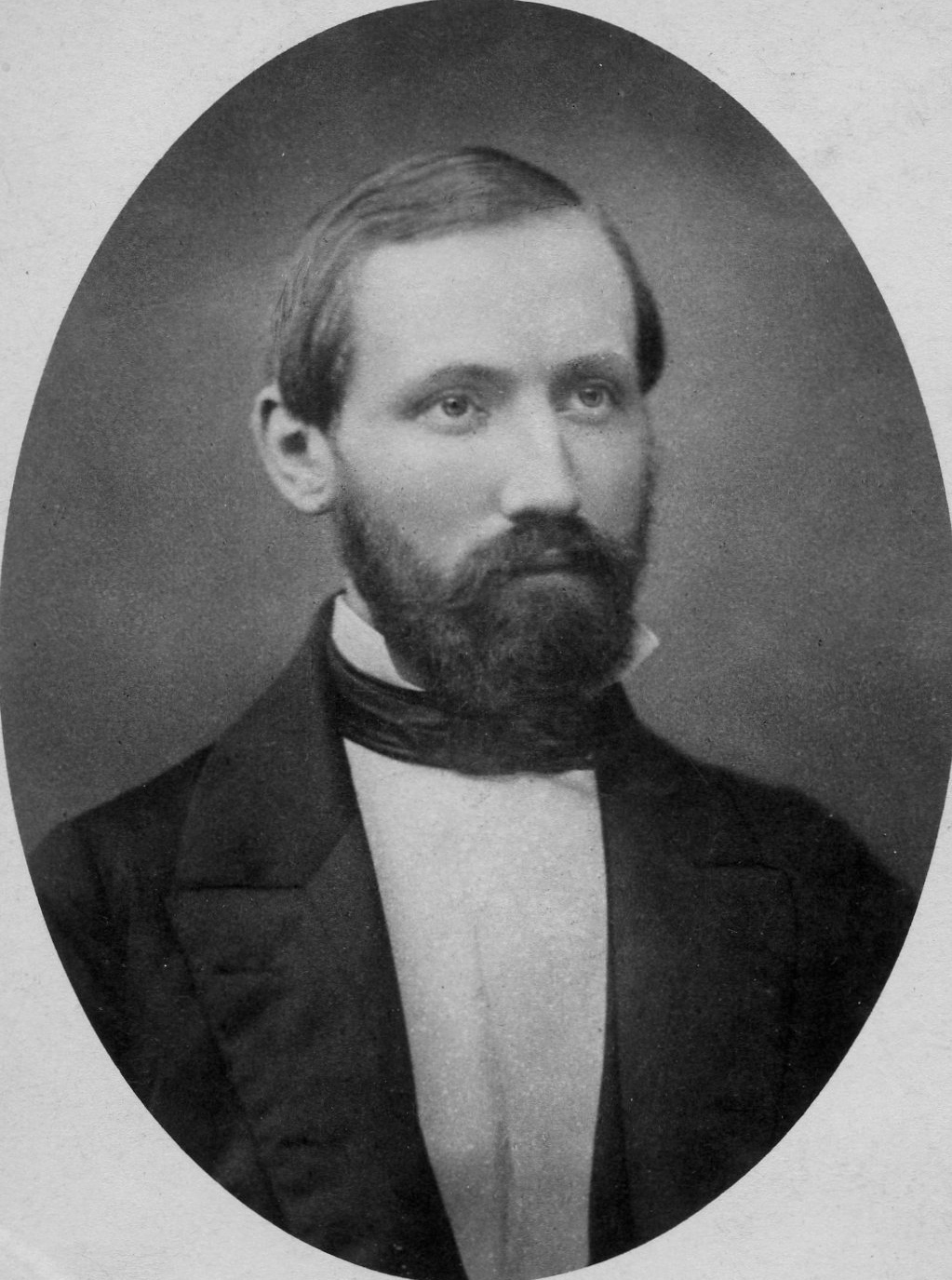
A mathematician at the artificial-intelligence company Anthropic says he and the company's Claude model have produced a proof of the Riemann hypothesis, a conjecture about the distribution of prime numbers that has gone unsolved since the German mathematician Bernhard Riemann proposed it in 1859. Levent Alpöge posted the claim in a four-page note on his personal website on Friday, November 20, saying the argument also resolves a broader version of the problem known as the generalized Riemann hypothesis.
The proof is not written as a conventional mathematical paper. Alpöge released it instead as code in Lean, a programming language that checks a mathematical argument step by step, and said he has not yet mastered all of the underlying mathematics himself. "I believe I have, working with Claude, discovered a proof of the Riemann Hypothesis," he wrote, according to Scientific American, which also quoted him writing that accepting the result felt like "a loss of a principal guiding light."
What the computer can confirm, and what it cannot
The Riemann hypothesis predicts the precise pattern governing where prime numbers fall along the number line, by way of the zeros of a function called the Riemann zeta function. It is one of seven problems the Clay Mathematics Institute designated as Millennium Prize problems in 2000, each carrying a $1 million award; only one, the Poincaré conjecture, has been resolved to date. Under the institute's published rules, a solution must appear in a refereed publication and then survive at least two years of scrutiny by the global mathematics community before any prize is even considered, and the institute does not comment on or certify unpublished claims.
What has happened so far is narrower than a peer-reviewed proof. The Lean and Mathlib open-source communities, in a joint statement dated November 21, said Alpöge's submission compiles without errors as a Lean library spanning roughly 17 million lines of code, that the statement being proved matches the hypothesis as formally encoded in the Mathlib library, and that multiple independent proof-checking programs accepted the exported argument. The communities said they have "full confidence that Alpöge's proof of the Riemann Hypothesis is correct" in that narrow, mechanical sense. Separately, MIT mathematician Andrew Sutherland independently recompiled the code and confirmed that its central theorems rest only on Lean's standard logical axioms, with no hidden assumptions. None of that is the same as the broader mathematical community reading, understanding and endorsing the argument, which both Sutherland and other mathematicians said could take months or years.
"I believe I have, working with Claude, discovered a proof of the Riemann Hypothesis."
Reaction ranges from awe to pointed caution
Brian Conrey, a longtime specialist on the hypothesis, called the claim "a monumental moment in human history" but said, by his own account, he had not seen a full manuscript and that what he had seen "looks like it's seriously complicated," adding he expected "there will be simpler ways to do it," according to reporting distributed by AFP. James Maynard, an Oxford mathematician and 2022 Fields Medal winner, described the result as historic if it holds and said he suspects it will ultimately prove correct, while cautioning that confirming a proof's validity would not by itself explain why it works. Youness Lamzouri of the University of Lorraine, who had previously produced a simpler, non-AI proof of a related partial result, said he was astonished: "I don't have words to describe what I am feeling right now." Not every response was celebratory; mathematician Andrew Granville said Alpöge should have taken more time to prepare a clear write-up before announcing the claim publicly.
Adding to the confusion, Stanford mathematics professor Ravi Vakil said hours after Alpöge's post that a postdoctoral researcher in his own department had independently submitted a separate proof of the hypothesis the same day, this one written entirely by a human without AI assistance. Neither Vakil nor the unnamed postdoctoral researcher responded to press inquiries, and no details of that competing proof have been made public.
The result did not come out of nowhere
Anthropic mathematicians, including Alpöge, had been working toward this territory for months. In research Anthropic published in August, an unreleased research version of Claude raised the proven lower bound on the share of zeta-function zeros known to lie on the "critical line," from 41.6 percent to 67.2 percent, with Alpöge and colleague Ralph Furman validating the machine-generated argument and outside experts Conrey and Dan Goldston reviewing it on short notice. Anthropic was explicit at the time that the technique was not expected to extend into a full proof of the hypothesis itself, which makes Friday's announcement a significant escalation from that earlier, more modest result.
The claim also arrives amid wider, unsettled competition over AI-assisted mathematics. Roughly two months earlier, rival OpenAI said one of its models had made progress on a different Millennium Prize problem, concerning the Navier-Stokes fluid-dynamics equations; mathematicians who reviewed that work said it appeared largely correct but was not fully vetted either. That episode also produced a public dispute over credit, with NYU mathematician Tristan Buckmaster and Alpöge suggesting related prior work of theirs had been used without acknowledgment, which OpenAI denied.
What happens next
For now, the practical effect is limited: no journal has published the work, the Clay Institute's clock on the two-year scrutiny period has not started, and Alpöge himself has said a full, human-readable written argument — something mathematicians can actually read and critique line by line rather than merely compile — is still to come, because he says the conventional version would be "extremely long." Sutherland, who reviewed the Lean code, told reporters the moment was nonetheless historic in a different sense, saying that building a system capable of helping produce an argument this complex was itself the hardest part of what happened. Other mathematicians, including Hector Pasten of the Pontifical Catholic University of Chile and Carlo Pagano, a visiting researcher at Google DeepMind, said that if the proof holds up it could open new connections across different branches of number theory, comparing its potential significance to a Rosetta Stone for the field.
Alpöge has said he consulted Anthropic chief executive Dario Amodei before posting the claim and acknowledged, without elaborating, that the timing of the announcement could be viewed cynically by skeptics. Mathematicians broadly agree on one point regardless of how the verification eventually turns out: the process of checking whether the Riemann hypothesis has truly been proved, by a human working with a machine, will itself take considerably longer than it took to make the claim.
OpenRouter Pulls 125 Endpoints After Research Finds AI 'Privacy' Promises Were Broken

Thinking Machines releases a laptop-ready AI model built on reused layers
Apple permanently shuts down its 28-year-old Support Community forums