New Mexico seeks up to $40 billion fine against Meta over Cambridge Analytica
A state prosecutor asked a Santa Fe judge to impose one of the largest civil penalties ever sought against a technology company, three weeks after a jury found Meta liable for 43.9 million violations of New Mexico's consumer-protection law.
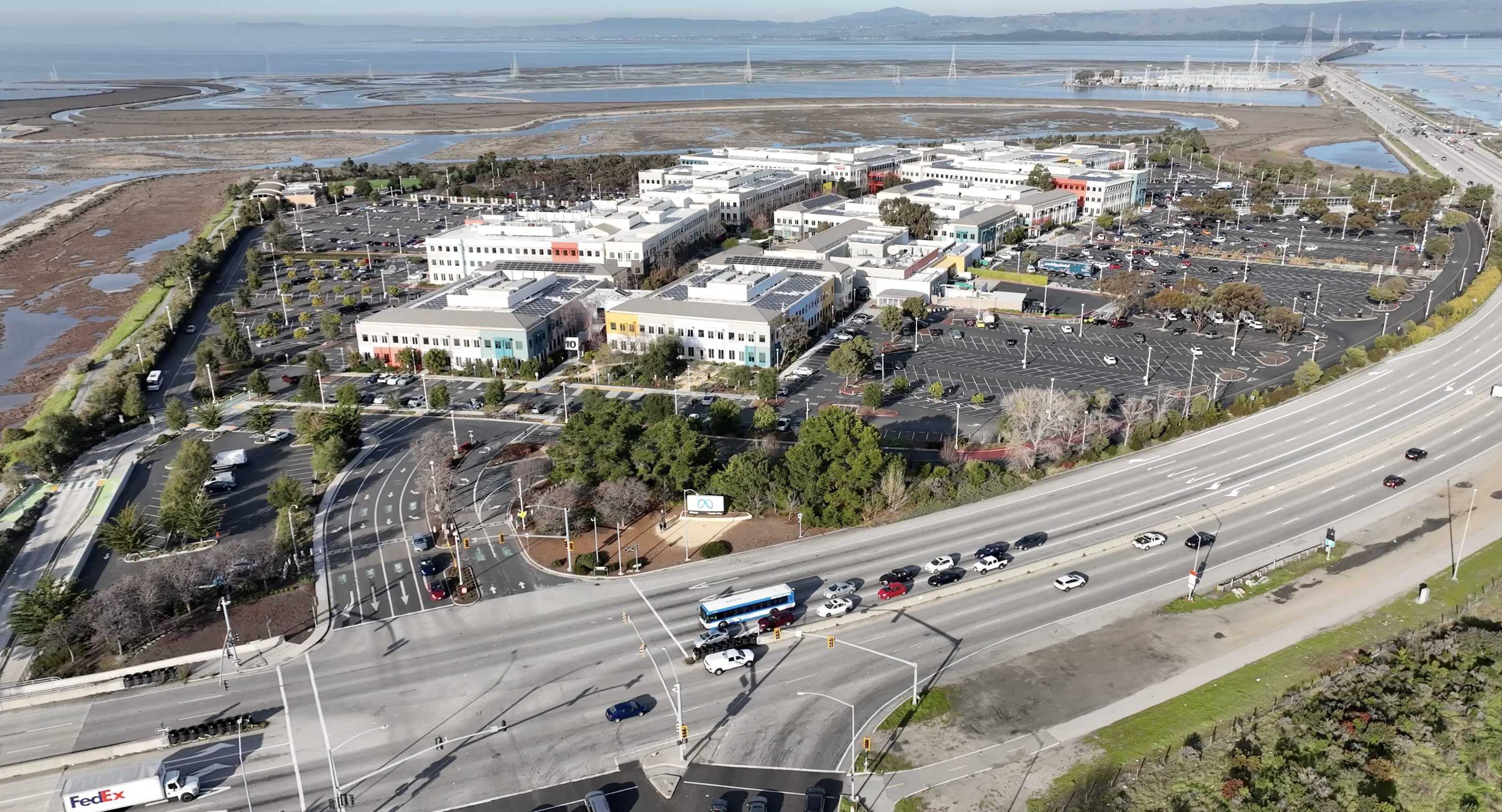
A New Mexico prosecutor asked a state judge on Thursday to order Meta Platforms to pay as much as $40 billion for misleading Facebook users about its handling of the Cambridge Analytica data scandal, a penalty that would rank among the largest ever imposed on a technology company by a single court. The request came at a hearing in Santa Fe County District Court, three weeks after a jury found Meta liable for 43.9 million violations of New Mexico's Unfair Practices Act.
The case, State of New Mexico v. Facebook, Inc., was filed in 2021 by then-Attorney General Hector Balderas and later taken up by his successor, Raúl Torrez. It turns a scandal that first broke in 2018, when news organizations revealed that the political consulting firm Cambridge Analytica had harvested data from roughly 87 million Facebook profiles, including those of an estimated 350,000 New Mexicans, into one of the costliest unresolved legal exposures facing any American technology company.
What the jury found
Jurors in Santa Fe determined on September 25 that 26 of 29 public statements Meta and Mark Zuckerberg made about Facebook's data practices, content moderation and response to Cambridge Analytica were willfully deceptive under state consumer-protection law. The jury assigned roughly 2.1 million violations to each of 11 statements that ran in major news outlets, and about 1.39 million violations to each of 15 statements made through Meta's own channels. The total came to 43,899,720 violations, of which New Mexico's attorney general has said roughly 24.4 million trace back to statements made personally by Zuckerberg.
New Mexico's Unfair Practices Act caps penalties at $5,000 per violation, which put the jury's math on a path to a theoretical maximum of about $219.5 billion, a figure Meta itself disclosed to investors as a litigation risk in its second-quarter 10-Q filing with the Securities and Exchange Commission, which stated that the state attorney general had indicated it would seek "up to $62.85 billion in penalties" ahead of trial.
The hearing
At Thursday's penalty-phase hearing, state special prosecutor Randi McGinn argued for a figure well below even that disclosed number but still enormous: $35 billion to $40 billion. She told Judge Francis Mathew that the size of the fine mattered less for the money than for the message, arguing that "Meta has not learned its lesson, and this court should speak to Meta in the only language that it understands."
Meta's attorney, Matt Nicholson, countered that the request amounted to an "astronomical penalty" that would violate the U.S. Constitution's Eighth Amendment protection against excessive fines. He urged Mathew to cap any penalty at $3.45 billion, arguing prosecutors had presented no evidence that any specific New Mexico resident saw, relied upon, or was harmed by the statements at issue.
- Jury verdict: 43,899,720 violations across 26 of 29 challenged statements, found September 25
- Theoretical statutory maximum: about $219.5 billion at $5,000 per violation
- Meta's SEC-disclosed exposure estimate ahead of trial: $62.85 billion
- New Mexico's request at the October 1 hearing: $35 billion to $40 billion
- Meta's counter-proposal: a cap of $3.45 billion
Why New Mexico stands alone
New Mexico is pursuing Meta alone partly because it refused to join a group settlement. Earlier this year, Meta reached a roughly $17 billion agreement with 47 other states and territories over allegations that its platforms were designed to be addictive to children, splitting that total dozens of ways. New Mexico declined, choosing instead to press ahead with its own, broader case. That strategy has already paid off for the state: in March, a separate Santa Fe jury found Meta had exposed children to predators and ordered $375 million in civil penalties, and in August a judge added a further $567 million to fund youth mental-health programs in the state. Judge Mathew referenced that earlier multistate split directly at Thursday's hearing, signaling he is inclined toward a penalty well below prosecutors' ask.
New Mexico's Department of Justice has framed the litigation as a model for other states frustrated by the limits of federal privacy enforcement. After September's verdict, Torrez told reporters the trial had revealed "in stark detail the way in which this company plays fast and loose with the rules." Meta, for its part, has said it "disagrees with the verdict and will continue to defend ourselves against efforts to distort our record."
What happens next
Judge Mathew did not rule from the bench. According to reporting on the hearing, he told the parties he expects to issue a written decision within about two weeks, which would put a ruling around the middle of October. Whatever figure he lands on, both sides have strong incentives to appeal: New Mexico has signaled it would challenge a penalty it considers too low to deter a company of Meta's size, while Meta has already previewed the excessive-fines and due-process arguments Nicholson raised Thursday, which are built for an appellate court, not a trial judge.
The stakes extend well beyond New Mexico. Other state attorneys general have been watching the case closely as a test of how far century-old consumer-protection statutes can stretch to cover modern data-privacy and content-moderation disputes. For Meta, which has now absorbed roughly $942 million in New Mexico penalties from the child-safety case alone this year, a Cambridge Analytica penalty in the billions, even far short of prosecutors' $35 billion to $40 billion request, would mark one of the largest state-level civil verdicts against a technology company in U.S. history.

OpenAI fires three safety researchers over alleged leak of confidential material

Lyft to pay $272.5 million in largest driver-misclassification settlement in California history

California enacts law fining robotaxi firms that block emergency responders
