US on verge of losing 26-year measles elimination status as cases hit 35-year high
An international commission meeting in Washington this week is expected to declare that measles has become endemic in the United States for the first time since 2000, as confirmed cases top 5,000 and a dispute over the death toll draws scrutiny to the CDC and HHS Secretary Robert F. Kennedy Jr.
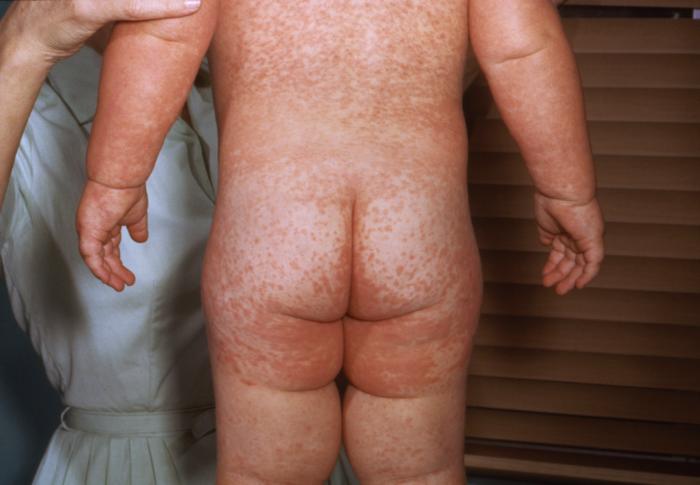
An international commission convened in Washington this week is expected to conclude that measles has become endemic in the United States for the first time since 2000, stripping the country of a public health status it has held for 26 years as confirmed cases climb to their highest annual total since 1991.
The Measles and Rubella Elimination Regional Monitoring and Re-Verification Commission, a technical body that reports to the Pan American Health Organization, is holding its sixth annual meeting from Nov. 10 through Nov. 13 to review measles data from every country in the Americas, including a detailed look at whether the outbreak that began in West Texas in January 2025 has continued, essentially without interruption, inside the United States for a full year. If the commission finds that it has, the finding goes to PAHO Director Jarbas Barbosa, who makes the formal determination. Officials and outside researchers following the closed-door sessions say a decision could be announced within days.
The question arrives as the Centers for Disease Control and Prevention's own data show 5,182 confirmed measles cases in the United States so far in 2026, spread across 47 jurisdictions, more than double the 2,289 cases recorded in all of 2025 and the highest annual count since 1991. The CDC attributes 43 new outbreaks to this year alone and says 96 percent of this year's cases are linked to those outbreaks. National kindergarten vaccination coverage for measles, mumps and rubella has fallen to 92.4 percent, below the roughly 95 percent threshold generally considered necessary to prevent sustained community spread, leaving an estimated 280,000 kindergartners without full protection.
A status earned in 2000, now in doubt
The United States was declared free of endemic measles in 2000, meaning the virus no longer circulated continuously and new cases came only from importation or short, contained chains of transmission. Under PAHO's elimination framework, a country loses that status if health authorities determine that a single viral genotype and lineage has circulated without interruption for 12 months or longer in a defined geographic area. The clock PAHO is using for the United States began Jan. 20, 2025, the date tied to the outbreak's onset among unvaccinated Mennonite families in rural West Texas, according to the Pan American Health Organization's own account of the review's methodology.
That outbreak killed two unvaccinated children in Texas and an unvaccinated adult in New Mexico before spreading into South Carolina, Utah, Arizona and elsewhere. The commission's review was originally scheduled for April but was postponed roughly seven months, a delay PAHO attributed to the time needed for the CDC to complete genomic sequencing of outbreak samples; researchers tracking the issue said the delay also coincided with staffing reductions at federal health agencies. The Center for Infectious Disease Research and Policy at the University of Minnesota reported that the Broad Institute, under a CDC contract, assembled roughly 1,000 viral genome sequences to help the commission determine whether later outbreaks share a direct lineage with the original Texas strain or represent separate importations.
"It's a symbolic loss. It's a loss of standing. It's a loss of stature. It's a loss of achievement." — Jennifer Nuzzo, director of the Pandemic Center at Brown University School of Public Health
Canada lost its own measles elimination status in November 2025 after the same commission found endemic transmission had been re-established there, a precedent that researchers say has sharpened attention on the U.S. review. Brazil lost its elimination status in 2019 and did not regain it until 2024, illustrating how long a reversal can take to undo even after case counts fall.
A death toll counted two different ways
Underlying the review is a dispute over how many Americans have died. The CDC's public dashboard lists four measles deaths in the United States in 2026, a figure the agency itself labels "subject to change." State health departments, however, have independently confirmed considerably more. Pennsylvania alone has reported six measles-associated deaths this year, and New York and Wisconsin have each reported one, bringing the state-level total to eight for 2026, according to reporting that cross-checked state health department disclosures against the federal tally.
News organizations have reported that Health and Human Services Secretary Robert F. Kennedy Jr. directed CDC Director Erica Schwartz to remove two confirmed Pennsylvania deaths from the agency's weekly online update in August, after he questioned whether measles had actually caused them, even though CDC staff had already accepted Pennsylvania's determination. Kennedy later called the state's death announcements "premature" and suggested publicly that they "may even have been altogether fabricated," according to the health policy research organization KFF's own tracking of the discrepancy. Pennsylvania's health department responded that its cases were "measles-associated" findings reached after thorough epidemiological investigation, not casual assertions. A Lancaster County coroner subsequently ruled that measles had caused the death of an infant, and Kennedy later acknowledged that finding.
Schwartz told reporters on Nov. 10, as the PAHO commission's sessions opened, that she had not been pressured by Kennedy or his deputies and that the decisions on what to publish were hers alone, according to an account relayed by Medical Daily's reporting on her comments. She said the agency's response to outbreaks would not change regardless of the commission's finding. "We're going to be doing the same thing that we've been doing today, which is working with the states," she said, adding that the outbreaks are concentrated in "closely knit communities" that have historically declined vaccination and that the country is "just now seeing the results of those decisions."
Who is most exposed
The outbreaks have been heaviest in a handful of states, with the CDC's data page pointing to continuing activity in Pennsylvania, Utah, Maryland, Wisconsin and Delaware, alongside the original Texas cluster and its spread into South Carolina. Infants too young to be vaccinated, pregnant women, whose infection can cause congenital measles in a newborn, and people who are immunocompromised face the greatest medical risk from the virus, which health officials estimate infects roughly nine of every ten unvaccinated people exposed to it. Because measles can cause pneumonia and encephalitis and, more rarely, a fatal degenerative brain disease that can emerge years after infection, physicians say the stakes of community spread extend well beyond the immediate case count.
What a lost status would — and would not — change
PAHO officials and independent researchers are careful to note that losing elimination status carries no legal or financial penalty and would not, by itself, change CDC vaccination recommendations, which already call for two MMR doses, the first at 12 to 15 months of age and the second between ages 4 and 6. Regaining the status would require documenting at least 12 consecutive months without the kind of sustained transmission that triggered the loss, plus evidence of restored vaccination coverage, a bar that took Brazil five years to clear after its own loss in 2019.
Several physicians and researchers who have been tracking the commission's deliberations described the practical impact as limited but the symbolic one as significant. "At best, losing the elimination status would be a call to arms," said Dr. Paul Offit, director of the Vaccine Education Center at Children's Hospital of Philadelphia. Dr. Peter Hotez of Baylor College of Medicine put it more bluntly: "Measles is back." Brittany Kmush, an epidemiologist at Syracuse University, said the designation matters less as a bureaucratic label than as a marker of institutional capacity: "Elimination status is not just a certificate. It's a signal of what your country can do."
Not everyone treats the designation as consequential. Dr. Ralph Abraham, the CDC's principal deputy director, has said losing the status would not "really" matter and has cast low vaccination rates in affected communities as a matter of personal choice rather than policy failure. The commission's findings are expected to go to Barbosa in the coming days, with a public announcement likely by the middle of next week. If the United States is classified as having re-established endemic measles transmission, it would join Canada as the second country in the Americas to lose the designation since the region was declared measles-free as a whole in 2016.

Doctor kills one, wounds four at Washington gym before fatal standoff over condo dispute
Meghan Markle's father jailed again after cutting off ankle monitor in federal child sex abuse case

Two dead, 19 hurt as Brooklyn building collapses next to excavation site
