Brazil reports record-low Amazon deforestation days before pivotal runoff election
Satellite data released this week show Amazon clearing fell to its lowest level since monitoring began in 1988, a milestone Brasília is showcasing just days before President Lula faces a tight runoff against a Bolsonaro-aligned challenger.
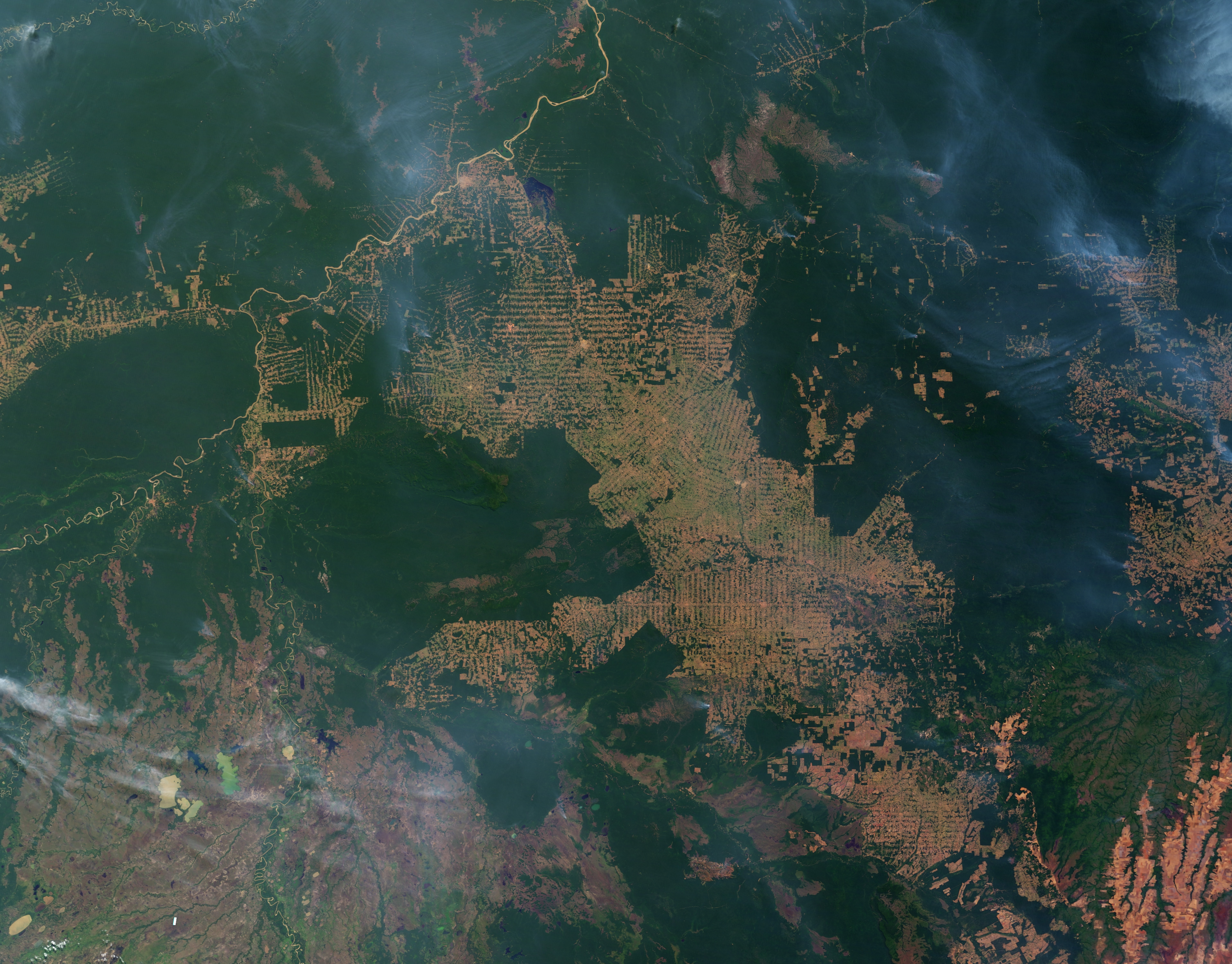
Brazil's government said this week that deforestation in the Amazon rainforest has fallen to its lowest level since satellite monitoring began nearly four decades ago, a milestone officials credited to intensified enforcement and one that lands just a week before President Luiz Inacio Lula da Silva faces a runoff election in which Amazon policy has become a central dividing line.
Figures released by Brazil's National Institute for Space Research, known by its Portuguese acronym INPE, and first detailed by Al Jazeera, show that 3,335 square kilometers of rainforest were cleared in the 12 months through July 2026, a drop of about 42 percent from the previous year. That figure comes in below the prior record low of 4,571 square kilometers set in the 2011-12 monitoring cycle, meaning Brazil has now recorded its smallest annual loss of Amazon forest since the PRODES satellite program began producing comparable annual data in 1988.
A decline four years in the making
The scale of the reversal becomes clearer against the longer historical record. Annual clearing in the Brazilian Amazon peaked at nearly 30,000 square kilometers a year in the mid-1990s, and under former President Jair Bolsonaro's 2019-2022 term the country lost an average of roughly 11,600 square kilometers a year as environmental enforcement was scaled back. Deforestation has now fallen every year since Lula returned to office in 2023, with this year's total representing a 71.2 percent decline over four years, according to the government figures.
- 3,335 sq km cleared, Aug. 2025-July 2026 — down 42% year-on-year
- 4,571 sq km — the previous record low, set in 2011-12
- ~30,000 sq km a year — the mid-1990s peak
- 11,600 sq km a year — the 2019-2022 average under Jair Bolsonaro
- 5,517 sq km — Cerrado savanna clearing, down 24% to its lowest since 2001
Clearing in the neighboring Cerrado savanna, Brazil's other major biome and an important carbon sink in its own right, fell about 24 percent to 5,517 square kilometers, its lowest level since that monitoring series began in 2001. Government scientists have been tracking the trend in near-real time through INPE's DETER early-warning system, whose data on the TerraBrasilis satellite platform showed alerts falling in nearly every month of the current cycle before the slower, more precise annual PRODES count confirmed the record.
'Like a dream,' officials say
Environment Minister Joao Paulo Capobianco, who took over the ministry from Marina Silva earlier this year, presented the figures at a news conference in Brasilia and did not hide his satisfaction with the result.
"It's an absolutely stratospheric drop... it's like a dream," Capobianco told reporters, attributing the decline to tougher enforcement, satellite-based monitoring and closer cooperation with state and municipal governments.
Outside government, reaction was similarly emphatic. Marcio Astrini, head of the advocacy coalition Observatorio do Clima, called the figures "a historic achievement," while cautioning that sustaining the trend will require continued political commitment. Lula himself wrote online that his administration's goal remains zero illegal deforestation in the Amazon by 2030, a target first set in his 2023 environmental plan and overseen in part by an interministerial committee on deforestation control that coordinates federal, state and law-enforcement efforts across the nine Amazonian states.
An election-week complication
The timing is politically loaded. Lula is seeking re-election against Senator Flavio Bolsonaro, son of the former president, after neither candidate won a majority in the October 4 first round. According to the electoral court's tally, Flavio Bolsonaro finished narrowly ahead with 47.03 percent of valid votes to Lula's 45.16 percent, setting up an October 25 runoff that polls described as a near-even race.
Environmental policy has become one of the sharper contrasts between the two campaigns. Flavio Bolsonaro's platform pledges stronger oversight of the Amazon and a promise to end illegal deforestation by 2029, a year ahead of Lula's own target, even as he has also praised his father's record of loosening environmental enforcement and criticized what he calls a "radical environmental agenda." Allies of the Workers' Party have signaled they intend to make Friday's figures a centerpiece of the closing week of campaigning, framing the deforestation data as proof that Lula's enforcement-heavy approach has delivered measurable results that a more permissive policy could reverse.
The nine states that make up Brazil's Legal Amazon are not affected evenly. Para, the sprawling northern state that INPE's near-real-time alert data identified as the single largest source of forest-clearing warnings in the current cycle, remains the epicenter of both the enforcement effort and the agribusiness expansion that drives much of the pressure on the forest, through cattle ranching, soy cultivation and illegal logging and mining. Roraima was the lone Amazonian state where alerts rose rather than fell this cycle, up roughly a third, according to the same INPE data, underscoring that the national trend masks sharp regional variation. For the Indigenous communities and traditional riverine populations who rely on intact forest for their livelihoods, slower clearing generally means fewer land invasions and less violence tied to illegal logging and mining camps, though rights groups have long argued that enforcement gains in one region can simply push deforestation pressure into another. Commodity exporters, meanwhile, have watched the figures closely because European Union due-diligence rules set to tighten market access for soy, beef and timber linked to recent deforestation give Brazilian producers a direct commercial stake in the downward trend continuing.
Reasons for caution
Scientists and forest monitors who track the Amazon caution against reading the data as a sign the forest's problems are solved. Reporting on the government's near-real-time alert data, environmental news outlet Mongabay has noted that clear-cut logging is only one driver of forest loss, and that degradation from fires, selective logging and drought can strip forests of carbon and biodiversity value without necessarily registering as deforestation in satellite imagery used to calculate the headline figure. Forecasters have also flagged a strong El Nino pattern expected to bring drought conditions into early 2027, a risk that could fuel fires even as clear-cutting itself continues to decline.
There is also a measurement wrinkle worth flagging: the figures presented this week are drawn from INPE's PRODES annual cycle, which measures deforestation from August to July and has traditionally been finalized in November. Analysts tracking the program had anticipated for months, based on INPE's monthly DETER alerts, that the full-year PRODES number would land at or near a historic low once finalized, so this week's release confirmed a trend that had already been visible in the preliminary data rather than coming as a surprise.
Brazil's environment ministry says it will continue publishing monthly DETER alerts through the rest of the year, with the next PRODES cycle beginning in August 2026 already underway. The more immediate test, however, is political: whichever candidate wins the October 25 runoff will inherit both the credit for this year's numbers and responsibility for whether the downward trend holds. With the Amazon increasingly central to Brazil's international standing on climate diplomacy following its hosting of last year's United Nations climate summit, COP30, in the Amazonian city of Belem, the coming administration's enforcement choices are likely to be watched as closely abroad as the raw hectare counts are watched at home. That summit produced a voluntary roadmap among participating governments aimed at reversing global deforestation, giving Brazil's own trajectory an added measure of symbolic weight heading into whichever administration takes office in January.
Al Jazeera — Brazil's Amazon deforestation hits lowest level on record
INPE (Brazil's National Institute for Space Research) — official deforestation monitoring updates
Mongabay — Amazon deforestation alerts fall to lowest level since 2013, Brazilian data show
MercoPress — Flávio Bolsonaro edges Lula in the first round, both head to an October 25 runoff

European diplomats attacked by Israeli settlers during West Bank olive harvest

UN peacekeeping chief presses Security Council to decide Lebanon force's fate

Houthi missiles strike Yemen's seat of government in Aden as truce collapses into war
.jpg?width=1200)