Cairo court sentences Egyptian TV presenter Sarah Khalifa to death in drug trafficking case
A Cairo court convicted television host Sarah Khalifa and 27 co-defendants of running a synthetic-drug manufacturing and trafficking network, sentencing 12 of them to death by hanging. Her lawyer says she will appeal to Egypt's highest criminal court.
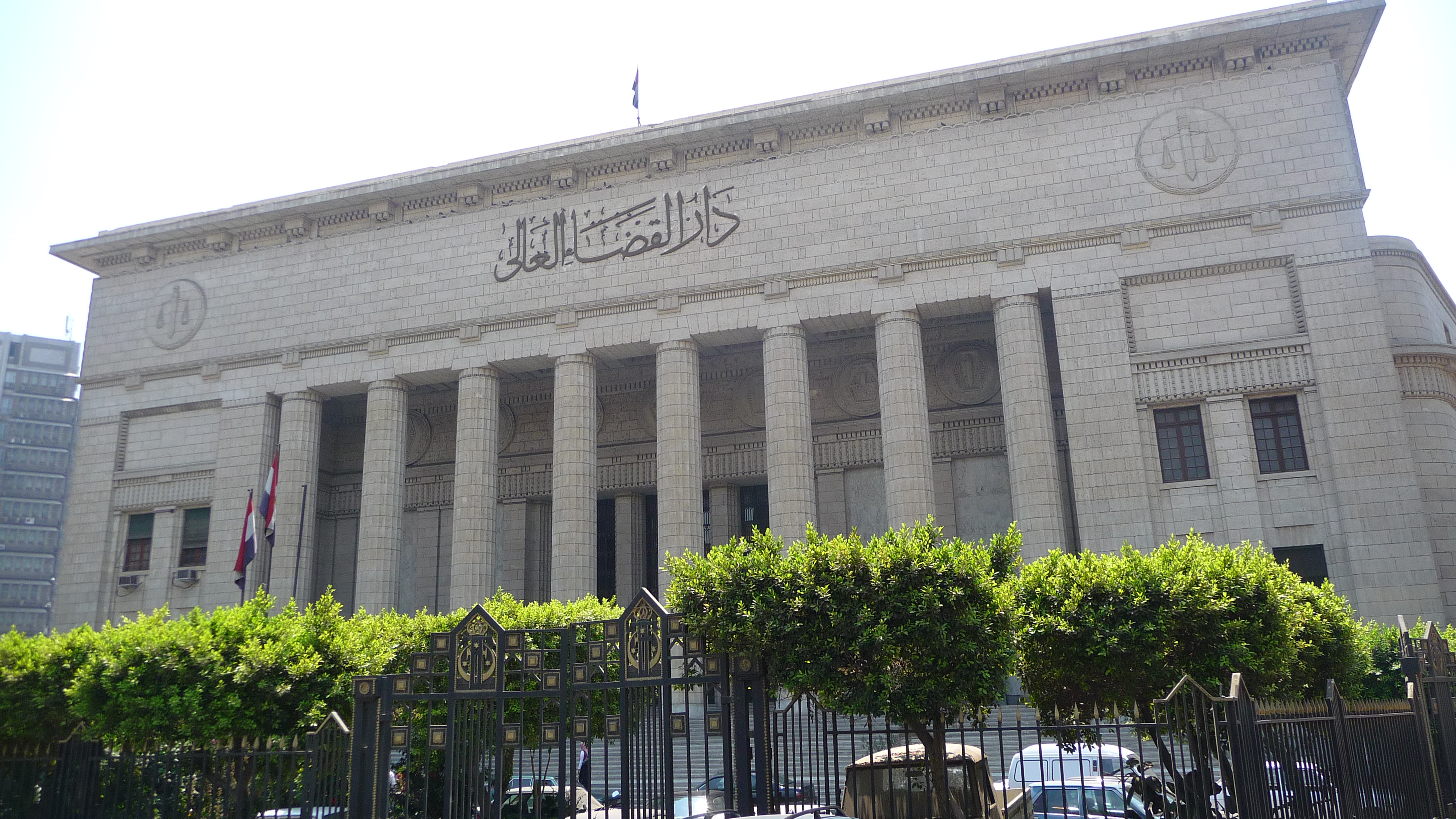
A Cairo criminal court sentenced Egyptian television presenter Sarah Khalifa and 11 co-defendants to death by hanging on Saturday, closing a 17-month prosecution that accused the 39-year-old host of a true-crime program of financing and directing a synthetic-drug manufacturing ring. Nine other defendants were sentenced to life in prison and seven were acquitted, in a case that drew wide attention in Egypt because of the defendant's television profile and the scale of the narcotics operation prosecutors described.
Khalifa, who hosted the security and crime program "Mission Impossible" on the private Al-Mehwar channel and built a following of roughly 2.5 million people on Instagram, wept as the verdict was read and denied any role in the trafficking network, according to reporting from Al Jazeera. Her lawyer said the defense would appeal to Egypt's Court of Cassation, the country's highest criminal appellate body, a process that could take months or years before any sentence becomes final.
What the court found
The Cairo Criminal Court convicted Khalifa and 27 co-defendants of forming an organized criminal group that imported raw chemical materials used to manufacture synthetic narcotics, then produced and trafficked the drugs domestically and abroad, according to Al Jazeera's account of the verdict. Prosecutors also charged the group with possessing unlicensed firearms and ammunition. Investigators said they seized more than 750 kilograms of synthetic narcotics and precursor materials from apartments that had been converted into drug laboratories, following roughly 40 days of surveillance before Khalifa's arrest in April 2025.
Of the 28 people who stood trial, 12 — Khalifa among them — received death sentences and fines of 500,000 Egyptian pounds each, a sum worth roughly $9,800 at current exchange rates. Nine co-defendants were sentenced to life imprisonment with smaller fines, and seven were acquitted of all charges. Two further suspects tied to the case remain fugitives and have been placed under travel bans, according to The National's account of the verdict. The prosecution's referral to trial had rested on statements from 20 witnesses along with what it described as digital evidence — messages, photographs and videos — documenting the defendants' activity, and it accused Khalifa specifically of financing the network and traveling abroad to coordinate with foreign contacts.
In a separate proceeding heard by the same court on Saturday, Khalifa was also convicted of kidnapping and assaulting a man after filming the episode at her home; news organizations have reported differing prison terms of three to five years for that conviction, a discrepancy that had not been resolved in initial coverage.
"I have never smoked a cigarette in my life," Khalifa told the court, according to multiple outlets that covered the hearing, adding that she "never saw any drugs" until she was photographed with them inside the offices of Egypt's anti-narcotics authority.
A television personality turned defendant
Khalifa began her on-air career on Egypt's ART network before working with the Iraqi channel Al-Sharqiya, later moving into production and event planning through her own company. In 2024 she co-hosted a program with the singer Hamo Beka and opened a cosmetic clinic in the Cairo suburb of Agouza, building a public profile as a media personality with business interests well outside journalism. That profile is part of why the case has drawn heavier coverage than Egypt's routine narcotics prosecutions, which rarely reach international audiences.
Under Egyptian law, no death sentence takes effect until the case file is referred to the Grand Mufti, the country's senior Islamic legal authority, for a religious opinion; the opinion is advisory and does not bind the court, but the referral is a mandatory procedural step before sentencing is finalized. Khalifa and her co-defendants retain the right to appeal to the Court of Cassation, which under Egyptian procedure can reconsider the substance of a case rather than being limited to narrow points of law — meaning the appellate court could uphold the sentence, reduce it or set the verdict aside entirely.
Part of a wider pattern of death sentences
The verdict lands amid a broader increase in Egypt's use of capital punishment. Executions in the country nearly doubled last year, rising to 23 in 2025 from 13 in 2024, while new death sentences climbed 35 percent, from 365 to 492, according to Amnesty International's global report on death sentences and executions, published in May. Egypt's judicial system has faced sustained, formal criticism on this point from United Nations bodies. When the Human Rights Council's Working Group formally reviewed Egypt's human-rights record on 28 January 2025, dozens of member states recommended that Egypt establish a moratorium on executions and ratify the treaty protocol committing states to abolish the death penalty, according to the Human Rights Council working group's official report on Egypt. Separately, in 2024, a group of UN special rapporteurs, including the Special Rapporteur on extrajudicial, summary or arbitrary executions, warned that Egypt must halt planned executions in a separate counterterrorism case, citing torture allegations, coerced confessions and trials that fell short of international fair-trial guarantees — concerns rights groups say apply broadly to Egypt's criminal courts, including mass trials involving dozens of co-defendants of the kind seen in the Khalifa case. More broadly, the UN human rights office has tracked what it calls an alarming global rise in executions concentrated in a small number of states, with UN News reporting in January that drug offenses accounted for a disproportionate share of death sentences in several of the countries carrying out the most executions.
Who is affected
The immediate parties are the 28 defendants and their families, who now face a legal process that will stretch on for months through the appellate courts regardless of Saturday's verdict. Nine defendants sentenced to life imprisonment and seven acquitted defendants also had their fates decided in the same proceeding, underscoring the scale of the case relative to Egypt's other organized-crime prosecutions. Khalifa's television audience and business associates — including staff at her production company and clinic — are a secondary constituency affected by the collapse of a public figure's career into a capital case. More broadly, Egyptian anti-narcotics authorities cited the size of the seizure, more than 750 kilograms of synthetic narcotics and precursor chemicals, as evidence of a trafficking operation large enough to warrant the harshest available penalties, a framing that will likely continue to shape how Egyptian courts treat drug cases involving public figures.
The trial itself ran for several months after Khalifa's arrest, with defense lawyers challenging both the surveillance operation that preceded the arrest and the validity of the physical and digital evidence prosecutors presented, according to Egypt Independent's account of the proceedings. Those challenges did not persuade the court, which convicted 21 of the 28 defendants outright — 12 to death and nine to life imprisonment — while acquitting the remaining seven.
What happens next
No execution is imminent. The case must first complete its mandatory review by the Grand Mufti's office, and Khalifa's legal team has confirmed it will pursue an appeal through Egypt's Court of Cassation, a process that in past Egyptian capital cases has taken anywhere from several months to multiple years. Because the Court of Cassation can reconsider the substance of the verdict rather than only procedural questions, the death sentences, the life terms and the acquittals could all still be revisited before any sentence becomes final. Rights organizations, meanwhile, are likely to continue citing cases like this one as part of their broader argument that Egypt's expanding use of capital punishment for offenses that do not involve killing runs counter to international legal standards, a critique Egyptian courts have not adopted in their own sentencing practice to date.

Bangladesh's measles toll nears 1,000 child deaths as outbreak outpaces vaccine drive

Delhi building collapse death toll rises to six as search continues

RSF-allied forces kill at least 26 in Sudan's Nuba Mountains days after UN warns foreign networks are fueling the war
