Fire at Kinshasa wedding hall kills at least 22, exposes lax safety enforcement
A blaze that raced through a single-exit banquet hall in Kinshasa's Lingwala district killed at least 22 wedding guests overnight, prompting the Congolese government to order emergency inspections of party venues nationwide — the second such pledge in under two years.
A fire tore through a rented banquet hall in the Congolese capital overnight, killing at least 22 people who had gathered for a wedding celebration and injuring dozens more in one of Kinshasa's deadliest structural fires in years.
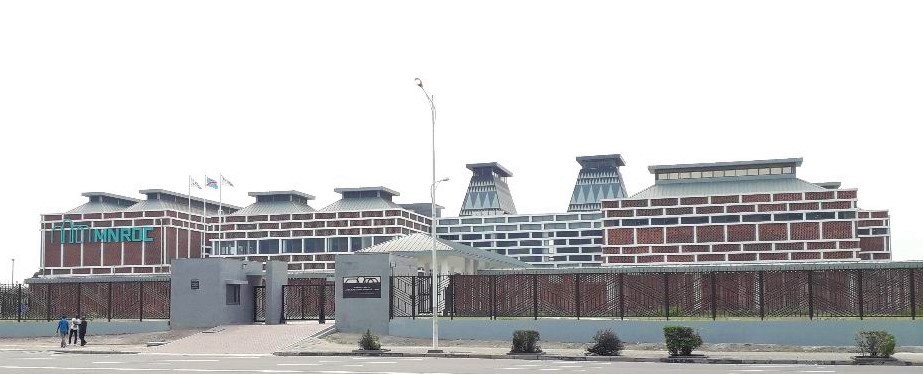
The blaze broke out late on Friday, September 4, in a hall known as Panacée, on an upper floor of a commercial building in the Lingwala district, not far from the National Museum of the Democratic Republic of Congo. Guests were still dancing when flames spread through decorations strung across the ceiling, according to the Congolese state news agency's account of the disaster. The hall had a single narrow exit, and as smoke filled the room, the crush of people trying to leave through it left many trampled or trapped.
The numbers
Norbert Mushinga, the bourgmestre, or mayor, of Lingwala commune, gave a provisional toll of 22 dead on Saturday morning and warned it could still rise as rescue teams cleared the gutted building. His count was echoed by international wire services, including a Xinhua dispatch citing the same provisional figure. The DRC's national government, however, issued a lower official count of 12 dead — seven women and five men — with five people hospitalized and 21 others treated and released. The discrepancy between the municipal and national figures had not been resolved by Sunday, a common pattern in the chaotic early hours after mass-casualty fires in Kinshasa, where death registries are compiled independently by city halls, hospitals and the interior ministry. The injured were scattered across at least four facilities — Camp Kokolo military hospital, Vijana hospital, Cinquantenaire hospital and the former Maman Yemo hospital — complicating any single, reconciled count.
A familiar hazard
The fire is the latest in a string of blazes that have struck Kinshasa's informal economy of rented party halls, many of them converted from commercial space with minimal fire-safety oversight. The United Nations peacekeeping mission's firefighting unit, which supplements the capital's threadbare civil-protection service, has logged repeated interventions in Kinshasa in recent years, citing electrical faults, arson and domestic negligence in densely packed, often wood-framed buildings as recurring causes — a risk that worsens during the region's dry season.
The danger is not new to Congolese authorities. Nearly two years before Friday's fire, President Félix Tshisekedi's cabinet ordered the interior ministry to draw up a multi-sectoral plan to combat recurring fires after a series of blazes damaged markets, fuel depots and a displaced-persons camp. That 2024 directive called for revitalizing the fire brigade and inspecting factories and public buildings for compliance with safety codes. It is unclear how much of the plan was carried out; Friday's fire suggests enforcement, at least in the capital's crowded rental-hall sector, remained thin.
Reaction
The national government expressed condolences to bereaved families and pledged state solidarity, while acknowledging that the exact cause of the fire — whether faulty wiring, flammable decorations, or some combination — had not yet been determined. Mayor Mushinga described the scene to reporters the morning after the fire:
The disaster occurred in a building housing a party hall on the grounds of the Protestant University of Congo, while a wedding ceremony was taking place there. The provisional toll is 22 dead, and this toll could rise.
Jacquemain Shabani, the deputy prime minister who heads the interior, security and decentralization ministry, moved quickly to order a nationwide response. In a telegram dated the day after the fire, he instructed every provincial governor to carry out "systematic inspections" of banquet halls and other venues used for public gatherings, and to shut down immediately any that fail to meet safety standards, including working fire-suppression equipment and adequate emergency exits. For Kinshasa specifically, he set a 15-day deadline for governors to report back, citing "the consequences of the recent catastrophe." The dead and injured were, by all accounts, ordinary wedding guests — family members, friends and neighbors of a couple whose celebration turned into a mass-casualty event.
Beyond the immediate victims, the closure order threatens Kinshasa's dense network of small, often family-run event venues, a sector that hosts weddings, funerals and church functions across the city's roughly 14 million residents and forms a modest but significant slice of the informal economy. Proprietors of halls found lacking will face the choice of costly retrofits — additional exits, fire extinguishers, non-flammable decor — or closure, at a time when many are already operating on thin margins. Local reporting on the Panacée hall noted that its location on Boulevard Triomphal placed it among dozens of similar commercial venues repurposed for large private events with little independent safety certification.
What happens next
Congolese authorities have not announced criminal charges or named a specific cause, and investigators were still working through the wreckage as of Sunday. The credibility of Shabani's inspection order will be tested over the coming two weeks, when Kinshasa's provincial government is due to report which halls have been checked and which, if any, have been closed. Given that a similar cabinet-level pledge to overhaul fire prevention went largely unfulfilled after the 2024 directive, Congolese commentators and residents alike are likely to watch closely for whether this round of promised inspections produces lasting changes or fades once public attention moves on. Funerals for the confirmed victims were expected to begin this week, even as the final death toll — and the true number of the missing or unidentified — remained unsettled.

Melania Trump brokers localized Russia-Ukraine ceasefire for flooded city of Oleshky

Gunmen kill seven at Greek Orthodox church funeral in Jordan's Karak province

Israel orders West Bank lockdown after deadly Hebron checkpoint attack
