Germany and Russia hold first top-diplomat talks since 2022 invasion
Foreign ministers Johann Wadephul and Sergey Lavrov met for roughly 20 minutes on the sidelines of the UN General Assembly, their first face-to-face contact since Russia's invasion of Ukraine — a meeting both sides afterward described, in different words, as producing nothing new.

NEW YORK — On the sidelines of the United Nations General Assembly's high-level debate in New York on Saturday, German Foreign Minister Johann Wadephul sat down with his Russian counterpart, Sergey Lavrov, for the first meeting between the two countries' top diplomats since Russia's full-scale invasion of Ukraine in February 2022.
The encounter lasted roughly 20 minutes, took place in a room provided by the Russian delegation, and opened with a handshake before the two ministers moved into a closed-door session. It was requested by Berlin. The last time a German foreign minister met a Russian counterpart in person was in January 2022, when Annalena Baerbock traveled to Moscow weeks before the invasion began. Since then, the two governments' most senior diplomats had not spoken face to face.
A short, frosty exchange
According to accounts from both delegations, the ministers discussed the war in Ukraine, the safety of shipping in the Black Sea, and bilateral relations more broadly. Wadephul used the meeting to press Lavrov to "abandon the dangerous path of escalation" toward Germany, Europe and NATO, and warned that incidents such as last month's attempted drone attack on Leipzig airport had further damaged an already severely strained relationship. He told Lavrov that a return to more constructive ties was possible "at any time," but that this depended on a genuine willingness in the Kremlin to end the war — willingness he said was "not yet apparent."
Lavrov's response, delivered afterward at his own news conference, was dismissive. He said he had learned nothing from the German minister that Berlin had not already stated publicly.
"I told him that frankly … you could just have called me and said: 'Read my statement.'"
Russian Foreign Ministry spokeswoman Maria Zakharova, who confirmed the meeting had been requested by the German side, offered a similarly pointed account of the exchange, telling Russian media that Wadephul had been unwilling to discuss Moscow's version of events surrounding the 2022 killings in Bucha, Ukraine.
Behind the freeze
The estrangement between Berlin and Moscow dates to the start of the invasion, but it deepened sharply this year. In the early hours of August 5, an explosive-laden drone struck the wing of a Ukrainian Antonov cargo aircraft carrying ammunition bound for Ukraine at Leipzig/Halle airport in Saxony; the device, packed with plastic explosive, failed to detonate. A second drone collided with a passenger jet that had aborted its landing because of the airport's closure. In early September, Germany formally blamed Russia for the attack, summoned Moscow's ambassador and ordered the closure of two Russian state-linked institutions on German soil. President Vladimir Putin called the German evidence "fabricated" and described Berlin's response as a "serious mistake."
- January 2022 — Baerbock meets Lavrov in Moscow, the last German-Russian foreign minister meeting before the invasion
- February 2022 — Russia invades Ukraine; high-level German-Russian diplomatic contact halts
- August 2026 — An explosive drone strikes a Ukrainian cargo plane at Leipzig/Halle airport
- September 2026 — Germany blames Russia, expels diplomatic contacts and closes two Russian institutions
- September 26, 2026 — Wadephul and Lavrov meet at the UN General Assembly, their first talks since 2022
A pointed backdrop at the UN
The meeting took place hours after Lavrov used his own address to the General Assembly to reaffirm Russia's war aims, telling delegates that the goals of what Moscow calls its "special military operation" "will be achieved" and that "threats to Russia's security will be eliminated." He also used the speech to argue against expanding the UN Security Council to include permanent seats for Germany and Japan, backing claims by Brazil, India and African states instead — a direct swipe at one of Berlin's long-standing foreign policy goals. Wadephul, in his own remarks to the Assembly earlier in the week, had pressed the case for continued Western support of Ukraine and for reform of multilateral institutions, including on the German Foreign Office's own published account of his address to the chamber.
German officials described the New York meeting as consistent with the government's stated approach heading into the UN session, which emphasized what the Foreign Office called efforts to "contribute to the resolution of crises" while deepening partnerships on the sidelines of the General Debate.
Who is watching
The exchange was closely watched in Kyiv, where officials have pressed Western governments not to normalize relations with Moscow absent a full Russian withdrawal. After the meeting, Wadephul called Ukrainian Foreign Minister Andrii Sybiha to brief him on what had been said. Sybiha said afterward he was grateful to Wadephul "for conveying our firm shared positions to the Russian side: insisting that Moscow end its war, reaffirming unwavering support for Ukraine, and warning against further hostile actions against Europe." The two also discussed further steps to increase pressure on Moscow and to shore up Ukraine's resilience heading into winter, when Russian strikes on energy infrastructure have historically intensified.
The encounter also registered in Washington, where the Trump administration has separately been pursuing its own diplomatic track on ending the war, and among European capitals weighing further sanctions on Russia over the invasion and the Leipzig incident. Analysts covering the meeting, including reporting by Al Jazeera and The Moscow Times, described it as a limited, largely symbolic reopening of a channel rather than the start of substantive negotiations, noting that neither side signaled any shift in its underlying position on the war.
What comes next
Neither ministry announced plans for a follow-up meeting. German officials indicated Berlin's support for Ukraine, including military assistance, would continue unchanged, while Russian officials gave no sign of a shift in the Kremlin's negotiating position. For now, the New York meeting stands as a narrow reopening of contact between two governments that have had almost no direct diplomatic dealings in three and a half years — a channel that both sides characterized, in their own ways, as having produced no breakthrough.
Trump rejects Iran's seven-day plan to reopen Strait of Hormuz

Moldova Declares 60-Day Energy Emergency as Drought and Overlapping Wars Squeeze Supplies
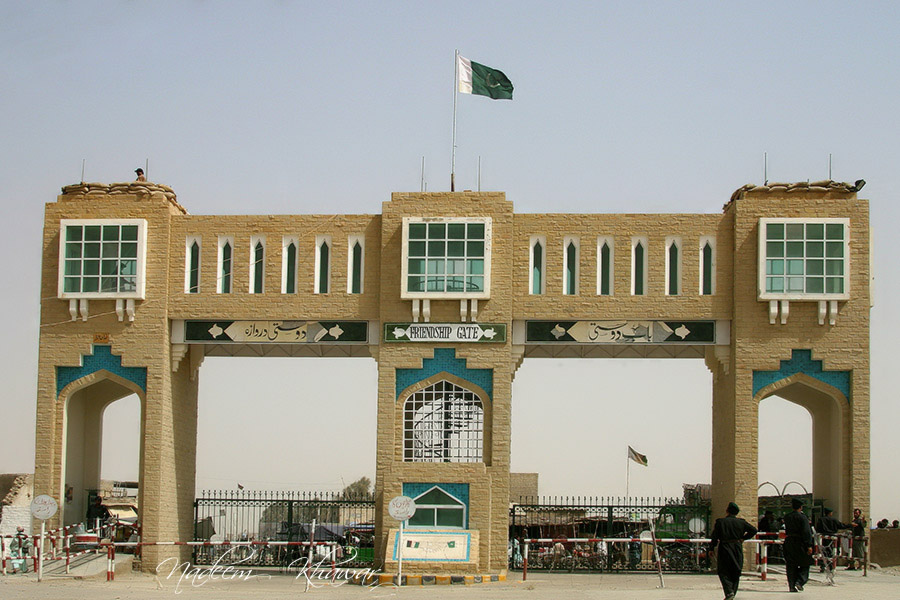
Pakistan and Afghanistan trade blame after deadliest border clash in months
