Moldova Declares 60-Day Energy Emergency as Drought and Overlapping Wars Squeeze Supplies
Facing record-low river flows, a spike in European gas prices and a string of Russian drone incursions, the EU-candidate country hands its government emergency powers over fuel, electricity and water through the winter.

Moldova has entered a 60-day state of emergency in its energy and hydrological sectors, a measure that hands the government sweeping temporary powers over fuel stocks, electricity imports and drinking-water supplies as the small, EU-candidate country heads into winter with its rivers at record lows and gas markets destabilized by two overlapping wars. Parliament in Chisinau approved the decree on September 22, and it took legal effect on September 26 after publication in the country's Official Gazette.
The vote followed a National Security Council session on September 21, chaired by President Maia Sandu, at which officials reviewed what the presidency's own agenda notice described as "the impact of the international energy crisis on the Republic of Moldova" and recommended the emergency declaration to the government and legislature.
A five-hour vote
Moldova's 101-seat parliament, dominated by the governing pro-European PAS party, backed the measure 54 to 20, with 22 deputies abstaining or absent, after roughly five hours of debate. The resolution, detailed in the government's press release, empowers a National Crisis Management Commission to fast-track the purchase and stockpiling of fuel, prioritize electricity and gas imports, simplify approval for backup generators, temporarily adjust heating-system rules, and, if conditions worsen, ration drinking water and restrict non-essential use.
The numbers behind the decision are stark. Inflows into the Dniester basin's reservoir have fallen to roughly 22 cubic meters per second, well short of the 60 cubic meters per second regulators consider a safe minimum, and hydropower output at the Costesti plant on the Prut has dropped by about 55 percent. Moldova will need to import an estimated 400 to 450 megawatts of electricity at peak winter demand against only about 360 megawatts of guaranteed import capacity from Romania. European gas benchmark prices climbed to roughly 84 euros per megawatt-hour in early September, some 50 percent above the level built into current tariffs, even though authorities say more than 90 percent of the season's gas needs are already contracted. Diesel reserves, which fell below four days of consumption in August and left more than 100 filling stations short of fuel, have since been rebuilt to roughly ten days' supply.
Three crises arriving together
Officials describe the timing, not any single failure, as the problem. Moldova severed its dependence on Russian gas after 2022 and now buys entirely on the European market, which leaves it exposed to price swings driven by conflicts far from its borders. The government points to fighting in the Persian Gulf, which has curtailed gas exports from Qatar, and to Russian strikes that have damaged oil refineries and power infrastructure in neighboring Ukraine, as external shocks layered on top of an unprecedented regional drought that has cut river flows and hydropower output across the Dniester and Prut basins simultaneously. The European Commission's energy directorate, which has run a standing dialogue with Chisinau on diversifying supply and integrating Moldova into EU electricity markets, has repeatedly flagged the country's exposure to exactly this kind of overlapping shock since Moldova lost direct access to Russian gas.
This is not Moldova's first such declaration. The government imposed an energy-sector emergency in March after Russian strikes on Ukraine's grid knocked out a cross-border power line linking Moldova to Romania, and lower-level alerts have been in place since a severe European drought set in over the summer. Winter energy emergencies have become close to an annual event in Chisinau, echoing similar declarations in October 2021 and December 2024 that were driven more directly by Russian gas pressure.
Who feels the strain
The immediate burden falls on Moldova's roughly 2.4 million residents, and disproportionately on rural communities that depend on the Dniester and Prut for drinking water and on lower-income households already vulnerable to fuel and heating costs. The government has said a compensation scheme covering more than 620,000 households will be expanded for the coming season, with the state budget line for winter energy subsidies rising above the 2.5 to 3.5 billion lei spent in prior years given elevated market prices. Diesel prices, officials have warned, could exceed 40 lei (roughly 2 euros) per liter this winter. Hospitals, water utilities and other essential operators are named in the decree as priority recipients of fuel and power should shortages materialize.
"I'm not saying that tomorrow we'll run out of gas, diesel, electricity or water. The problem is that we are entering the cold season with several major risks overlapping at the same time," Prime Minister Vasile Tofan told deputies, describing what he called a "perfect storm" of drought, war and refinery damage.
Environment Minister Gheorghe Hajder framed the request in similar terms, telling parliament, according to reporting on the debate, that authorities "must have all the tools required to intervene" before shortages of water or fuel actually materialize rather than after. Opposition deputies who voted against the measure argued the government should pair emergency powers with concrete relief for households rather than administrative authority alone.
A war that keeps arriving from the air
The energy emergency lands alongside a separate but related source of alarm: repeated incursions by Russian drones into Moldovan airspace during strikes on neighboring Ukraine. On September 24, four drones crossed into Moldova's north, with at least one exploding near the villages of Camenca and Cernita in Floresti district; Moldovan authorities briefly closed northern airspace before reopening it. President Sandu and parliamentary speaker Igor Grosu condemned the episode, and the country's diplomats renewed a formal protest over the violations, arguing responsibility for the danger lies with Moscow's continuing war. A separate Shahed-type drone crossed both Moldovan and Romanian airspace on September 8, an incident the Kyiv Independent reported triggered the scrambling of NATO fighter jets from a Romanian air base and the temporary suspension of flights at Iasi airport. Moldovan officials count dozens of such overflights since the start of 2026 alone, part of more than 50 recorded since Russia's full-scale invasion of Ukraine began in 2022.
What comes next
The state of emergency runs through late November, after which the government must either let it lapse or ask parliament to extend it. In the interim, the National Crisis Management Commission gains authority to intervene directly in fuel and power markets, licensed energy operators must report their stocks daily, and dedicated transport corridors are meant to keep diesel and gas moving even if commercial supply chains falter. Moldova's broader European integration track continues in parallel: the country has drawn close to 480 million euros of a 1.9 billion euro EU growth package since 2024 and launched day-ahead electricity trading in December 2025 as it works toward joining the EU's internal power market, an effort Brussels has cast as central to insulating Chisinau from exactly the kind of shock now unfolding. Whether the 60-day window is enough will depend largely on factors outside Moldova's control: how the Gulf conflict affects Qatari gas flows, whether Russian strikes further damage Ukraine's grid and refineries, and whether autumn rain arrives in time to lift the Dniester and Prut before the coldest months set in.
Trump rejects Iran's seven-day plan to reopen Strait of Hormuz

Germany and Russia hold first top-diplomat talks since 2022 invasion
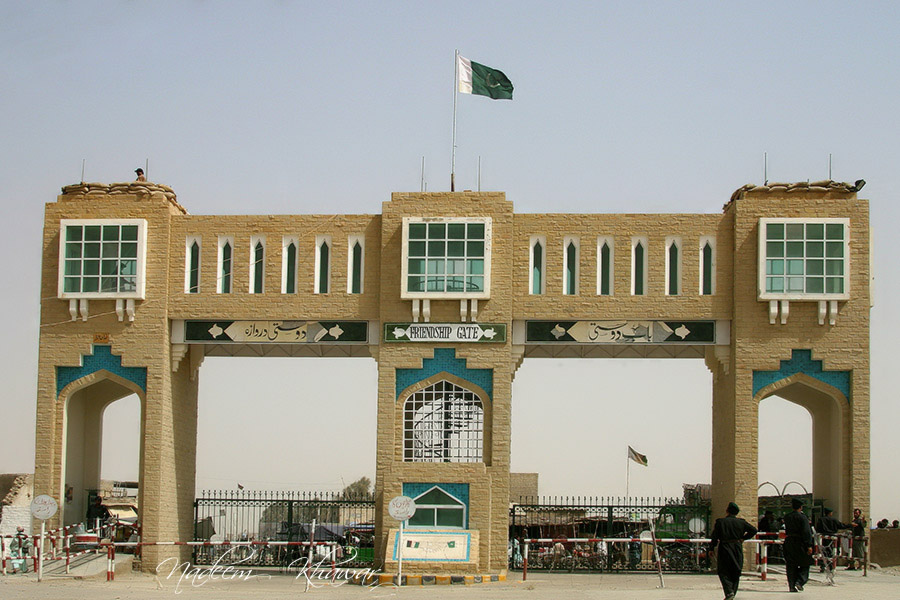
Pakistan and Afghanistan trade blame after deadliest border clash in months
