Pakistan and Afghanistan trade blame after deadliest border clash in months
Pakistan says it killed 13 Afghan Taliban fighters in an overnight battle in Balochistan, while Kabul denies the losses and says it destroyed a Pakistani border post — the sharpest flare-up yet in a war that has simmered since February.
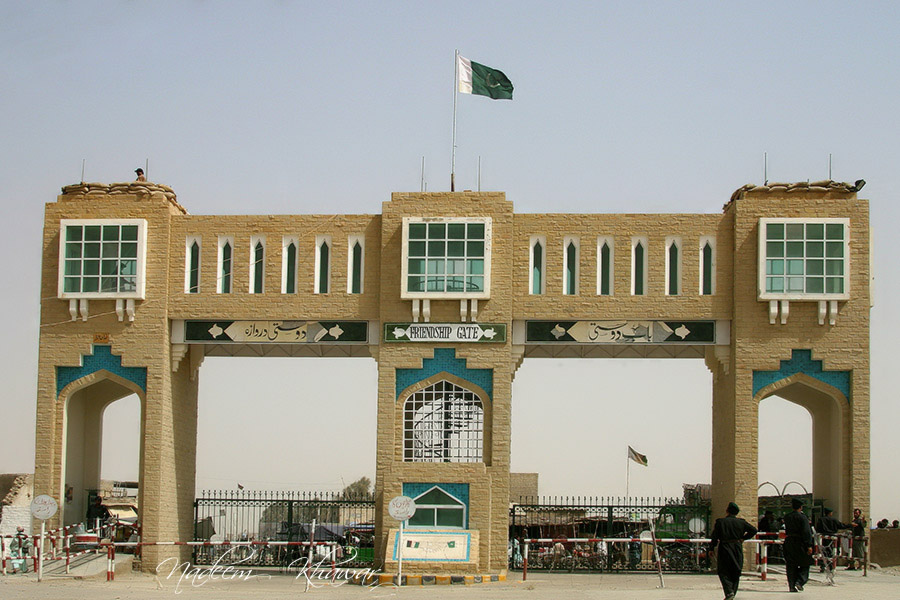
Pakistani and Afghan Taliban forces traded gunfire and artillery for hours along their shared border early Friday, the latest and possibly the bloodiest flare-up yet in a week of strikes and counter-strikes that has pushed the two neighbors closer to a wider war than at any point since fighting first erupted in February.
Pakistan's information ministry said its troops repelled an "attempted Afghan aggression" overnight in the Gulistan sector of southwestern Balochistan province, killing at least 13 Afghan Taliban personnel and wounding several more. Kabul's defence ministry denied its forces suffered any casualties and instead claimed its fighters destroyed a Pakistani border post near Spin Boldak, opposite the Pakistani city of Chaman — an account Islamabad's information ministry dismissed as "false and fabricated." Residents in Chaman reported that the exchange of fire lasted for hours through the night. Neither government's figures could be independently verified.
A disputed night at the border
The Gulistan clash was the sharpest ground engagement since a nationwide ceasefire collapsed earlier this year, and it followed two consecutive nights of Pakistani air and drone strikes deeper inside Afghan territory. On Thursday, Pakistani aircraft and drones hit what Islamabad described as ten militant staging and storage sites in Afghanistan's Kandahar, Paktia and Khost provinces; Afghan officials said four civilians were killed in those strikes, which came days after Pakistan accused Afghan forces of attempting a drone incursion of its own. The strikes and the border battle together mark, by most independent counts, the worst 72 hours of fighting between the two governments since February.
The immediate trigger for this month's escalation was a mass-casualty attack far from the border. On September 18, a suicide bombing and gun assault tore through the Old Police Lines compound in Kohat, in Pakistan's Khyber Pakhtunkhwa province, killing at least 31 people — most of them police officers — during Friday prayers at a mosque inside the compound. A faction of the Pakistani Taliban claimed responsibility. Within three days Pakistani jets had struck sites in Afghanistan's Kunar and Paktika provinces that Islamabad said were used by the group; Pakistan put the death toll at 28 militants, while Afghan authorities said three civilians were killed, a figure the United Nations said it had confirmed.
Seven months of low-intensity war
Friday's clash is the latest chapter in hostilities that began on February 21, when Pakistani airstrikes on alleged Pakistani Taliban and Islamic State-Khorasan camps in Nangarhar, Paktika and Khost set off days of ground fighting, retaliatory raids and competing casualty claims running into the hundreds on both sides. Pakistan's defence minister, Khawaja Asif, later described the campaign, codenamed Operation Ghazab lil-Haq, as an "open war." Two temporary ceasefires, tied to the Eid al-Fitr and Eid al-Adha holidays, briefly quieted the border in March and May but never produced a lasting agreement, and low-intensity clashes continued through the summer before this month's spike.
Islamabad accuses the Taliban government of sheltering Tehreek-e-Taliban Pakistan fighters and allowing them to plan attacks — including, it says, the Kohat bombing — from Afghan soil. Kabul denies harbouring anti-Pakistan militants and casts Pakistan's internal security problems as its own affair, arguing that cross-border strikes violate Afghan sovereignty and have killed far more civilians than fighters.
Civilians and trade caught in the crossfire
The rural, sparsely resourced border districts on both sides have borne the brunt of the fighting. Afghanistan's de facto authorities have reported dozens of civilian deaths from Pakistani strikes since February, while Pakistan has recorded civilian casualties and displacement from retaliatory shelling in Balochistan and Khyber Pakhtunkhwa. A United Nations account of the fighting's toll on ordinary Afghans described families fleeing villages near the border with almost no notice, adding to a displacement crisis in a country already reliant on humanitarian aid. By the spring, aid workers estimated the war had displaced roughly 115,000 Afghans and about 3,000 Pakistanis from border districts, figures that have almost certainly grown since. Trade has suffered as well: the Torkham and Chaman crossings, arteries for an estimated tens of thousands of daily commuters and hundreds of trucks in peacetime, have been repeatedly and sometimes completely closed since February, a disruption Pakistani and Afghan traders' associations say has cost both economies heavily.
"The Taliban have failed to seize the opportunity to integrate Afghanistan with the wider community and to improve the lives of the Afghan people due to their misplaced priorities," Pakistan's deputy prime minister and foreign minister, Ishaq Dar, told a meeting of the Organisation of Islamic Cooperation's contact group on Afghanistan this week.
Fraying mediation, hardening positions
The renewed fighting complicates a mediation effort that has involved China, Turkey, Qatar and Saudi Arabia since a fragile Qatar-brokered ceasefire in October 2025, and follow-up talks in Doha and Istanbul have so far failed to produce a durable framework. Dar's remarks came on the sidelines of the United Nations General Assembly in New York, where he pressed the Taliban to take "credible, verifiable and sustained" action against militant sanctuaries as a precondition for normalizing relations. Kabul, for its part, has appealed to Russia, China, the European Union and Britain for help ending a war it blames squarely on Pakistani aggression.
At the UN, Secretary-General António Guterres's office has repeatedly voiced alarm over the civilian toll, and the world body's mission in Afghanistan has documented casualties from strikes on both sides of the border over the course of the fighting, a pattern reflected in the UN's own briefings on the violence earlier this year, which called for an immediate cessation of hostilities. Independent reporting on the ground has struggled to keep pace with the competing claims: accounts of the overnight fighting in Gulistan noted that neither side's account of casualties could be independently verified, a caveat that has accompanied nearly every clash since February. It echoes an earlier flashpoint in June, when a Pakistani ground operation and strikes along the border produced similarly irreconcilable death tolls from Islamabad and Kabul.
Pakistan's state broadcaster reported that security forces "remain fully prepared to give a timely and effective response to any infiltration into Pakistan's territory from Afghan soil," signalling little appetite in Islamabad for de-escalation without concessions from the Taliban.
What happens next
Pakistani officials have said they are in "no hurry" to wind down Operation Ghazab lil-Haq before the Taliban offers verifiable guarantees against cross-border militancy, suggesting the current cycle of strikes and skirmishes could continue for weeks. Afghan officials have promised an "appropriate response" to Pakistani strikes, raising the prospect of further retaliation rather than a swift return to talks. Diplomats from the four mediating countries are expected to press both sides for a fresh truce in the coming days, but with Islamabad and Kabul each blaming the other for the collapse of previous ceasefires, and with a mass-casualty attack inside Pakistan still unresolved, neither government has signalled it is ready to step back from the border.
Al Jazeera — Pakistani forces kill Afghan Taliban fighters in border escalation
Daily Pakistan Global — Pakistan rejects Afghan claim about destruction of Pakistani border post
Radio Pakistan (state broadcaster) — Security forces foil aggression attempt from Afghan side
UN News — Displacement toll of the Pakistan-Afghanistan border fighting
Trump rejects Iran's seven-day plan to reopen Strait of Hormuz

Germany and Russia hold first top-diplomat talks since 2022 invasion

Moldova Declares 60-Day Energy Emergency as Drought and Overlapping Wars Squeeze Supplies
