US, Denmark and Greenland Sign Arctic Security Pact After Months of Annexation Threats
A new agreement gives Washington permanent basing rights on Greenland and bars non-NATO powers from the island, closing an eight-month standoff that began with President Trump's threats to seize the territory.

The United States, Denmark and Greenland signed a new security agreement on Tuesday at the United Nations headquarters in New York, formally ending eight months of tension that began when President Trump repeatedly threatened to seize the Arctic island by force or economic pressure. The pact grants Washington permanent basing rights on Greenland, bars non-NATO countries from stationing forces there, and commits the United States to defending the territory, while Denmark and Greenland say it leaves Greenlandic sovereignty untouched.
President Trump signed the document alongside Danish Prime Minister Mette Frederiksen and Greenland's premier, Jens-Frederik Nielsen, on the sidelines of the U.N. General Assembly. The White House called the deal a "historic" arrangement that gives the United States "permanent control over security and all other needs" on the island, at what it said was no cost to American taxpayers.
What the agreement changes
The document, published in full by the White House, amends and supplements the 1951 U.S.-Danish defense agreement that has governed the American military presence on Greenland for 75 years. Under the new terms:
- The United States gains the right to build two additional military installations, at Narsarsuaq in the south and Mestersvig on the east coast, alongside its existing Pituffik Space Base in the northwest.
- Washington may "modernize and expand" Pituffik, and has laid groundwork for elements of a proposed missile-defense system referred to as "Golden Dome."
- Non-NATO countries are barred from establishing any military presence, base or "sensitive" investment in Greenland without the consent of all three parties, a provision aimed squarely at China and Russia.
- The security commitments have no expiration date and, notably, are written to survive even if Greenland eventually becomes independent from the Kingdom of Denmark.
Greenland spans roughly 2.16 million square kilometers and is home to about 57,000 people, most of them Indigenous Inuit, making it the world's largest island and one of its most sparsely populated territories. Pituffik, the only active U.S. base on the island until now, currently houses around 700 military, civilian and contract personnel. Analysts who reviewed the text told CNN that the changes to the underlying legal framework are, in practical terms, narrower than the rhetoric surrounding the signing suggested — largely codifying an expanded U.S. footprint that the 2004 update to the 1951 agreement already permitted with advance notice. Iris Ferguson, a former deputy assistant secretary of defense for Arctic policy in the Biden administration, said the episode had nonetheless "caused a lot of damage to Arctic security" through months of uncertainty, even as she credited the final text with pushing "in the right direction towards advancing common goals," including a new guarantee of continued U.S. military access should Greenland eventually leave the Kingdom of Denmark, an issue she said had "long festered" under the old arrangement.
How the crisis unfolded
The dispute traces to January 2026, when Trump revived his first-term interest in acquiring Greenland, this time declining to rule out military force and threatening tariffs of up to 25 percent on goods from Denmark and other European countries if Copenhagen did not cede the territory. "If we don't do it, Russia or China will take over Greenland," Trump said at the time, arguing the United States could not accept either country as a neighbor across the Arctic. Nielsen told Washington there would be "no more pressure, no more hints, no more fantasies about annexation," and tens of thousands of Greenlanders took to the streets of Nuuk on January 17 in what organizers called the largest protests in the territory's history. The European Union backed Denmark throughout the standoff, with European Council President António Costa and Commission President Ursula von der Leyen issuing joint statements affirming Greenland's right to self-determination and warning against any coercive move by a NATO ally.
Talks that followed produced the framework unveiled on September 18 and signed four days later. Denmark's prime ministry, in a statement released after the signing, said the text "recognizes and respects the sovereignty and territorial integrity of the Kingdom of Denmark and the Greenlandic people's right to self-determination," and that it must still clear parliamentary procedures in Copenhagen and Nuuk before taking legal effect.
Reaction in Nuuk, Copenhagen and Brussels
Frederiksen told reporters after the signing that "the Kingdom of Denmark is in a better place than we were yesterday" and described the pact as "a deal that can last forever." Nielsen was more expansive in his praise, framing the outcome as a validation of Greenland's negotiating position after months of pressure.
"Your security is our security, and our security is your security," Nielsen said, calling the agreement "a win-win-win" for Greenland, Denmark and the United States.
Not every Greenlandic voice was as enthusiastic. Naaja Nathanielsen, one of Greenland's two representatives in the Danish parliament and a former minister in Nuuk, told CBS News that "a lot of trust has been tested" over the past eight months and that Greenlanders had been "generally afraid and worried about everything, from losing our country, to our livelihoods." She nonetheless called the accord "a huge step in the right direction" and noted it is the first binding international agreement Greenland has signed in its own right.
NATO Secretary-General Mark Rutte welcomed the signing, saying in a statement that the pact, combined with "NATO's growing role in securing this vital region, enhances our collective security and supports a safer and more stable future for us all." Costa, the European Council president, called it "a positive step for transatlantic cooperation and Arctic security" grounded in respect for Greenlandic self-determination, according to reporting from Copenhagen. Coverage of the New York signing ceremony, including remarks from all three leaders, was carried by Al Jazeera and other outlets present at the United Nations.
What happens next
The agreement now goes to the Danish Folketing and to Greenland's Inatsisartut for the ratification procedures both governments say are required before it carries legal force; no date has yet been set for those votes. Construction timelines for the Narsarsuaq and Mestersvig sites have not been disclosed, and officials in Copenhagen have said Arctic security will increasingly be treated as a shared NATO responsibility rather than a bilateral U.S.-Danish matter, a shift expected to feature in alliance planning discussions in the coming months. For Greenlanders, the more immediate question is domestic: an independence movement that gained momentum during the annexation threats is likely to keep pressing the argument that a U.S. military commitment written to outlast Danish sovereignty strengthens, rather than weakens, the case for eventual statehood. Investors in Greenland's nascent mining sector, courted for years over the island's rare-earth and critical-mineral deposits, are also watching closely: the agreement's tighter screening of non-NATO foreign investment could reshape who is allowed to bid for future mining licenses on the island.

Iranian Guard Officers Helped Direct Houthi Blitz That Seized Yemen's Red Sea Coast, Officials Say
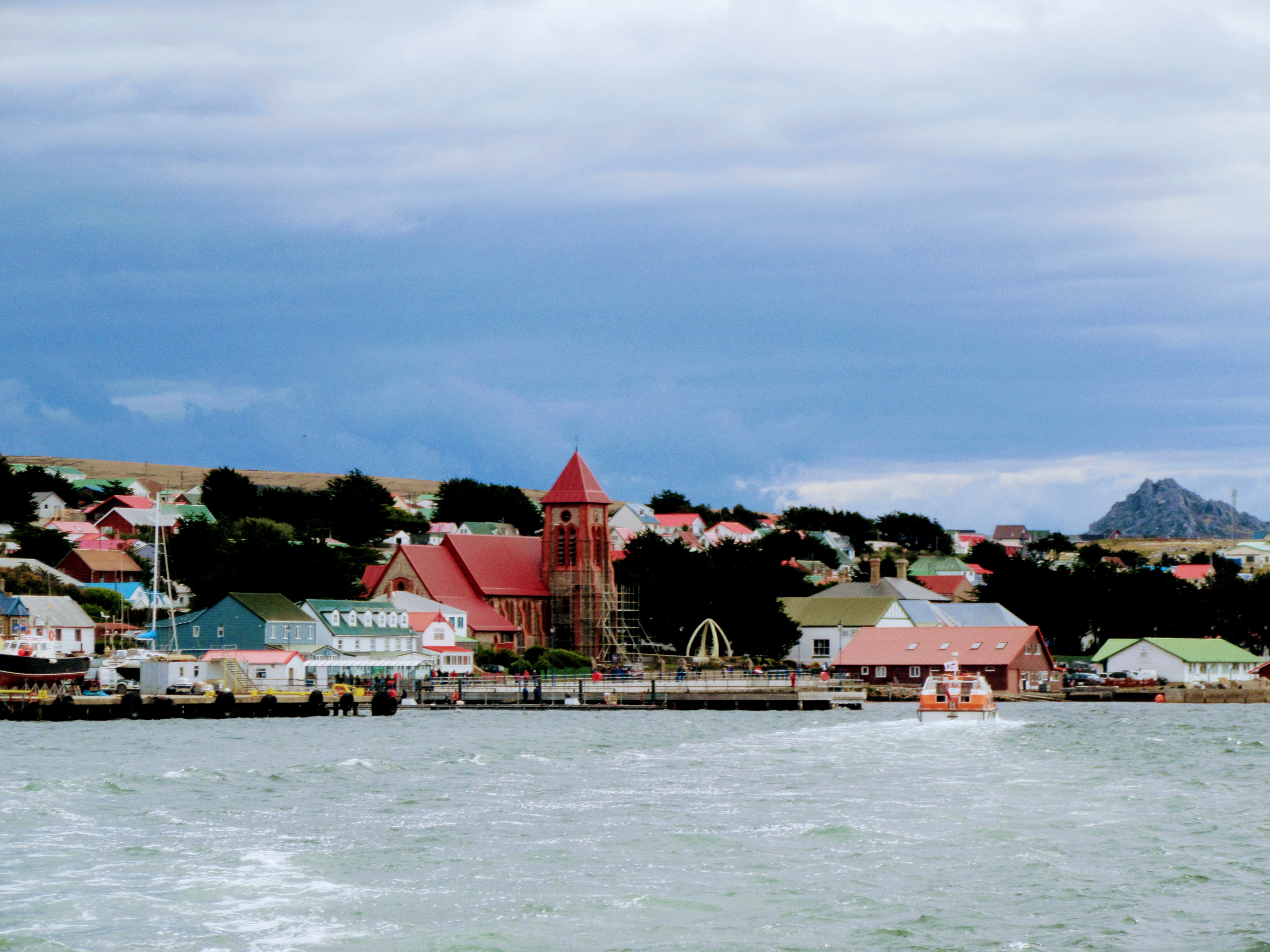
Argentina escalates Falklands oil dispute as Milei tells UN the islands are 'illegally occupied'

UN investigators find "reasonable grounds" that US strikes on Iran school, sports complex were war crimes
