Venezuelans hold first nationwide protest in nearly two years to demand elections
Thousands marched in Caracas and four other cities on Thursday behind the movement of Nobel laureate María Corina Machado, nine months after the United States captured Nicolás Maduro and installed an interim government that has yet to set a date for a vote.
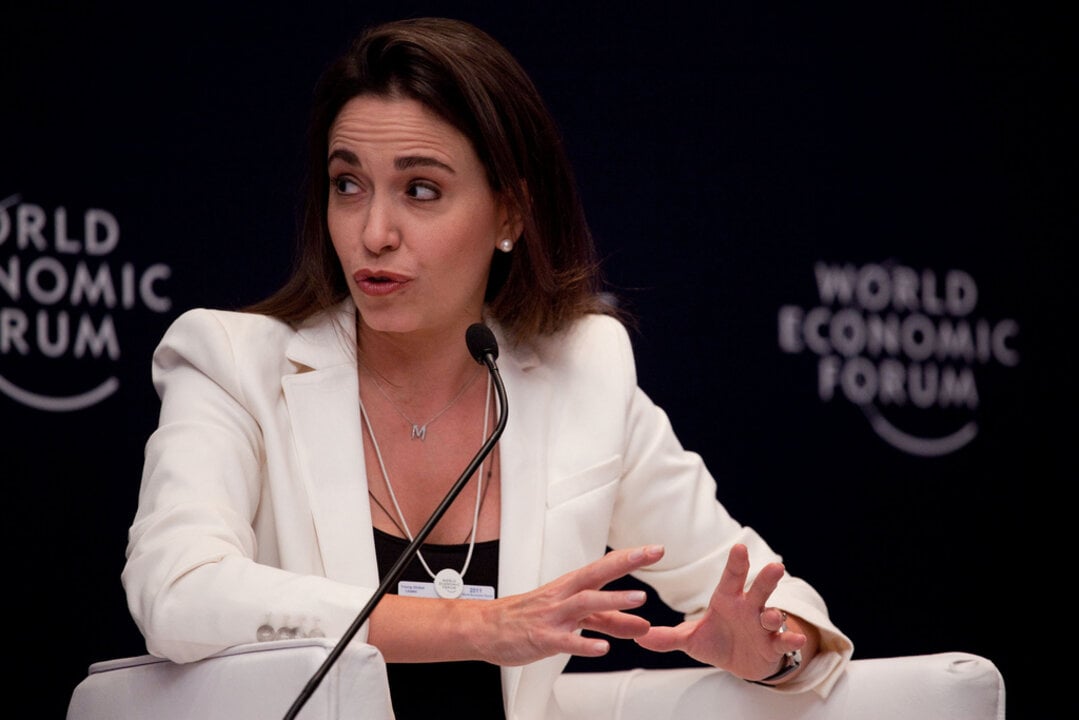
Thousands of Venezuelans marched through the streets of Caracas and four other cities on Thursday in the country's first nationwide opposition demonstration in nearly two years, demanding that the interim government that replaced Nicolás Maduro commit to a firm date for elections.
The protest was organized by Vente Venezuela, the movement led by opposition leader María Corina Machado, winner of the 2025 Nobel Peace Prize for her work promoting democratic rights in Venezuela. It was the first protest of its scale since the government of acting President Delcy Rodríguez took power in January, after United States special forces seized Maduro in a raid on Caracas and flew him to New York to face drug-trafficking charges.
A thin security presence
Demonstrators gathered in Caracas, Valencia, Maracay, San Cristóbal and Maracaibo. Turnout varied by city — in the hundreds in Maracay, growing into the thousands in the capital — and several of the smaller marches dispersed before dark. Security forces, who have violently broken up past opposition protests, were notably sparse this time.
The ruling United Socialist Party organized a counter-demonstration the same day, calling supporters to march from Caracas's Plaza Venezuela — the same square where the opposition had planned to gather — toward the presidential palace, framed officially as a Breast Cancer Awareness Month event. Interior Minister Diosdado Cabello, who oversees the security services, appeared at the government march on state television; organizers moved the opposition's rally to a nearby location to avoid a direct confrontation.
"Seeing this makes me happy because I know change is possible," said Leosmary Hernández, an 18-year-old cosmetology student who marched in Maracay, describing the hardships of studying and working under Venezuela's dollarized, crisis-battered economy.
From Maduro's capture to a stalled transition
The protest is the clearest public test yet of the fragile order that has governed Venezuela since Maduro's removal. The Justice Department had offered a $50 million reward for information leading to his arrest before the January operation; he and his wife, Cilia Flores, were indicted in federal court in New York on narco-terrorism and weapons charges and have pleaded not guilty.
Rodríguez, Maduro's former vice president, has governed since as acting president with close, if uneasy, coordination with Washington. Addressing the UN General Assembly for the first time in September, she pledged that "elections will be held in Venezuela" but tied the timing to an ongoing "political dialogue with opposition sectors" and set no date. President Trump has praised her administration's management of the transition while saying it remains too soon to hold a vote.
Separate from Thursday's march, US-backed negotiations between a faction of the opposition and the interim government — aimed at overhauling Venezuela's Supreme Court and electoral council ahead of any future vote — held their latest round earlier this month, though officials involved say structural changes could take considerable time. Machado's movement is not part of those talks, though she has said she will not obstruct them. She has called for a presidential election by July 24, 2027 — Simón Bolívar's birthday.
Political prisoners and an unresolved count
The detention of government critics remains a central grievance. Venezuelan rights group Foro Penal counted 322 political prisoners as of early October, down from more than 400 in June but still far short of the releases the government has publicly claimed. UN-mandated human rights investigators said in January that of roughly 800 people believed arbitrarily detained, only about 50 had been verifiably freed despite government announcements of mass releases, and they reported new arrests of dissidents and intimidation by armed, government-aligned groups in the weeks after Maduro's capture. Caracas denies holding political prisoners.
- Protests held in five cities: Caracas, Valencia, Maracay, San Cristóbal and Maracaibo
- Organized by Vente Venezuela, the movement of Nobel Peace Prize laureate María Corina Machado
- 322 political prisoners counted by Foro Penal as of early October, down from 404 in June
- No election date set nine months after Maduro's January capture by US forces
What's next
Neither Rodríguez nor Trump has set a date for a legislative or presidential vote, and the US-backed talks over judicial and electoral reform are not expected to produce quick results. Machado, who has been outside Venezuela for nearly a year, says her campaign's internal tallies showed her candidate won the disputed 2024 election, a claim the government rejects. With no timetable agreed and the next major diplomatic test — a further UN review of detentions — still pending, Thursday's march is likely to be read on both sides as a gauge of how much street pressure the opposition can still muster nearly a year into the post-Maduro transition.

Melania Trump brokers localized Russia-Ukraine ceasefire for flooded city of Oleshky

Gunmen kill seven at Greek Orthodox church funeral in Jordan's Karak province

Israel orders West Bank lockdown after deadly Hebron checkpoint attack
