American Eagle profit triples on tariff refunds, but shares fall 11% on outlook
American Eagle Outfitters posted second-quarter earnings far above Wall Street estimates, lifted largely by a $196 million tariff refund, but investors sent shares down about 11% after third-quarter guidance signaled continued softness at the company's namesake brand.
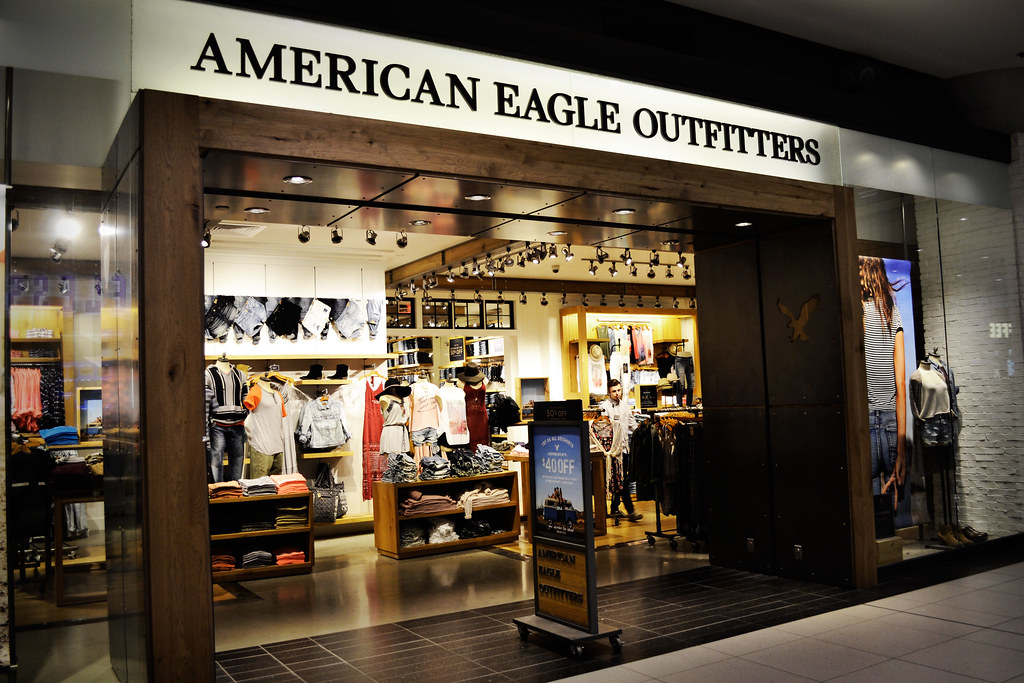
American Eagle Outfitters posted second-quarter profit that more than tripled Wall Street's expectations, but the win did little to reassure investors. Shares of the Pittsburgh-based apparel retailer fell as much as 11% in premarket trading Thursday after executives disclosed that most of the earnings beat came from a one-time customs refund rather than stronger underlying sales, and after the company's third-quarter guidance pointed to continued weakness in its namesake brand.
The company reported the results in a second-quarter earnings statement released after Wednesday's closing bell, and in a corresponding filing with the Securities and Exchange Commission. AEO Inc., which owns both the American Eagle and Aerie brands, said diluted earnings came to 79 cents a share, against a consensus estimate of roughly 22 cents tracked by Zacks Investment Research. Revenue rose 8% from a year earlier to $1.38 billion, edging past analyst forecasts near $1.37 billion.
A profit inflated by tariff refunds
The scale of the earnings beat traced almost entirely to a single line item. American Eagle said it received $196 million in refunds, including interest, tied to duties collected under the International Emergency Economic Powers Act, after the Supreme Court ruled in February that the executive branch lacked authority to impose those tariffs unilaterally. Net of a related $35 million bump to incentive-compensation accruals, the refund added a $161 million benefit to operating income, according to figures disclosed in the company's quarterly filing. Trade lawyers have described a broader wave of similar refund claims moving through U.S. Customs and Border Protection as importers across retail, apparel and manufacturing seek repayment of duties paid over roughly the prior year.
Stripped of that windfall, gross margin still expanded, but by far less than the headline 980-basis-point gain to 48.7% that the company reported. Operating margin came in at 15.3%, compared with 8% a year earlier — a jump that several Wall Street analysts flagged as unsustainable once the refund cycle ends. Merchandise margins on their own actually narrowed by roughly 330 basis points, the company's filing showed, meaning the underlying business sold goods at thinner markups even as the refund pushed total profitability higher. Inventory, meanwhile, rose 14% by cost and 9% by unit count from a year earlier, a buildup the company attributed partly to tariff-related cost inflation still working through its supply chain even as the refunds arrived.
The refund itself is a byproduct of a legal fight that worked through U.S. courts for more than a year. The tariffs in question were imposed under emergency economic powers rather than the trade statutes Congress has historically used to authorize duties, and importers challenged that approach almost immediately. When the Supreme Court sided with the challengers, the ruling did not just end future collection of those duties — it opened a refund channel for companies that had already paid them, run through a claims process at U.S. Customs and Border Protection. American Eagle's $196 million recovery is among the larger single-company refunds disclosed so far by a mall-based apparel retailer, reflecting the volume of imported denim, knitwear and intimates apparel the company brings in each year from suppliers in Asia and Central America.
Aerie carries the portfolio
Beneath the tariff story, the quarter underscored a widening gap between American Eagle's two main brands. Aerie, the intimates and activewear label, and its OFFLINE athletic line together grew revenue 25%, with comparable sales up 19%. The American Eagle brand itself, which still generates the bulk of company revenue, posted a 1% decline in comparable sales, dragging total company comparable sales to a 6% gain that would have been stronger without it. Net sales at the American Eagle nameplate rose just 0.7% to $805.9 million.
Executive Chairman and Chief Executive Jay Schottenstein credited the results to "the broad-based momentum of Aerie and OFFLINE, alongside encouraging progress at American Eagle," language that reflected the company's continued reliance on the newer brand to offset softness at its flagship. Jennifer Foyle, the company's executive creative director for both American Eagle and Aerie, said the namesake chain had seen "a little pressure on seasonal ideas" and that management expected the pattern to persist into the third quarter while it works to right-size inventory, according to remarks reported by Reuters. The company closed six American Eagle stores and opened three during the first half of the fiscal year, while Aerie, including OFFLINE, opened five and closed two, leaving the consolidated store count at 1,167.
The divergence matters to a broader swath of the retail sector. Mall landlords, apparel wholesalers and rival teen and young-adult chains including Gap and Abercrombie & Fitch are watching the same consumer: shoppers who, according to retail-trade coverage of the results, have been prioritizing essentials such as groceries and gasoline over discretionary apparel purchases and waiting for markdowns before buying clothing. AEO's own guidance assumes that pattern does not meaningfully improve before the holiday season.
For American Eagle's store and distribution employees, the results carry a more immediate implication: continued store-fleet pruning at the namesake chain even as the company adds Aerie and OFFLINE locations. The company has trimmed its American Eagle footprint over several recent fiscal years while expanding Aerie, a mix shift that has gradually made the intimates and athletic label a larger share of overall revenue than it was five years ago. Shareholders, for their part, have already absorbed a steep decline over the past year — the stock's 52-week range runs from $14.06 to $28.46, meaning Thursday's premarket price sat closer to the low end of that band than the high.
Analysts question the quality of the quarter
The market's reaction reflected skepticism that a profit built substantially on a nonrecurring customs refund says much about the durability of the business. Shares, which closed Wednesday at $16.89, traded near $15 in the premarket session Thursday, a decline of roughly 11% that would trim the company's market capitalization to around $2.5 billion if it holds through the regular session.
"American Eagle continues to struggle as our experts have pointed out a less-clear brand voice and merchandising strategies … AE falls behind the likes of Levi's and Abercrombie," said Patrick Ricciardi, an analyst at Third Bridge.
That assessment echoed a broader theme among sell-side commentary following the release: that the tariff refund, while real cash now on the balance sheet, obscured a namesake brand still searching for a clearer identity relative to competitors that have more successfully repositioned around denim and casualwear in the past two years. Several analysts also pointed to the inventory build as a signal that markdowns, and the margin pressure that comes with them, could weigh on the back half of the fiscal year regardless of how the tariff dispute concludes elsewhere in the industry.
What happens next
For the third quarter, American Eagle guided to operating income of $110 million to $115 million, comparable sales growth in the mid-to-high single digits, and a gross margin roughly flat with a year earlier — a marked deceleration from the second quarter's tariff-boosted margin expansion. For the full 2026 fiscal year, the company left its comparable-sales outlook at mid-single-digit growth and set an operating-income target of $540 million to $550 million, alongside capital spending guidance of $250 million to $260 million, most of it directed toward Aerie store growth and supply-chain investments rather than the American Eagle chain.
The company also declared a quarterly dividend of 12.5 cents a share, signaling that management is not treating the tariff windfall as a reason to alter its capital-return plans. Investors will get the next read on whether the American Eagle brand's turnaround is gaining traction when the company reports third-quarter results later this year, a period that will lack the one-time refund benefit and will instead reflect the retailer's performance heading into the holiday shopping season, typically the most consequential stretch of the year for mall-based apparel chains. With gross margin guided to be roughly flat and operating income guided well below the tariff-inflated second-quarter figure, the coming quarter is likely to serve as the clearer test of whether Aerie's growth alone can offset a namesake brand that, by the company's own admission, is still working through soft demand in its core seasonal categories.
AEO Inc. — American Eagle Outfitters Reports Second Quarter Fiscal 2026 Results
SEC EDGAR — American Eagle Outfitters Inc. Form 8-K, Exhibit 99.1
Reuters (via KSL) — American Eagle sticks to annual sales forecast amid cautious spending
Nasdaq — Why American Eagle Outfitters shares fell 10% this week

Bending Spoons Agrees to Buy Miro for $1.36 Billion, a Tenth of Its 2021 Valuation

Insurers Turn to Wall Street to Cover AI's Data-Center Boom

Bond Yields Near 5% as Traders Bet on First Fed Rate Hike Since 2023
