EU Clears AkzoNobel-Axalta Coatings Merger, With a Catch
The European Commission has conditionally approved the $25 billion merger of AkzoNobel and Axalta, requiring AkzoNobel to sell its European vehicle refinish business — leaving a parallel US antitrust review as the last major hurdle before closing.
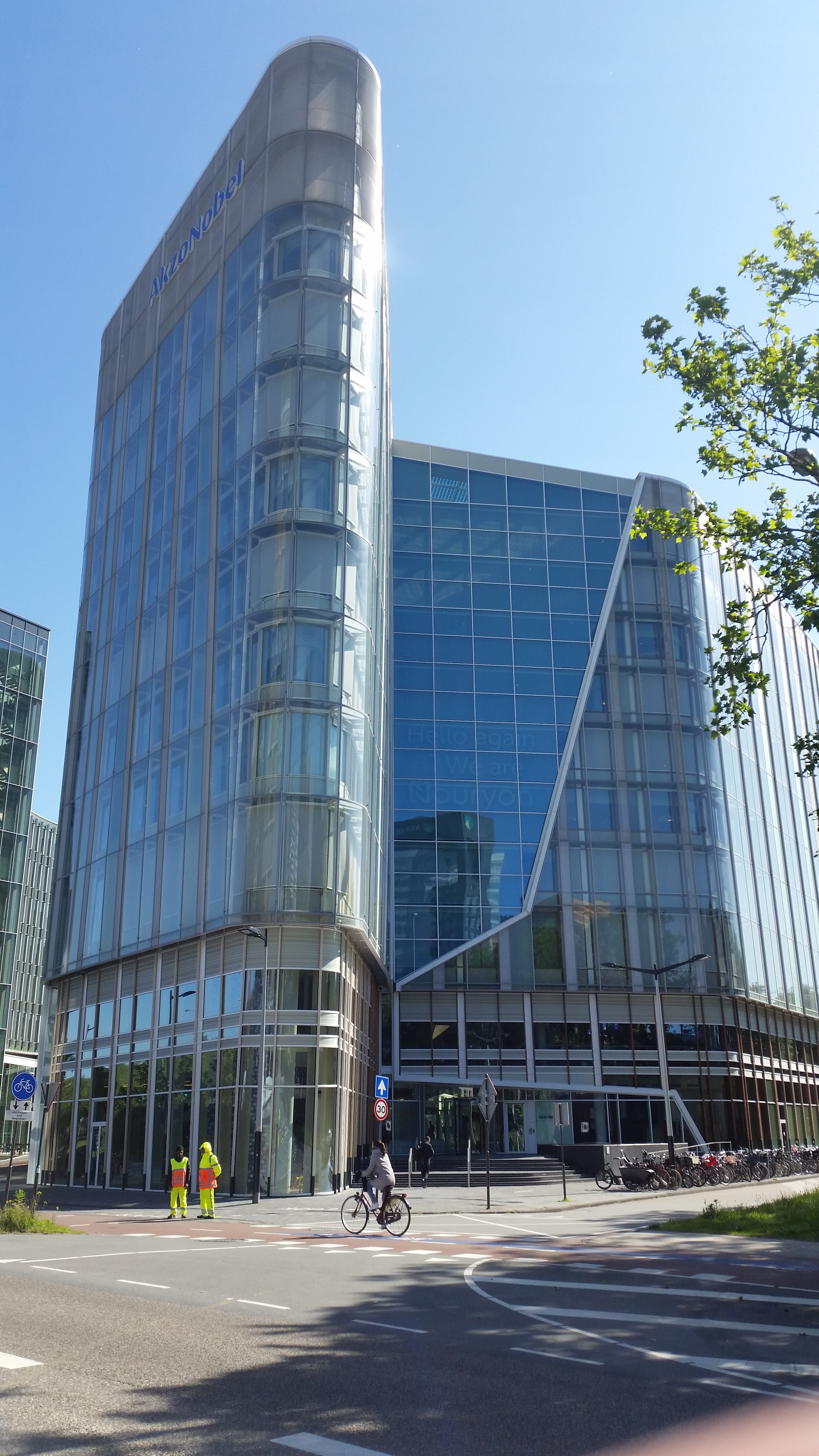
The European Commission has given conditional clearance to the proposed merger of AkzoNobel and Axalta Coating Systems, removing the last major regulatory obstacle in Europe to a deal that would combine two of the world's largest paint and coatings makers. The approval, confirmed in a joint release AkzoNobel filed with securities regulators on Friday, is tied to a single structural remedy: AkzoNobel has agreed to sell its European vehicle refinish coatings business to resolve the Commission's competition concerns.
Both companies said the fix was limited in scope. The Commission's objections centred on overlapping refinish operations in the European Economic Area, the United Kingdom and Switzerland, and Axalta's version of the announcement states that no other competition issues were identified by regulators in any other market. The companies have described the transaction throughout as an all-stock merger of equals with a combined enterprise value of roughly $25 billion and pro forma annual revenue of about $17 billion.
A deal built on scale, not a takeover
AkzoNobel, based in Amsterdam, and Axalta, headquartered in Philadelphia, first agreed to combine in November 2025, structuring the transaction so that AkzoNobel shareholders would end up owning 55 percent of the combined group and Axalta shareholders 45 percent, with each Axalta share converting into 0.6539 of an AkzoNobel share. The resulting company would carry dual listings during a transition period before consolidating solely on the New York Stock Exchange, and would operate from both Amsterdam and Philadelphia. Greg Poux-Guillaume, AkzoNobel's chief executive, is set to lead the merged business, with Axalta's Chris Villavarayan serving as deputy chief executive and Axalta chair Rakesh Sachdev chairing an eleven-member board.
Shareholders of both companies cleared the way for the deal in August, when, according to trade coverage of the twin shareholder meetings, investors at AkzoNobel's extraordinary general meeting and Axalta's special meeting both approved the merger and related resolutions on the same day. That vote left regulatory sign-off as the principal remaining condition, with the companies targeting a close in the first quarter of 2027.
The combined group would bring together AkzoNobel's decorative, powder, marine and aerospace coatings with Axalta's refinish and light-vehicle coatings businesses, spanning 173 manufacturing sites and 91 research facilities. The companies have pointed to roughly $600 million in pre-tax annual cost synergies, with about 90 percent of that targeted within three years of closing, as the commercial logic behind combining two companies whose product lines overlap only partially.
The remedy, and the hurdle still ahead
Friday's approval followed weeks of negotiation over remedies. Reporting from the trade publication MLex, which covers competition policy, tracked the European Commission's review through late October and early November, when the companies revised their initial remedy offer after regulators signalled it did not go far enough to address overlap concerns in vehicle refinish coatings. An earlier account from the Capitol Forum-linked outlet CPI, syndicated through PYMNTS in early October, had reported that the companies met European competition officials and prepared to submit a formal remedy package, a step that extended the Commission's original review deadline.
Europe was not the only jurisdiction the companies needed to satisfy. In the United States, Axalta disclosed in an internal notice to employees, filed with the Securities and Exchange Commission, that it plans to divest its North American Building Products business — the unit that makes wood and general industrial coatings — to address separate antitrust concerns raised by US regulators. That filing, dated October 20, describes the divestiture as driven by merger regulatory requirements rather than the unit's performance, and says Building Products employees face no immediate change to their roles or reporting lines. The companies have not announced a buyer for the business, and the US Federal Trade Commission has not yet issued a final ruling on the merger.
"This approval is an important milestone as we move closer to completing our merger with Axalta," Greg Poux-Guillaume, AkzoNobel's chief executive, said in the companies' joint statement confirming the EU decision.
Who is affected
The clearest effect falls on the European vehicle refinish market, where AkzoNobel's business — sold to bodyshops and auto repair networks under brands distinct from Axalta's refinish lines — will pass to a new owner once a buyer is identified and the sale completes. Regulators' concern was that combining AkzoNobel's and Axalta's refinish operations would have left too few independent suppliers serving European bodyshops, pushing up prices or narrowing product choice for repair networks that rely on a handful of global coatings suppliers.
Employees of the businesses being divested — AkzoNobel's European refinish unit and Axalta's North American Building Products operation — face the most direct uncertainty, pending new ownership. AkzoNobel's special cash dividend of €2.5 billion, promised to its shareholders ahead of closing and separate from the share-exchange mechanics, remains intact under the current terms, as does Axalta's exchange ratio for its investors. Axalta and AkzoNobel have both suspended their existing share buyback programmes while the deal is pending, directing capital instead toward closing conditions and the two divestitures.
Customers of the wider combined business — carmakers, industrial manufacturers and decorative-paint retailers — are less directly touched by Friday's decision, since the Commission found no competition problems outside the refinish overlap. Coatings industry analysts have nonetheless watched the deal closely as a test of how far consolidation can go in a sector already dominated by a small number of global suppliers including PPG, Sherwin-Williams and Nippon Paint.
What happens next
With the EU's conditional approval secured, the companies' remaining task is securing the US Federal Trade Commission's sign-off, alongside any outstanding approvals in other jurisdictions where the merger required notification. AkzoNobel and Axalta have said they still expect the transaction to close in early 2027, a timeline that has already slipped from the companies' original late-2026 target as the remedy negotiations in Brussels ran longer than first anticipated. Axalta's chief executive, Chris Villavarayan, who is slated to become deputy chief executive of the combined group, said in the companies' statement that the deal is intended to "create a global leader in coatings with scale, innovation and capabilities to shape the future of our industry."
Buyers for the two businesses being sold — AkzoNobel's European refinish operation and Axalta's North American Building Products unit — have not been named, and the companies have given no timetable for identifying them beyond saying the sales are being pursued to satisfy regulators ahead of closing. Investors in both companies will be watching for confirmation of US clearance, which would leave the merger needing only final administrative and shareholder-adjacent steps before the two coatings makers can complete what would be one of the largest industrial combinations of the past year.
SEC EDGAR — AkzoNobel Form 6-K: "European Commission approves AkzoNobel and Axalta merger of equals"
MLex — AkzoNobel-Axalta deal to gain EU merger approval
PYMNTS/CPI — AkzoNobel, Axalta Near EU Approval for $25 Billion Merger
Repairer Driven News — Axalta and AkzoNobel Shareholders Overwhelmingly Approved Merger of Equals

Moderna swings to profit and lifts 2026 sales outlook as new flu shot and cancer therapy gain traction
US economy added 165,000 jobs in October, unemployment falls to 4.1%

Wendy's board rejects $1.4 billion Peltz-led buyout bid, adopts poison pill
