FTC tells appeals court Amgen's Enbrel patent deal isn't shielded from antitrust law
In a Fourth Circuit filing, the Federal Trade Commission rejected Amgen's claim that its 2004 acquisition of Roche patent rights covering Enbrel is immune from antitrust review, a case that could reshape how drugmakers defend delays to biosimilar competition.
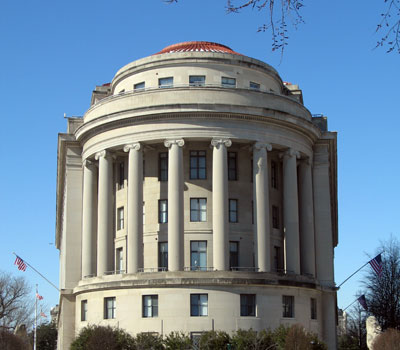
The Federal Trade Commission has told a federal appeals court that Amgen cannot shield its acquisition of patent rights covering the blockbuster arthritis drug Enbrel from antitrust scrutiny simply because the company later turned those rights into issued patents and used them in court, a filing that could reshape how drugmakers defend delays to biosimilar competition.
In a brief filed with the U.S. Court of Appeals for the Fourth Circuit, the commission rejected Amgen's argument that its 2004 deal for exclusive rights to Roche patent applications is immune from Sherman Act review because Amgen's subsequent patent litigation is protected petitioning activity. The FTC's brief, filed in support of neither party in the underlying case, sided against Amgen's legal theory even as it declined to weigh in on the facts of the dispute.
The numbers behind the fight
Enbrel, known generically as etanercept, remains one of Amgen's largest products despite years of declining sales as government pricing rules and competition squeeze revenue. The drug generated $2.226 billion in sales for Amgen in 2025, a 33% drop from the prior year, according to the company's fourth-quarter and full-year earnings release, out of $36.75 billion in total company revenue reported in the same filing and detailed in Amgen's annual report filed with the Securities and Exchange Commission.
Enbrel's original patents were set to expire in 2012. Under the arrangement at issue, Amgen instead obtained rights to two pending Roche patent applications that the FTC says were shaped to cover Enbrel, then used the resulting patents to win permanent injunctions against biosimilar rivals Sandoz and Samsung Bioepis. Those injunctions run through April 2029 — seventeen years after the original exclusivity period ended, and roughly three decades after Enbrel first reached the U.S. market in 1998, a history traced in detail by trade outlet pharmaphorum's reporting on the drug's patent history. Sandoz's biosimilar, Erelzi, has been sitting on an FDA approval since 2016 without ever reaching U.S. patients.
How the case reached the Fourth Circuit
The underlying lawsuit was brought by health insurers CareFirst of Maryland and CareFirst BlueChoice, who allege Amgen's 2004 restructuring of Immunex's license agreement with Roche let the company manufacture new patent claims specifically to block cheaper etanercept competitors, forcing insurers and patients to keep paying list prices for years longer than they otherwise would have. A federal judge in the Eastern District of Virginia denied Amgen's motion to dismiss the case, rejecting the company's argument that the Noerr-Pennington doctrine — which shields citizens' right to petition courts and government agencies — automatically covers the earlier decision to acquire the patent rights in the first place. The judge did agree to let Amgen pursue an immediate appeal of that legal question, which is what put the issue before the Fourth Circuit and drew the FTC into the case as a friend of the court.
The commission's brief argues there is no meaningful difference, for antitrust purposes, between buying a finished patent and buying a pending application that later becomes one. It also notes that the FTC and Justice Department routinely screen exactly this kind of transaction for competitive harm when companies report patent deals under the Hart-Scott-Rodino Act. Advocacy group the Open Markets Institute filed its own brief backing the insurers' position in the same appeal.
A pointed brief, even while staying neutral
Although the FTC's filing formally takes no side in the CareFirst-Amgen dispute, its language leaves little doubt about where the commission believes the law stands. Commissioners authorized the brief on a 2-0 vote, and the filing directly challenges the breadth of Amgen's position.
"Amgen's novel and sweeping arguments find no support in case law and, if accepted, would pose a substantial threat to competition."
The FTC's press release announcing the filing framed the intervention as part of the agency's broader effort to keep pharmaceutical companies from using patent maneuvering to delay lower-cost competition, language consistent with the commission's stated mission, laid out on its case page in the FTC's legal library, of promoting competition and protecting consumers. Coverage of the filing by trade press, including a report from PYMNTS on the brief's implications for biologic drug markets, similarly framed the filing as a warning shot to drugmakers relying on patent-thicket strategies.
Who has a stake in the outcome
The immediate parties are Amgen, which also owns the Enbrel patents through subsidiary Immunex Corporation, and the CareFirst insurers pursuing damages on behalf of health plans that paid for the drug. But the case's reach extends further. Sandoz and Samsung Bioepis, whose FDA-approved etanercept biosimilars remain blocked from the U.S. market under the same 2029 injunctions, are watching closely, as is a separate antitrust suit Sandoz filed against Amgen last year that a different federal judge dismissed in February. Patients and employers who ultimately absorb higher premiums tied to Enbrel's price are also affected, since biosimilar competition typically drives sharp price declines once it is allowed to begin. More broadly, pharmaceutical companies across the industry that rely on patent acquisitions to extend market exclusivity are watching for a ruling that could set precedent well beyond Enbrel.
What happens next
The Fourth Circuit has not yet scheduled oral argument in the appeal, which will decide only the narrow legal question of whether Amgen's 2004 patent acquisition can be examined under antitrust law at all — not whether Amgen actually violated it. If the appeals court sides with the FTC's reasoning, the case would return to the district court for further litigation over the merits of CareFirst's claims, a process that could take years and involve extensive discovery into Amgen's dealings with Roche two decades ago. If Amgen prevails instead, the ruling could hand pharmaceutical companies a durable defense against a growing wave of insurer and biosimilar-maker lawsuits challenging patent-based delay tactics. Either outcome is likely to influence how drugmakers structure future licensing deals for pending patent applications, an area the FTC's brief argues has largely escaped judicial scrutiny until now. Briefing in the appeal is expected to continue through the fall, with Amgen due to file a reply brief following the FTC's filing and CareFirst's own response.

US retail sales rose 0.8% in September as gasoline-station spending surged

Wells Fargo and Citigroup post stronger profits as bank earnings season wraps up

Inflation Jumps to 3.7% in September, Keeping Pressure on the Fed to Raise Rates Again
