Porsche Bets on Scarcity Over Scale in New Decade-Long Turnaround Plan
Reeling from a collapse in China sales and a near wipeout of profit last year, the Volkswagen-owned automaker told investors Wednesday it will prioritize exclusivity over volume, with roughly 9,000 jobs disappearing by 2035.
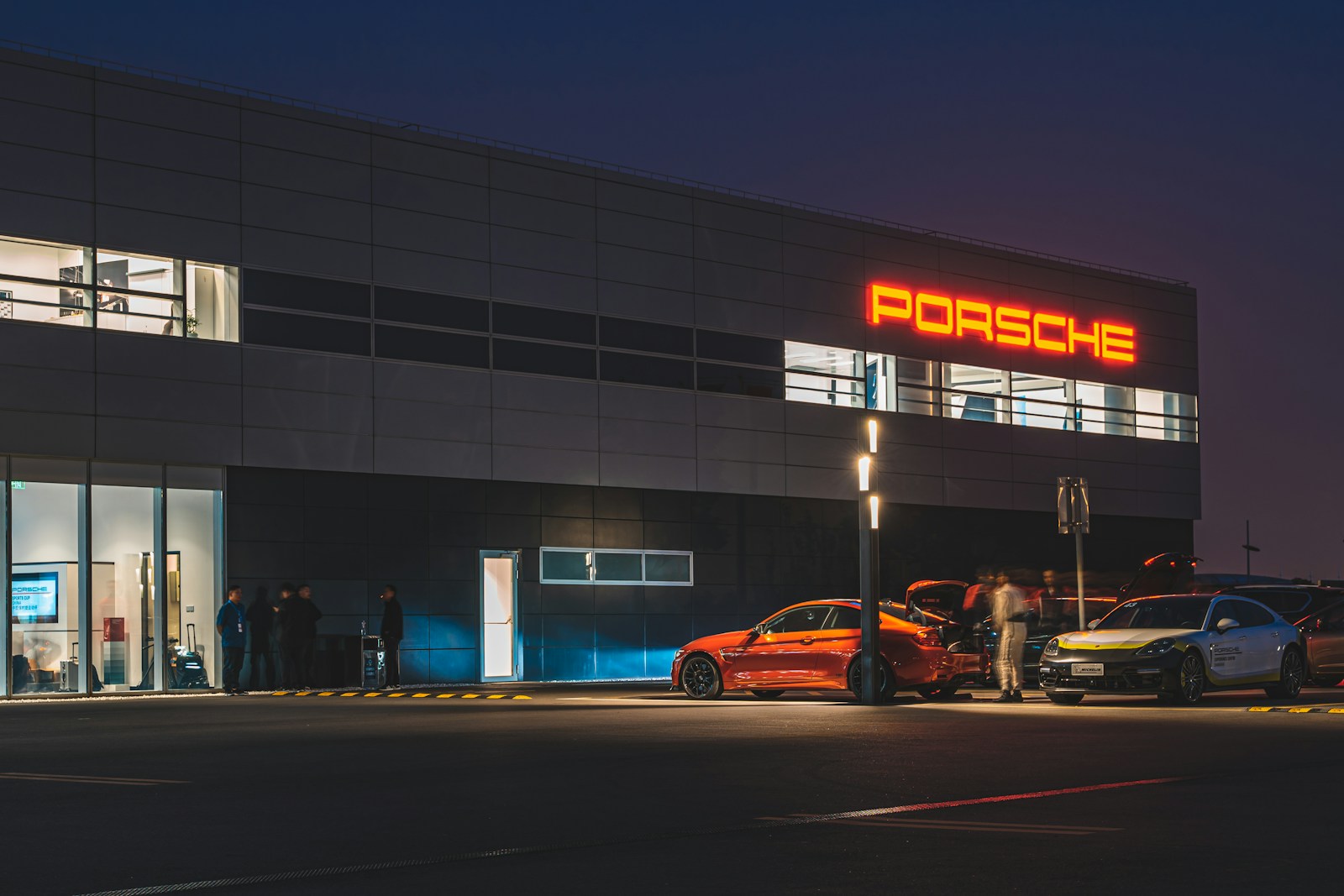
Porsche laid out a decade-long turnaround plan on Wednesday, telling investors it needs until the early 2030s to rebuild the profitability that evaporated last year under the weight of a collapsing Chinese market, stalled electric-vehicle demand and new United States tariffs. At a Capital Markets Day held in Weissach, Germany, chief executive Michael Leiters presented a strategy called "Sportwagenschmiede '35" — literally, "sports car forge '35" — that pairs sharply lower volume targets with a restructuring already set to eliminate roughly 9,000 jobs by 2035.
The plan, detailed in a presentation posted to Porsche's newsroom, is less about selling more cars than about selling fewer of them at higher margins. Management said it is lowering the point at which the company breaks even to fewer than 200,000 vehicles a year — a level roughly 30 percent below the 279,449 cars Porsche delivered worldwide in 2025 — while pushing medium-term group operating returns back up to a range of 10 to 15 percent, with sales revenue targeted at €41 billion to €45 billion. Longer term, the automaker is aiming for a 15 percent operating return on sales and a 12 percent automotive net cash-flow margin, metrics it has not come close to since before the pandemic-era boom.
A profit collapse that forced the reset
The scale of the retreat is visible in last year's numbers. Porsche's group operating profit fell to just €413 million in 2025, down from €5.64 billion the year before, as the company absorbed roughly €3.9 billion in extraordinary charges tied to a reworked product strategy, battery write-downs and tariff costs. Group sales revenue slipped 9.5 percent to €36.27 billion, and operating return on sales — a closely watched profitability measure that stood at 14.1 percent in 2024 — cratered to 1.1 percent. For 2026, the company has told shareholders to expect only a partial recovery, with operating return on sales of 5.5 to 7.5 percent weighed down by roughly €700 million in tariff costs and further one-off expenses.
China is the clearest driver of the slide. Deliveries there fell 26 percent in 2025 to 41,938 vehicles, as buyers who once prized the Porsche badge increasingly turned to domestic brands such as BYD, Xiaomi and Nio, many of them offering comparable performance and far more advanced in-car software at lower prices. The country that was Porsche's single largest market for most of the past decade has shrunk to a fraction of its former size, a retreat that trade coverage of the restructuring has tied directly to the rise of domestic competitors, and executives said Wednesday that the new financial targets assume no meaningful rebound there.
Nine thousand jobs, mostly without forced layoffs
The job cuts central to the strategy were negotiated with labor representatives over several months and finalized this past summer, when Porsche's management and works council agreed to eliminate an additional 5,000 positions on top of earlier rounds — 3,900 agreed in 2025 and 500 tied to the wind-down of a subsidiary — bringing the total to about 9,000 roles, or roughly one in five jobs at a company that employed 42,600 people at the end of 2024. Under Wednesday's strategy, management positions specifically will shrink by 40 percent, and the broader workforce is targeted to fall by 25 percent, with the company saying it could go as high as 30 percent.
Porsche has structured the reductions to avoid compulsory redundancies, relying instead on natural attrition, early retirement, partial-retirement schemes and voluntary departure agreements with severance. In return for workers' agreement to the cuts, the company extended employment and site guarantees for its Zuffenhausen and Weissach facilities through 2035. The restructuring also targets costs well beyond payroll:
- Development costs cut by up to 20 percent
- Production personnel costs down 30 percent
- Sales and distribution costs down 20 percent
- Material costs down 10 percent
On the product side, Porsche said it would launch an all-electric version of the 718 Boxster and Cayman by 2028, introduce a new combustion and plug-in-hybrid B-segment SUV that goes on sale in 2029, and develop a new mid-engined super sports car platform, with at least one "brand-defining" launch planned every year through 2030.
Investors, workers and an industry watching closely
Shares of Porsche AG, majority-owned by Volkswagen Group but listed separately on the Frankfurt exchange, swung sharply as the targets were digested, ranging between €41.90 and €44.69 before settling little changed near €42.40 in early afternoon trading, according to pricing tracked on the exchange, while materials posted to the company's investor relations site showed the new targets alongside a financial calendar already looking toward the next update — a sign that investors were still weighing whether a decade-long timeline for recovery represents discipline or delay.
"They are unavoidable in order to reduce costs, because a return to strong growth in China is not expected," said Daniel Schwarz, an analyst at the investment bank Metzler, of the job cuts underpinning the restructuring.
Leiters, who took over as chief executive on January 1, framed the plan as a break from Porsche's recent past rather than a retreat from its ambitions. "Our strategy will lay the groundwork to make Porsche significantly more efficient, productive and profitable," he told investors, adding that the company wants "to be attractive to all stakeholders: our customers, our workforce, our partners and our investors." Chief financial officer Jochen Breckner said the plan to raise margins rests on "a higher value per vehicle, a more attractive product mix and a sustainably more efficient cost and capital base" rather than higher sales volumes.
Workers' representatives, who spent months negotiating the job-cut framework, described it in more guarded terms when the broader package was finalized earlier this year. Works council chairman Ibrahim Aslan called the agreement "hard-fought," saying the task now was to implement it jointly with the executive board — language that underscored how contentious the cuts were even with guarantees against forced dismissals.
What happens next
Porsche executives were explicit that the turnaround will not show up quickly in quarterly results. The near-term 2026 guidance already reflects continued pressure from tariffs and restructuring costs, and management has said repeatedly that the bulk of the margin recovery depends on new vehicles that will not reach showrooms until 2028 and 2029. For the next several years, the company's own numbers suggest investors should expect a business that is smaller, by volume, than the one that went public in 2022 — but one that is betting exclusivity, rather than growth, is the surer route back to the margins that once made it Volkswagen Group's most profitable brand.

AT&T Beats Earnings Forecasts as Debt Load Overshadows Record Fiber Growth
Tesla Shares Climb Ahead of Earnings as Musk Confirms Board Committees to Weigh SpaceX Merger

Netflix profit beats estimates, but stock slides on weak guidance and ad-revenue cut
