Japan Launches Spacecraft to Bring Home a Piece of a Martian Moon
The H3 rocket carried the Martian Moons eXploration probe off Tanegashima before dawn Tuesday, the first leg of a decade-long round trip to collect rock from Phobos and bring it back to Earth.

Japan's space agency launched a spacecraft toward Mars before dawn on Tuesday, opening a mission that aims to do something no country has yet managed: land on one of the Red Planet's two small moons, collect a sample of its surface, and bring that material back to Earth.
The Martian Moons eXploration probe, known as MMX, lifted off at 4:41 a.m. local time from the Yoshinobu Launch Complex at the Tanegashima Space Center, carried by an H3 rocket on its tenth flight, according to JAXA's launch notice. The Japan Aerospace Exploration Agency is leading the mission, with instruments, funding and operational support contributed by NASA's planetary science division, France's CNES, and Germany's DLR, coordinated in Europe through the European Space Agency.
A decade-long round trip
The spacecraft's target is Phobos, the larger and closer of Mars's two moons. According to mission details published by ESA, MMX will spend roughly a year cruising to Mars, enter orbit around the planet in August 2027, and begin circling Phobos itself the following month in a tight "quasi-satellite" orbit, a feat no mission has attempted before. The probe will spend more than a year studying Phobos and the smaller moon, Deimos, from a distance before a lander descends to the surface in 2030 to gather material.
Scientists have debated for decades whether Phobos and Deimos are asteroids that drifted close enough to Mars to be captured by its gravity, or debris thrown into orbit by a catastrophic impact on the planet itself. Gamma-ray and neutron readings from an instrument called MEGANE, built for NASA by the Johns Hopkins Applied Physics Laboratory with Lawrence Livermore National Laboratory, are designed to pin down the moon's chemical makeup and help settle the question.
A roughly 25-kilogram rover named Idefix, built jointly by France's CNES and Germany's DLR space agency, will be released onto Phobos's surface in early 2029 to scout a safe landing site and study the terrain's texture and composition up close. Because Phobos's gravity is so weak, Idefix will weigh only about 15 grams once it touches down, according to DLR.
A capsule bound for the Australian outback
The main spacecraft is expected to land on Phobos in 2030, using a pneumatic sampling device co-developed with NASA to collect at least 10 grams of surface material, then lift off again and begin the journey home. A return capsule is due to separate from the spacecraft and re-enter Earth's atmosphere in 2031, parachuting into the Australian outback in a recovery modeled on Japan's earlier Hayabusa asteroid missions. The sample would then be flown to Japan for cataloguing before being distributed to MMX's partner agencies for study, as Space.com reported ahead of the launch.
If MMX succeeds, it would mark the first sample ever returned from the surface of a moon other than Earth's own, and the first spacecraft to travel to the Mars system and come home again. JAXA has built a track record on sample-return missions with its two Hayabusa probes, which brought back material from asteroids in 2010 and 2020, but a round trip to the Mars system is a considerably longer and more technically demanding undertaking, with years of deep-space navigation, two separate orbital insertions and a landing on a body with almost no gravity to hold the spacecraft down.
JAXA had reserved a backup launch period running from October 21 through November 7 in case Tuesday's attempt needed to be scrubbed, but the H3 lifted off on schedule on the first try. JAXA and its partner agencies are expected to confirm the spacecraft's early trajectory and solar-panel deployment in the coming hours as MMX begins its year-long cruise toward Mars.
Century of Records Shows Europe's Wild Bees Losing Ground
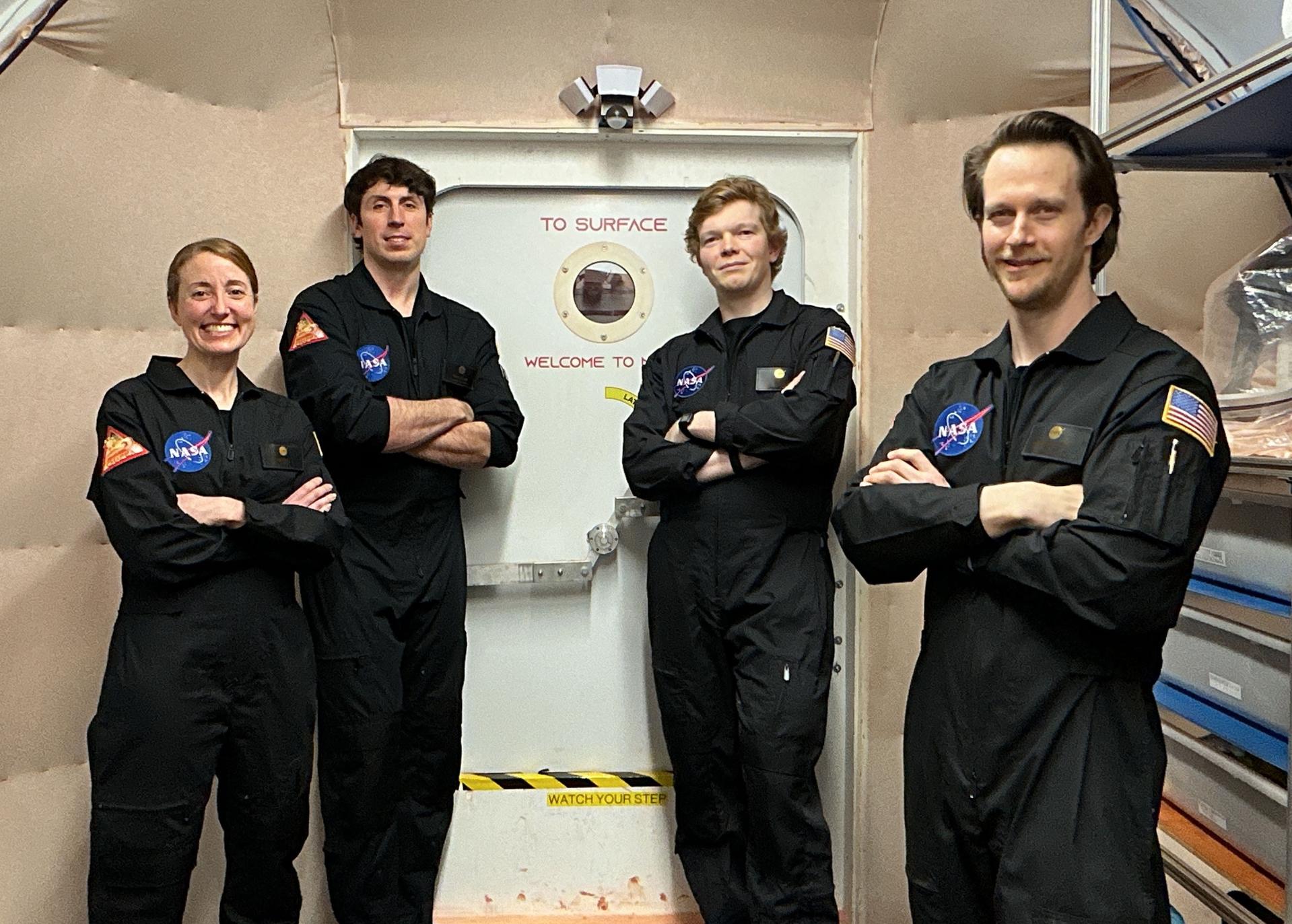
Four Volunteers Mark One Year Sealed Inside NASA's Simulated Mars Habitat

AI-Built Chemical Map Finds the Step Catalysis Models Were Missing