ABC sues FCC, alleging retaliatory campaign over broadcast license reviews
ABC and parent company Disney filed suit in federal court accusing the FCC of using an unusually early review of the network's broadcast licenses to punish it over news and entertainment programming, deepening a monthslong standoff with the Trump administration.
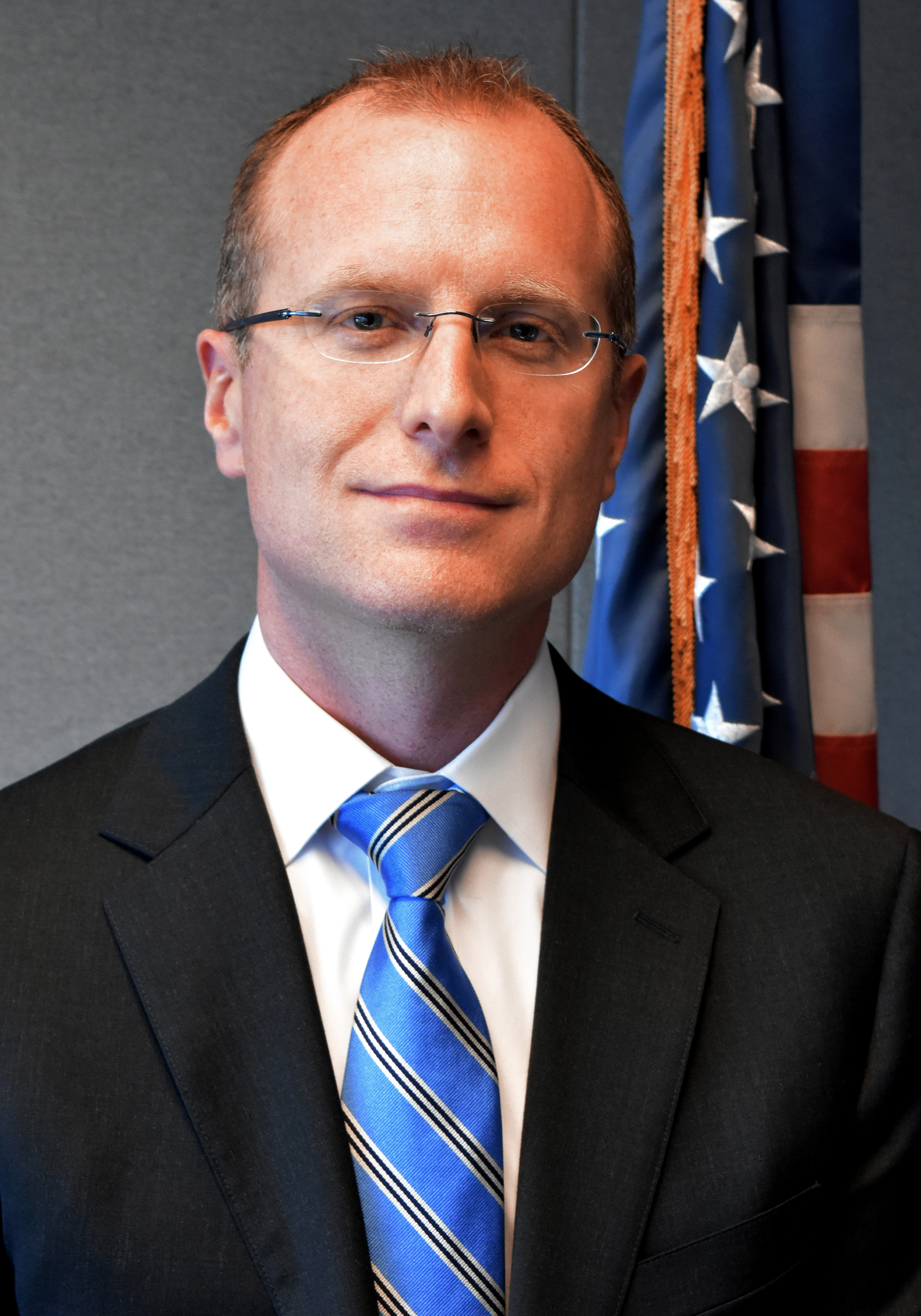
ABC and its parent company, The Walt Disney Company, sued the Federal Communications Commission on Tuesday, asking a federal judge to halt an unusually early review of the network's broadcast licenses that ABC says amounts to government retaliation for its news and entertainment programming.
The suit, filed in the U.S. District Court for the District of Columbia and docketed as American Broadcasting Companies, Inc. v. FCC, No. 1:26-cv-02902, opens with a blunt line: "Government censorship is deeply un-American." It argues that the commission, under Chairman Brendan Carr, has "waged a retaliatory campaign against ABC for a single reason: it disapproves of what ABC broadcasts," and asks the court to declare the agency's early license-renewal proceeding unconstitutional and unlawful.
ABC's complaint, paired with a motion for a temporary restraining order and preliminary injunction, seeks to stop the FCC's Media Bureau from proceeding with early renewal reviews of the eight broadcast stations ABC owns and operates directly. The network argues the commission has no legitimate basis to reopen licenses years before their scheduled expiration and that the timing and public statements surrounding the review reveal its true purpose: pressuring Disney over coverage the White House has objected to.
ABC had asked the court to hear its request for emergency relief within days, but U.S. District Judge Loren L. AliKhan declined to fast-track the case, instead ordering both sides to finish briefing by September 24 ahead of a hearing during the week of October 5. AliKhan said she would still convene the parties on short notice if the FCC moved to formally designate ABC's license renewals for an administrative hearing before then — but absent that, the early-renewal process ABC is trying to block will continue while the lawsuit proceeds.
The numbers behind the dispute
The proceeding at the center of the case traces back to an order the FCC's Media Bureau issued on April 28, directing Disney's ABC to file renewal applications for all of its licensed television stations within 30 days — by May 28, 2026 — rather than waiting for their normal renewal dates. None of the eight stations would ordinarily have been due for renewal until 2028 at the earliest; for most of them, the order arrived before even the midpoint of their current license terms. The FCC has not ordered an early, group-wide renewal review of a national network's owned stations in more than five decades, according to the agency's own filings.
Once ABC filed its applications, the Media Bureau set a formal comment schedule — a pleading cycle running from late June through early August — during which outside parties could file petitions to deny the renewals. ABC's lawsuit followed within two weeks of that schedule closing. The network's underlying legal filings run well over 100 pages and, according to reporting on the case, cite a string of public statements by President Trump calling for ABC's licenses to be pulled, alongside the FCC's own public comments about the network's coverage decisions.
How the standoff escalated
The government's scrutiny of Disney's ABC did not begin with the April order. The FCC has said its investigation centers on the company's diversity, equity and inclusion policies and on whether ABC's long-running daytime program "The View" still qualifies as a bona fide news program under the commission's rules — a designation that affects which equal-time and political-broadcasting obligations apply to it. But the timing has repeatedly tracked moments of friction between ABC and the administration. Carr ordered the license review in April, a day after Jimmy Kimmel staged a mock White House Correspondents' Dinner monologue mocking President Trump on ABC's air. Disney had already settled a defamation suit brought by Trump in December 2024 for $16 million.
Asked in the spring whether Kimmel's routine would factor into the commission's review, Carr told reporters that Disney was "going to have to come in and demonstrate that they've been operating in the public interest." He has more recently suggested that ABC's decision to limit its coverage of one of the president's primetime addresses could also bear on the proceeding. An FCC spokesperson has maintained that "the early renewal order is based on a long-running FCC investigation into Disney's DEI conduct, not any speech," and Carr said this week that Disney would receive a fair hearing based on "the facts and the law wherever they may lead."
Disney's new chief executive, Josh D'Amaro, who took over the company in March, framed the lawsuit as a matter of principle for the network's journalism. "We're going to stand up to what we believe is journalistic integrity," D'Amaro said. Carr, for his part, dismissed the suit's urgency, telling reporters Disney "seems a little jumpy right now."
Who is affected
The immediate stakes fall on ABC's eight owned-and-operated stations, in markets including New York, Los Angeles, Chicago, Philadelphia and San Francisco, whose licenses remain under review while the litigation proceeds. More broadly, media lawyers and press-freedom advocates say the case has become a proxy fight over whether the FCC's licensing power — which Congress designed as a technical, public-interest tool — can be used as leverage against a broadcaster's editorial choices. Other networks with FCC-regulated stations, including CBS and NBC, have watched the ABC proceeding closely as a signal of how aggressively the commission might use the same tool against them.
Press-freedom groups have largely sided with ABC. The Reporters Committee for Freedom of the Press had already urged the FCC to reject outside petitions seeking to deny ABC's renewals, arguing the commission "appears to be retaliating against ABC for broadcasting content that the Trump administration dislikes." Seth Stern, director of advocacy at the Freedom of the Press Foundation, was more pointed, saying it was "about time for someone to take Carr and his FCC to court over their endless campaign of intimidation and retaliation against journalism that displeases Carr's thin-skinned boss."
"Each is owned by ABC, and the Administration has openly and repeatedly called for the revocation of ABC's licenses because it dislikes the content and viewpoints expressed on ABC network programs," ABC's complaint states.
The dispute over "The View" adds a separate technical wrinkle. Under FCC rules, programs classified as bona fide news are exempt from certain equal-opportunity obligations that otherwise apply to political discussion on licensed stations. If the commission were to conclude the long-running daytime talk show does not meet that bar, ABC could face new compliance burdens tied to how the program handles political guests and commentary — a determination ABC argues the FCC is using as a pretext rather than pursuing on its regulatory merits.
The FCC's handling of the case has also drawn outside scrutiny independent of ABC's own lawsuit. The American Civil Liberties Union has filed public-records requests demanding that the commission release internal communications about the early-renewal decision, arguing that the agency's stated rationale "does not seem credible" given the timing relative to ABC's programming choices. Former FCC officials, writing publicly about the case, have gone further, describing the review as "an assault on free speech disguised as regulatory process." The commission has not released the requested records.
What happens next
With the hearing on ABC's request for emergency relief now set for the week of October 5, the FCC's early-renewal proceeding is expected to continue on its existing timeline in the interim, meaning the underlying licensing question and the constitutional challenge to it will move on parallel tracks for at least the next several weeks. Legal analysts covering the case note that a ruling favorable to ABC could constrain how the FCC uses license renewals against broadcasters going forward, while a loss would leave the agency's early-review authority largely intact. Disney has not said whether it would appeal an adverse ruling, and the FCC has given no indication it intends to pause the underlying renewal review while the case is litigated.

Spotify and Joe Rogan Sign New Multiyear Deal, Extending Their Six-Year Partnership

Canadian Poet Anne Carson Wins 2026 Nobel Prize in Literature

London Film Festival opens with 'Elsinore,' reviving a forgotten theater tragedy