National Book Foundation Names 2026 Finalists, With Rushdie Medal to Follow
The National Book Foundation named 25 finalists across five categories for the 77th National Book Awards on Tuesday, and confirmed Salman Rushdie will separately receive its lifetime-achievement medal at the November ceremony.
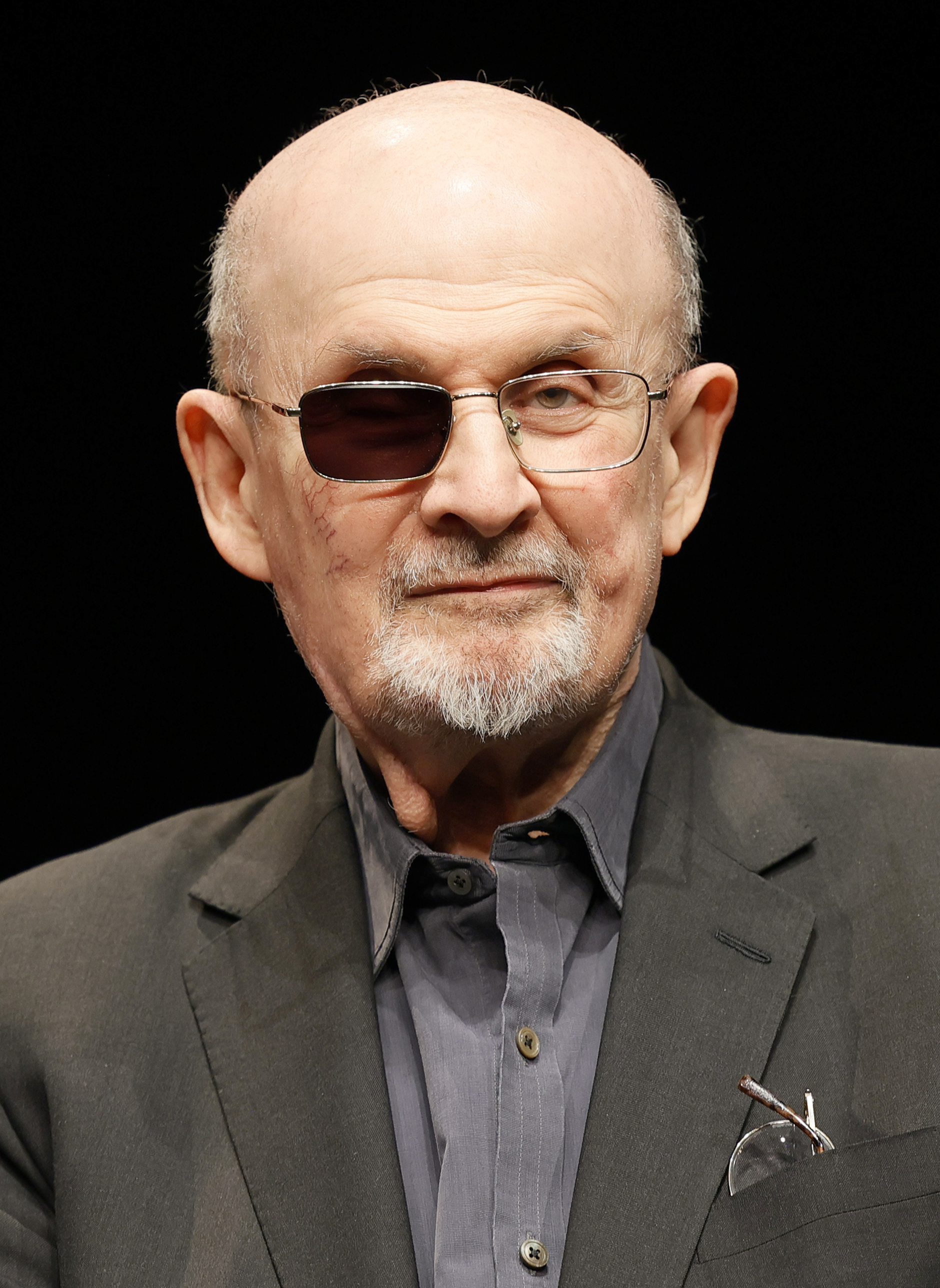
The National Book Foundation on Tuesday named 25 finalists across five categories for the 77th National Book Awards, narrowing monthlong longlists down to the writers who will compete for one of American publishing's most closely watched prizes. The foundation also confirmed that novelist Salman Rushdie will receive its medal for lifetime literary achievement at the awards ceremony next month, an honor separate from the competitive categories.
The finalists, drawn from fiction, nonfiction, poetry, translated literature and young people's literature, were announced on the foundation's website and reported the same morning by NPR. Winners in each category will be revealed at a ceremony in Manhattan on Nov. 18.
Five Categories, Twenty-Five Names
In fiction, the finalists are Hannah Lillith Assadi's "Paradiso 17," Edwidge Danticat's "Dèy," Julián Delgado Lopera's "Pretend You're Dead and I Carry You," Valeria Luiselli's "Beginning Middle End" and Morgan Thomas's "Mad Eden." Danticat, whose earlier books "Krik? Krak!" and "Brother, I'm Dying" were finalists in 1995 and 2007, is now a three-time nominee. Thomas, a first-time novelist, is recognized for a book centered on a patient navigator at a gender-affirming care clinic.
The nonfiction finalists are Colin Asher's "The Midnight Special," Abdelrahman ElGendy's "Huna," Camonghne Felix's "Let the Poets Govern," Sara Novć's "Mother Tongue" and Joseph Osmundson's "Spawning Season." In poetry, the field narrowed to Victoria Chang's "Tree of Knowledge," Carolina Ebeid's "Hide," Brenda Hillman's "Still House in the Desert," Fady Joudah's "Exhibit G" and Susan Stewart's "Bramble."
Translated literature finalists include Karl Ove Knausgaard's "The School of Night," translated from Norwegian by Martin Aitken; Vicente Luis Mora's "Centroeuropa," translated from Spanish by Rahul Bery; Intan Paramaditha's "Night of a Thousand Hells," translated from Indonesian by Stephen Epstein and Tiffany Tsao; Mohamed Mbougar Sarr's "Pure Men," translated from French by Lara Vergnaud; and Samar Yazbek's "Your Presence Is a Danger to Your Life," translated from Arabic by Leri Price. In young people's literature, the finalists are Elana K. Arnold's "Holloway," Tae Keller's "When Tomorrow Burns," Keala Kendall's "That Which Feeds Us," David Levithan and Gabriel Duckels's "The Fight of Our Lives" and Julian Randall's "Shook."
Each category's longlist of ten titles, released in September, was itself drawn from a far larger pool: the fiction judges considered 451 books submitted by publishers, while the nonfiction panel reviewed 727. Twenty-five judges across the five categories, all working authors and literary professionals, read through those submissions before whittling the field down to finalists this week.
The prize structure, as Publishers Weekly's coverage of the finalists noted, has held steady for years. The winner in each category receives $10,000 and a bronze medal; the other four finalists in that category each receive $1,000 and a citation. In translated literature, the award is split evenly between author and translator. The ceremony, a benefit dinner for the nonprofit foundation, is scheduled for Nov. 18 at Cipriani Wall Street in New York.
A Medal for a Writer Who Survived an Attack
The finalist announcement arrived weeks after the foundation separately named Rushdie the recipient of its 2026 Medal for Distinguished Contribution to American Letters, a lifetime-achievement honor distinct from the competitive awards. The medal, created in 1988, will be presented to Rushdie on Nov. 18 by the novelist Kiran Desai. He is the 39th person to receive it and only the fourth born outside the United States, following Saul Bellow, Isabel Allende and Art Spiegelman.
Rushdie, who became a U.S. citizen roughly a decade ago after emigrating from India to England as a teenager and later settling in New York, was stabbed repeatedly onstage at the Chautauqua Institution in western New York in August 2022. A New York state jury convicted his attacker, Hadi Matar, of attempted murder in 2025. In July, a federal jury in Buffalo convicted Matar on three additional terrorism-related counts, finding that he had acted in support of Hezbollah. Matar's federal sentencing is scheduled for Nov. 3, two weeks before Rushdie accepts the medal in Manhattan. Rushdie wrote about the attack in his 2024 memoir, "Knife," which was itself a National Book Award finalist that year.
"I was an immigrant writer in England, and now I'm an immigrant writer in America," Rushdie said of the honor.
Asked about Rushdie's selection, the foundation's executive director, Ruth Dickey, said his work celebrates literature's power to build bridges across borders and identities, according to the Associated Press account of the announcement, which several newspapers carried in September.
A Recurring Subject on the Shortlist
Among this year's finalists, two books address the war in Gaza directly. Joudah's poetry collection, "Exhibit G," is subtitled "Poems, Essays, and Photographs of Gaza." Yazbek's "Your Presence Is a Danger to Your Life," translated from Arabic, gathers testimony the Syrian writer collected from Palestinians during visits to Gaza in 2024. Their presence on the list, alongside memoirs of imprisonment, gender-affirming care and the AIDS epidemic, places this year's finalists within a longer pattern at the National Book Awards: judges have repeatedly recognized books that document conflict and marginalization as it is unfolding, rather than waiting for historical distance.
The finalists' publishers span large and small houses alike. Knopf, Liveright and Random House appear alongside independent presses such as Milkweed Editions, Graywolf Press and Europa Editions, reflecting the awards' longstanding practice of drawing finalists from across the publishing industry rather than concentrating them among the largest imprints.
For the five eventual winners, recognition carries practical as well as symbolic weight. A National Book Award has historically translated into a measurable sales increase, and the finalist designation alone tends to raise a title's visibility among booksellers and librarians in the weeks before the holiday buying season. For the finalists who do not win, the $1,000 prize and the finalist citation remain a durable credential.
What Happens Next
The foundation will announce the five winners, one per category, on the evening of Nov. 18 at the ceremony in Manhattan. Rushdie's medal will be presented at the same event, ahead of the competitive awards. The foundation has not announced plans for any additional honorees this cycle. In the meantime, the 25 finalist titles will be sold under newly stickered covers at bookstores nationwide, a marketing tradition the publishing industry leans on heavily during the fourth quarter.
Matar's federal sentencing, set for Nov. 3, will fall in the same stretch of weeks, an incidental overlap between the criminal case and the literary honor it indirectly produced. The foundation has given no indication that Rushdie's remarks at the ceremony will address the sentencing, and he has generally confined his public comments on the attack to his memoir and to brief statements made at the time of his selection for the medal.

A Decade After '13th,' DuVernay Closes New York Film Festival With '14th'

Spotify and Joe Rogan Sign New Multiyear Deal, Extending Their Six-Year Partnership

Canadian Poet Anne Carson Wins 2026 Nobel Prize in Literature
