CDC warns of a summer surge in rabies exposures and errors in emergency treatment
A new health advisory pairs a nationwide rise in rabies exposures with documented mistakes in post-exposure treatment, illustrated by a North Carolina petting zoo that exposed more than 260 people to a rabid skunk.

The Centers for Disease Control and Prevention issued a national health advisory this week warning of a summer surge in rabies exposures and, separately, a pattern of clinicians making mistakes when administering the treatment that prevents the disease from turning fatal. The advisory, issued Wednesday, pairs a nationwide statistical increase with a vivid case study: a mobile petting zoo in North Carolina that exposed more than 260 people, including children, to a rabid skunk that got into a pen of baby goats.
The numbers behind the warning
In its Health Alert Network advisory, the CDC said it received 17 percent more rabies-related inquiries in July and August than during the same period last year. Pharmacy dispensing data through early September showed a 33 percent increase in rabies vaccine use and a 76 percent increase in use of rabies immune globulin, the antibody treatment given alongside the vaccine, compared with the same stretch of 2025. At least eight state health departments reported increased use of post-exposure treatment, administration errors, or both. The agency was careful to note there is no current national shortage of either the vaccine or the immune globulin, even as demand has climbed.
Roughly 6 million Americans report an animal bite every year, and about 100,000 receive rabies post-exposure treatment, according to the CDC. A full course, when administered correctly, is described by the agency as "nearly 100 percent effective" — but fewer than 10 Americans die of rabies in a typical year, a toll the CDC says depends entirely on people getting treated promptly and correctly after an exposure. Hawaii remains the only U.S. state considered rabies-free; every other state has some level of ongoing wildlife rabies activity, most commonly in bats, raccoons, skunks and foxes, which is why public-health officials treat any bite or scratch from an unfamiliar wild animal as a potential exposure until proven otherwise.
What clinicians are getting wrong
The advisory lists specific, documented administration errors from the reporting states: injecting the vaccine into the gluteal muscle, where absorption is unreliable and the dose often has to be repeated; failing to infiltrate the immune globulin directly into and around the wound itself, where it does the most good; mixing the vaccine and the immune globulin in the same syringe or injection site, which can neutralize the vaccine; omitting the immune globulin entirely in cases where it was indicated; and misclassifying a patient's prior vaccination history, which changes the correct treatment protocol. Immunocompromised patients may need a fifth vaccine dose with follow-up lab testing, a detail the CDC said has also been inconsistently applied.
The North Carolina case that put a face on the numbers
The advisory's central example is Farm Adventures, a mobile petting zoo based in Harmony, North Carolina, where a rabid skunk got into a pen of baby goats in late July. Three goats later tested positive for rabies and a fourth was presumed positive; all four were euthanized. The zoo had already traveled to public and private events across seven North Carolina counties — Iredell, Davidson, Davie, Mecklenburg, Watauga, Burke and Durham — between July 28 and August 27, exposing people at community gatherings and at least one assisted-living facility before the risk was identified.
The North Carolina Department of Health and Human Services said in a press release that more than 260 people needed rabies vaccination as a result, and a follow-up release noted that no human rabies case has occurred in North Carolina since 2011, while stressing that the disease is almost always fatal once symptoms begin.
"My fear is that if he was feeding the goats, and he's 4. Who's to say that he didn't touch his mouth or eyes?" said the mother of a 4-year-old who was exposed at one of the petting zoo's events, describing the anxious wait for guidance on treatment.
Both the CDC and North Carolina's health department are urging anyone bitten or scratched by wildlife, or by any animal behaving unusually, to contact a healthcare provider or local health department promptly rather than delaying. North Carolina officials specifically recommended calling ahead rather than going straight to an emergency room where possible, so treatment can be arranged efficiently. General prevention guidance has not changed: avoid contact with wild or sick-looking animals, keep pet vaccinations current, supervise young children closely around unfamiliar animals at fairs and petting zoos, and wash hands after any animal contact.
A full course of treatment costs $11,000 to $14,000 per person, a burden that falls partly on insurers and partly on public health budgets depending on the state, according to figures cited in CDC materials — a cost that becomes more consequential the more often it has to be repeated because of an avoidable administration error.
What happens next
The CDC has not announced any regulatory or supply-side action, such as a shortage declaration or a vaccine allocation change; officials say the current problem is one of clinical practice and public awareness, not supply, and the advisory is aimed squarely at that, directing providers to the agency's post-exposure prophylaxis guidance for the correct injection sites, dosing schedule and documentation steps. Whether the corrections take hold will show up, if they work, as a leveling-off in the error reports coming from the eight states that flagged the problem this summer — a metric the CDC says it will continue tracking into the fall as animal activity and, with it, human exposures typically decline with cooler weather.

CPSC Recalls 180,000 Light-Up Toys Over Exposed Button Batteries That Can Kill Children
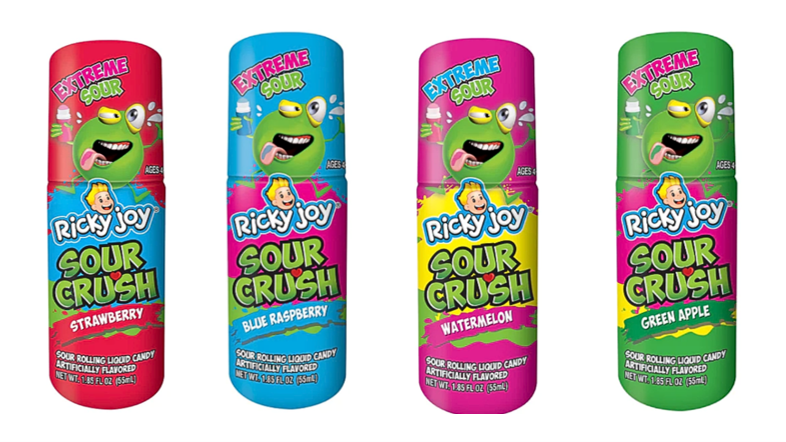
Ricky Joy recalls 2.3 million sour candy bottles after rollerball choking hazard
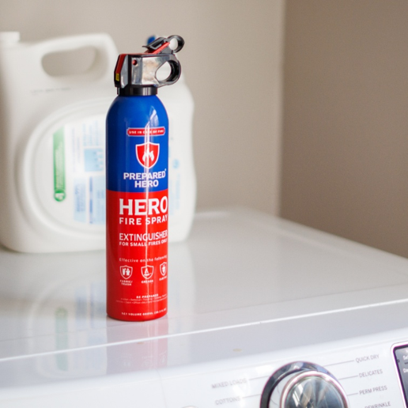
Prepared Hero Recalls 31,000 Fire Spray Canisters That Can Rupture Instead of Putting Out a Fire
