Chillife baby toy sets recalled for choking hazard, eighth such action in 2026
The Consumer Product Safety Commission pulled 20,134 Chillife-brand toy sets on Aug. 27 after reports that a bundled teether's pull strings can lodge in an infant's throat — the eighth nearly identical recall of an Amazon-sold teether design since January, covering roughly 280,000 units in all.
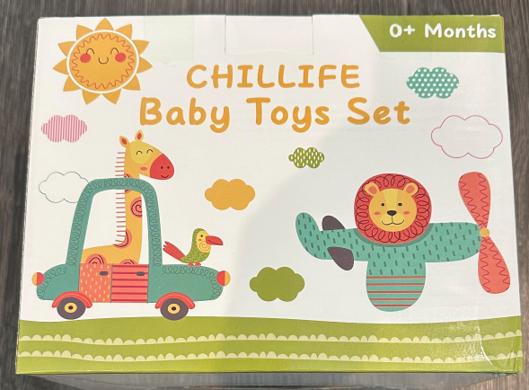
The U.S. Consumer Product Safety Commission recalled about 20,134 Chillife-brand "5-in-1 Montessori Baby Toy Sets" on Aug. 27, warning that a pull-string teether bundled with the sets violates the federal safety standard for children's toys and can lodge in an infant's throat. It is the eighth time since January that the agency has recalled a nearly identical teether design sold on Amazon under a different brand name, a pattern that has now pulled roughly 280,000 units of essentially the same defective toy off the market in a single year.
According to the recall notice posted by the commission, the teether at issue is an off-white plastic disc with a colored ball at its center, spinning rings, soft push buttons and six long silicone "tentacle" strings threaded through it. CPSC says the strings are both thinner and longer than the agency's mandatory toy standard permits, meaning they can reach the back of a child's throat and become lodged there. The commission says it is aware of four choking incidents involving the toy; none required medical attention. The sets, model number CHILLIFE01, sold on Amazon for about $27 from July 2023 through April 2026, imported by Shenzhen Xingchuangyi Trading Co., doing business as Chillife Official. Consumers are told to take the pull-string teether away from children immediately, cut its silicone strings, write "DESTROYED" on the toy body in permanent marker, photograph the destroyed toy and email it to the company for a partial refund of $5.40.
An eighth recall of a familiar design
The Chillife action is notable less for its size than for its company. CPSC has recalled seven other pull-string teethers this year built around the same underlying flaw — a silicone string that is narrower and longer than federal rules allow, threaded through a near-identical disc-shaped toy — each sold by a different Amazon storefront and imported from China under its own brand name. In January the agency recalled 6,800 Yetonamr-brand teethers after 32 reported choking incidents, then days later pulled 49,410 AiTuiTui-brand versions tied to 15 more choking reports and two cases of children biting pieces off the strings. In May, the Tiyol-brand recall covered 102,430 units, the largest single action in the series, after 11 choking reports. GOPO Toys, LiKee, Sili Factory and CuddleCubs Creations followed with smaller recalls between June and July.
- Yetonamr — Jan. 22, 2026 — 6,800 units — 32 choking incidents
- AiTuiTui — Jan. 29, 2026 — 49,410 units — 15 choking incidents, 2 string bite-offs
- Tiyol — May 14, 2026 — 102,430 units — 11 choking incidents
- LiKee — June 11, 2026 — 24,400 units — 10 reports of strings reaching a child's throat
- GOPO Toys — June 18, 2026 — 70,410 units — 3 reports of strings reaching a child's throat
- CuddleCubs Creations — July 23, 2026 — 106 units — no incidents reported
- Sili Factory — July 23, 2026 — 5,918 units — 1 gagging incident
- Chillife — Aug. 27, 2026 — 20,134 units — 4 choking incidents
Added together, the eight recalls cover roughly 280,000 units and at least 78 reports of a pull string reaching a child's throat, gagging or choking them. CPSC has not attributed any deaths to the toys, and most reports did not involve medical treatment.
Why the same flaw keeps resurfacing
Each of the eight teethers was imported by a separate, often obscure Chinese trading company and listed under its own brand name, even though the toys share a nearly identical mold, feature set and underlying defect. Because each importer is a distinct legal entity, CPSC must investigate and negotiate a recall with each one individually, even when the hazard repeats. It is a dynamic long flagged by consumer advocates: a report on the toy industry published last fall by the U.S. Public Interest Research Group Education Fund warned that toys "bought online and shipped from overseas" too often reach children with little of the scrutiny larger, established toy makers face before a product reaches store shelves.
The question of who ultimately bears responsibility for such listings is also the subject of unresolved litigation. In 2024, the CPSC ordered Amazon to notify and refund customers for more than 400,000 hazardous items sold through its Fulfilled by Amazon program, after ruling the company qualifies as a legal "distributor" of goods it warehouses and ships for third-party sellers — an order covering faulty carbon monoxide detectors, hairdryers and children's sleepwear. Amazon has since sued the commission, arguing it functions only as a logistics provider and should not answer for products it neither owns nor manufactures; the case is pending. The teether recalls fall outside that specific order, but they illustrate the same enforcement gap in miniature: regulators are compelling small, individual importers to act one storefront at a time rather than addressing the marketplace mechanism that keeps producing near-copies of the same hazardous toy.
Who is affected, and what to do
Parents who bought a Chillife 5-in-1 Montessori set should look for "Model: CHILLIFE01" printed on the packaging. The set itself — stacking blocks, a sensory toy, a shape-sorting cube and a suction-cup spinner — is not recalled; only the bundled pull-string teether is affected. The commission's guidance mirrors what it told buyers of the seven earlier recalled teethers: stop the child from using the toy immediately, separate the string component from the rest of the set, and follow the individual manufacturer's refund or replacement process, which in most of the eight cases required cutting the silicone strings and photographing the destroyed toy as proof before a refund is issued.
"The silicone strings can reach the back of children's throat and become lodged, posing a risk of respiratory distress and deadly choking hazard," the Consumer Product Safety Commission said in its recall notice for the Chillife toy sets.
Local television stations affiliated with Cox Media Group, including Atlanta's WSB-TV, picked up the recall within a day of its posting, part of the wire distribution CPSC notices typically receive.
What happens next
CPSC says it will keep accepting incident reports on the Chillife teether and the seven earlier recalled versions through its public database at SaferProducts.gov, and the agency's product-safety staff continue to monitor Amazon and other marketplaces for toys matching the same disc-and-string design under still other brand names. Given that a version of this recall has now landed roughly every six to seven weeks since January, consumer-safety attorneys and advocacy groups expect it will not be the last. In the meantime, the agency's standing advice for any pull-string, pull-cord or ribbon-strung toy marketed to infants is unchanged: strings should be short and thick enough that they cannot reach the back of a child's throat, and any toy that does not clearly meet that description should be kept away from children under 3 regardless of what recall list it currently appears on.

Airlines no longer owe meals or hotels for 10 types of delays, starting Monday

Broccoli sprouting seed recalls widen as FDA traces salmonella outbreak to a seed supplier

Hospitals Told to Pull Blood Thinner Argatroban Over Contamination Risk
