CPSC Recalls 180,000 Light-Up Toys Over Exposed Button Batteries That Can Kill Children
A California importer is recalling nearly 180,000 finger-light toys after regulators found children can easily reach the batteries inside, a hazard that federal data show sends a child to the emergency room roughly every 75 minutes nationwide.
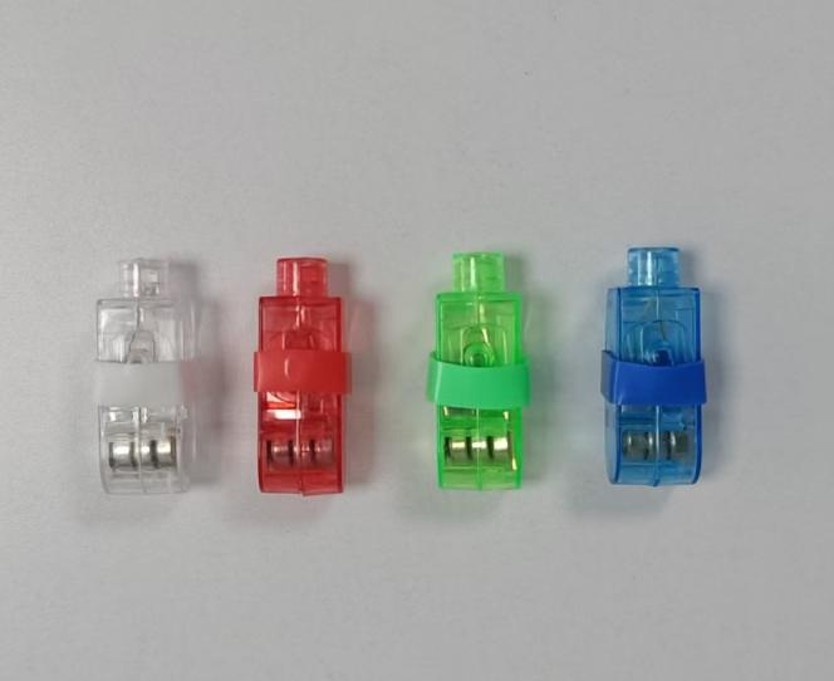
The U.S. Consumer Product Safety Commission announced Thursday that a California-based importer is recalling nearly 180,000 light-up toys after finding that children can pry open the battery compartment and reach the button cell batteries inside, a hazard that can cause fatal chemical burns within hours of being swallowed.
The recall covers California Cade Electronic finger lights, plastic ring-style toys that slip over a fingertip and glow when pressed, each powered by three small button cell batteries. The agency said the battery compartments do not meet the mandatory federal safety standard for toys, which requires them to resist opening by a child.
The numbers
The CPSC and the importer, Cade California Electronic LLC of Hacienda Heights, are recalling about 179,739 units, sold in boxes of 50 in white, blue, red and green. The toys were sold exclusively on Amazon.com from March 2015 through July 2026, priced between $5 and $16 per box, and were manufactured in China. The recall notice, filed as CPSC recall number 26-761, lists no reported incidents or injuries to date, though the agency classifies the hazard as capable of causing "serious injury or death" and is urging anyone who bought the toys to take them from children immediately, dispose of them and seek a refund by emailing the company with photo proof of destruction.
The finger lights were one of 13 recalls the commission posted on Sept. 10 covering products ranging from a competition motorcycle to a gas range, but the battery hazard drew particular attention from pediatric safety researchers because of how well-documented and how persistent the injury pattern has become.
A law written after a child's death
Button and coin battery ingestion has been a recognized pediatric hazard for years, and it produced federal legislation. Reese's Law, enacted in August 2022, was named for Reese Hamsmith, an 18-month-old Texas girl who died in December 2020 after swallowing a coin cell battery from a remote control. The law directed the CPSC to write a mandatory safety standard, and the commission adopted one in 2023 requiring that battery compartments in consumer products either need a tool, such as a screwdriver or coin, to open, or require two independent and simultaneous hand movements that a young child is unlikely to manage.
In building the case for the rule, the commission's own accounting found that from 2011 through 2021 it received reports of 27 deaths and an estimated 54,300 emergency-room-treated injuries tied to ingested or inserted button and coin batteries nationwide. The finger lights recall illustrates a gap the law was meant to close: a product first listed for sale in 2015, years before the standard existed, that the agency says remained on the market and out of compliance for roughly two years after the rule took effect, with sales continuing on Amazon until this past July.
Who is most at risk
Federal injury data show young children bear the overwhelming share of this harm. A study published in the American Academy of Pediatrics journal Pediatrics, drawing on a decade of national emergency department surveillance, estimated 70,322 battery-related ED visits among children under 18 from 2010 through 2019, or roughly one visit every 75 minutes nationwide — more than twice the rate recorded in the two decades before that. Ingestion accounted for more than three-quarters of those visits, and button batteries were involved in nearly 84 percent of cases in which the battery type was known. The average patient was not yet 4 years old.
Clinicians who treat these injuries describe the anatomy of the danger in blunt terms. Kris Jatana, an otolaryngologist at Nationwide Children's Hospital who has studied battery-related injuries extensively, has said of the injury mechanism:
"The clock is ticking from the moment a button battery gets lodged in the esophagus."
A lodged battery can generate an electrical current that produces caustic tissue damage within two hours, according to guidance the American Academy of Pediatrics publishes for parents, a timeline that makes the injury difficult to catch before serious harm occurs, since a swallowed battery often produces no obvious symptoms at first and can be mistaken for a coin on an X-ray.
Families who purchased the finger lights as party favors, stocking stuffers or novelty toys over the toy's decade on the market are the ones now being asked to check their households. The low unit price and packaging in bulk boxes of 50 — a format aimed at classrooms, goody bags and bulk gift-giving — mean a single purchase could have distributed the toys to dozens of children.
What happens next
The CPSC's remedy is a refund, not a repair: consumers are told to stop using the toys immediately, keep them away from children, and destroy them before contacting the company for reimbursement, since there is no batch of corrected replacement units being offered. Because the toys were sold only through Amazon, buyers with order histories may also see direct notifications through the retailer, which participates in the CPSC's recall notification system for third-party sellers.
More broadly, safety advocates and researchers have said for years that recalls alone have not been enough to reverse the injury trend, since new noncompliant products continue to reach the market, often through online marketplaces with limited pre-sale screening of imported goods. Toys are far from the only source of risk: hearing aids, remote controls, singing greeting cards, key fobs and kitchen scales all commonly rely on the same coin and button cells, and the CPSC's broader recall history shows the hazard recurring across all of those categories even after the 2023 standard took effect. What distinguishes the finger lights case is that it involves a children's toy, a category already covered by a mandatory toy safety standard well before Reese's Law existed, which makes the compartment defect harder to attribute to a regulatory gap alone.
The Pediatrics study's authors concluded that public-awareness campaigns and the pre-2023 regulatory patchwork had not meaningfully slowed the rate of injury, and argued that hazard reduction through safer battery and compartment design, rather than after-the-fact recalls, offered the more durable fix. Enforcement of the 2023 standard against noncompliant imports, this recall suggests, remains a work in progress nearly three years after it was adopted. The commission has not said whether it plans additional enforcement action against the importer beyond the recall itself, and it continues to encourage households to check any battery-powered toy, novelty item or gadget bought online for a compartment that opens without a tool, regardless of brand or recall status.

CDC warns of a summer surge in rabies exposures and errors in emergency treatment
Ricky Joy recalls 2.3 million sour candy bottles after rollerball choking hazard
Prepared Hero Recalls 31,000 Fire Spray Canisters That Can Rupture Instead of Putting Out a Fire
