Eye-Tracking Study Names the World's Most Captivating Cycling Routes
A new ranking from adventure travel operator Explore used eye-tracking technology on 200 viewers to score 52 renowned routes, with Canada's Bow Valley Parkway and Australia's Great Ocean Road topping the list.

A new study using eye-tracking technology has ranked the world's most visually captivating cycling routes, with a mountain road through Canada's Banff National Park and Australia's Great Ocean Road topping a list whose middle ranks are dominated by routes across Europe.
The research, published Sunday by the adventure travel operator Explore, showed 200 participants footage of 52 renowned cycling routes and used eye-tracking software to measure how quickly each scene captured attention and how long viewers' eyes lingered on it. Those two measures were combined into a weighted eye-catching score out of 100, producing a ranking the company says reflects genuine visual impact rather than self-reported popularity.
The Bow Valley Parkway, a road running between Banff and Lake Louise in Alberta, topped the list with a score of 97, followed by Australia's Great Ocean Road at 94 and Italy's Tuscany gravel routes at 91. Germany's Elbe Cycle Route, which follows the river for more than 1,200 kilometers from Czechia toward the North Sea, placed fourth, while a circular route through Amsterdam's canals and parks rounded out the top six.
Europe's depth, if not the top spot
Although neither of the top two finishers is in Europe, the continent accounted for a majority of entries in the top 15, including France's Provence lavender route and Route des Grandes Alpes, Italy's Stelvio Pass, Scotland's North Coast 500 and a circuit around Lake Ohrid spanning North Macedonia and Albania. There's something about seeing a country from the saddle that no other kind of travel can match, said Luke Judd, a travel expert at Explore involved in the research. You're moving fast enough to cover real ground, but slow enough to take it all in, he said.
The routes' appeal is not solely aesthetic. Banff National Park, one of Canada's most visited protected areas, is managed by Parks Canada, which each spring opens stretches of the Bow Valley Parkway to cyclists before the road reopens to vehicle traffic. Victoria's Great Ocean Road similarly runs through a string of coastal parks overseen by Parks Victoria, the state agency responsible for the reserves the route passes through.
The findings, first reported by Euronews, arrive as cycle tourism continues to grow across Europe and North America, with operators reporting rising demand for multi-day, self-guided routes over single-destination trips.
What's next
Explore said it plans to expand the eye-tracking methodology to a wider set of routes and traveler demographics in future editions of the study, and to test whether the same visual-attention scores correlate with rider satisfaction once people actually cycle the routes rather than simply watch footage of them. For now, the ranking is likely to feed a familiar late-summer wave of travel planning, as riders weigh next year's trips against routes that, by this measure, are hardest to look away from.
The list's lower half offered a reminder that dramatic scenery, not distance or difficulty, drove the scoring. Utah's Slickrock Trail and Hawaii's Road to Hana, both short by touring standards but visually intense, scored within a few points of longer, more storied routes such as France's Route des Grandes Alpes and Scotland's North Coast 500, a full loop of the Scottish Highlands popularly known as the NC500. Vancouver's Seawall, a mostly flat urban path with no significant elevation change, rounded out the top 15, suggesting that a route need not be remote or strenuous to hold a viewer's attention.
Rankings like this one have become a fixture of the late-summer travel calendar, and tourism boards in past years have used similar lists in their own marketing, even when the underlying methodology, as with Explore's eye-tracking approach, has little to do with how a route actually feels to ride. Cycling advocates note that visual appeal and rider experience do not always align: a road prized for its scenery can still carry heavy traffic, poor surfaces or limited services, factors an eye-tracking study of video footage cannot capture.

Vermont Egg Recall Exposes a Gap in Federal Salmonella Rules
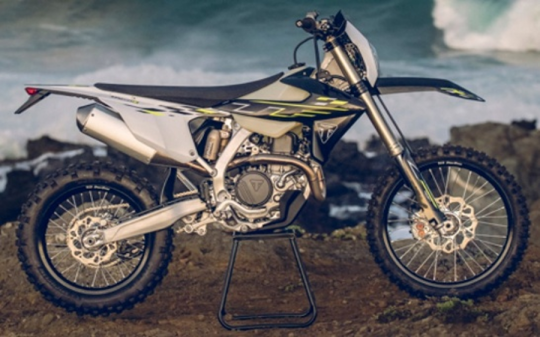
Triumph Recalls 1,560 TF 450 Motocross Bikes After Engine Defect Tied to Rider's Broken Bone

AGA and La Cornue recall thousands of luxury ranges over gas leak risk