Salmonella outbreak tied to Idaho broccoli sprouts sickens 22 across four states
Federal and state health officials say broccoli sprouts grown by Evergreen Fresh Sprouts, LLC have been linked to a Salmonella outbreak spanning Idaho, Montana, Utah and Washington, with the tainted product traced from a sample pulled from a sick patient's refrigerator.

Federal and state health officials are warning consumers in the Pacific Northwest and Mountain West not to eat broccoli sprouts grown by a single Idaho producer after a multistate Salmonella outbreak sickened at least 22 people, two of them seriously enough to require hospitalization. The Food and Drug Administration's outbreak investigation identifies the source as broccoli sprouts produced by Evergreen Fresh Sprouts, LLC of Moyie Springs, Idaho, contaminated with an uncommon strain called Salmonella Bovismorbificans.
The company recalled the product on Sept. 4 after Montana state laboratory testing confirmed the pathogen in a sample of sprouts collected directly from a sick patient's home refrigerator — the piece of evidence that investigators say cracked the case open. The Centers for Disease Control and Prevention's outbreak page, last updated Sept. 9, instructs consumers bluntly not to eat any of the recalled product.
The numbers
As of the most recent update, 22 people across Idaho, Montana, Utah and Washington have tested positive for the outbreak strain, according to the Washington State Department of Health, which alone has logged 16 cases scattered across King, Spokane, Whatcom and several smaller counties. Two people have been hospitalized; no deaths have been reported. Illness onset dates range from July 7 through Aug. 26, meaning the outbreak had been quietly building for nearly two months before investigators zeroed in on a single grower.
Of 19 patients interviewed by investigators, all 19 reported eating sprouts of some kind, and 17 — 89 percent — specifically recalled eating broccoli sprouts, a statistical signature health officials say made the source unusually easy to pin down once the right sample turned up. The recalled sprouts, sold in plastic bags and clamshell containers, carry expiration dates of Sept. 7, 9, 11, 14 or 16, meaning some product may still be sitting in refrigerators or on store shelves.
How the recall unfolded
The breakthrough came from state, not federal, lab work. According to a Montana Department of Public Health and Human Services release, sanitarians collected leftover sprouts from an ill Montana resident's kitchen and sent them to the state public health laboratory, where they tested positive for the outbreak strain — a rare instance of a consumer's own leftovers, rather than an inspection sample from a farm or warehouse, providing the smoking gun in a produce-borne outbreak.
"Do not eat any recalled broccoli sprouts. Throw them away or return them."
Evergreen Fresh Sprouts distributed the product to grocery stores, food co-ops, restaurants and food-service customers in Idaho, Montana and Washington, though the FDA cautions that further distribution to additional states may have occurred once retailers repackaged or resold the sprouts. Food Safety News reports this marks the third documented outbreak tied to the same grower since 2011, when 25 people across five states were sickened by Salmonella Enteritidis traced to the company's alfalfa and spicy sprout blends; a second outbreak in 2014 involving E. coli O121 sickened 19 people in six states.
Who is affected and what to watch for
Health officials say anyone who bought raw broccoli sprouts from the affected states in recent weeks should assume they could be contaminated unless they can confirm a different grower. Most people infected with Salmonella develop diarrhea, fever and stomach cramps within six hours to six days of exposure, and symptoms typically resolve within a week without treatment. But reporting from Today.com notes the CDC is urging anyone with more severe symptoms — a fever above 102 degrees, bloody diarrhea, persistent vomiting, signs of dehydration or diarrhea lasting more than two days — to contact a healthcare provider.
- Young children, adults over 65 and people with weakened immune systems face the highest risk of severe illness.
- Raw sprouts of any kind carry elevated food-safety risk because the warm, humid conditions needed to grow them also favor bacterial growth, and sprouts are typically eaten raw with no cooking step to kill pathogens.
- Consumers who bought the recalled sprouts are advised to throw them away or return them to the point of purchase, and to wash and sanitize any refrigerator drawers, containers or surfaces the sprouts touched.
Reaction and what happens next
State epidemiologists say the investigation remains open, and the FDA has not ruled out that additional retailers or states could be added to the distribution list as traceback work continues. Newsweek's coverage notes federal officials have cautioned that the confirmed case count of 22 likely understates the true scope of the outbreak, since many people who fall ill from Salmonella never seek testing or medical care. That undercount concern echoes warnings from public-health researchers who have flagged 2026 as an unusually active year for foodborne illness surveillance nationally, even as the number of distinct outbreaks tracks close to historical averages.
For now, the FDA and CDC say the priority is getting the recalled product out of circulation before more of it is consumed, given expiration dates stretching into next week. Attorneys who represent foodborne-illness plaintiffs, including the Seattle-based Marler Clark firm, have already begun soliciting affected consumers, a signal that litigation is likely to follow as it did after the company's two prior recalls. Whether this incident results in tighter oversight of small sprout growers — an industry the FDA has singled out for elevated food-safety rules for more than a decade — will likely depend on what investigators find when they trace the contamination back to its source on the farm.
FDA — Outbreak Investigation of Salmonella: Broccoli Sprouts (September 2026)
CDC — Salmonella Outbreak Linked to Broccoli Sprouts
Washington State Department of Health — 2026 Salmonella Outbreak Linked to Broccoli Sprouts
Food Safety News — New Salmonella outbreak traced to Evergreen Sprouts
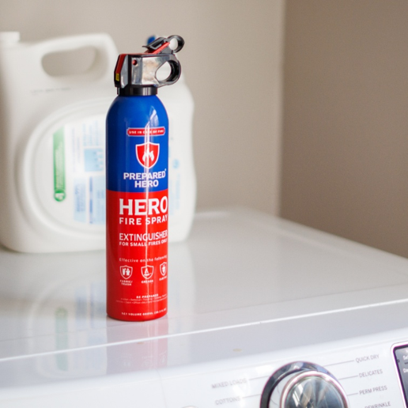
Prepared Hero Recalls 31,000 Fire Spray Canisters That Can Rupture Instead of Putting Out a Fire

Measles outbreak in southwestern Wisconsin grows to 159 cases as school year begins

Clorox recalls 6.3 million bottles of Mistolin and Lestoil cleaners over bacteria risk in Puerto Rico, Virgin Islands
