Opinion: The Fed's watchdog cleared Powell. The pressure campaign already did its damage.
A federal judge and now the Federal Reserve's own inspector general have both concluded there was no crime in the $2.46 billion renovation fight — only a badly managed construction project and a pretextual investigation that outlasted the facts.

The Federal Reserve's independent inspector general reported Tuesday that the $2.46 billion renovation of the central bank's Washington headquarters broke no federal law. That finding should have been the least surprising development in a yearlong saga that began with accusations of criminal fraud against Fed Chair Jerome Powell and ended, months ago, with a federal judge concluding the Justice Department's investigation existed mainly to harass him. The renovation was mismanaged, sometimes badly. It was never a crime. The gap between those two facts, and how long it took official Washington to say so plainly, is the real story here.
What the watchdog actually found
The report itself, issued by Inspector General Michael Horowitz's office and described in detail by CBS News and corroborated by an Associated Press account carried in the Boston Globe, found no reasonable grounds to believe Powell or other Fed officials violated any law in overseeing the renovation of the Eccles Building and an adjacent structure. But it did not exonerate the project's management. The IG documented a string of governance failures: four years into construction, the Fed still had no guaranteed maximum price with its contractor, cost estimates for the underlying construction work rose from an initial $921 million to roughly $2.018 billion, and the central bank's own public-facing project FAQ page had to be updated repeatedly as figures shifted. Those are real failures of cost discipline at an institution that should know better. They are also, as the inspector general's own legal conclusion makes clear, not crimes.
What the subpoenas actually targeted
The inspector general's report arrives on top of a federal court record that already told most of this story. In March, Chief Judge James Boasberg of the U.S. District Court for the District of Columbia quashed a set of Justice Department grand jury subpoenas aimed at Powell over the renovation, and did so in blunt language. According to Banking Dive's reporting on the ruling, Boasberg found the subpoenas' "dominant purpose is to harass and pressure Powell," not to pursue a legitimate criminal inquiry, and he held that line through a subsequent motion for reconsideration in April and a motion to vacate in June. By April, the Justice Department had formally closed the criminal investigation, clearing a path for the Senate to confirm Kevin Warsh as Powell's successor as Fed chair, a confirmation covered contemporaneously by Al Jazeera.
The subpoenas' "dominant purpose is to harass and pressure Powell," Judge James Boasberg wrote in quashing them — a finding he declined to revisit on reconsideration or on a later motion to vacate.
The fair counterargument
It would be too easy to wave away every concern raised during this episode as pure pretext. The renovation's cost overruns were real, and Congress has a legitimate oversight interest in how the Fed, an institution that answers to no appropriations committee for its operating budget, spends more than $2 billion on its own buildings. The Senate Banking Committee has publicly pressed the Fed for answers about the missing guaranteed-maximum-price contract, and lawmakers demanding those answers were doing their jobs. None of that is in dispute, and the inspector general's report validates most of it.
Why the pretext problem is still the bigger one
But congressional oversight and a criminal grand jury subpoena are not the same instrument, and confusing them is precisely the danger Boasberg's ruling identified. Oversight hearings, IG referrals and public letters are the ordinary machinery of accountability; a subpoena backed by the threat of criminal prosecution against the head of the nation's central bank is something else, and it is not a tool that gets pointed at a sitting Fed chair, mid-term, over a building's change orders unless someone wants him gone or wants him compliant. A judge found exactly that dynamic at work, not once but across three separate rulings. The inspector general's report, arriving months later and confirming there was never a legal violation to prosecute, does not soften that finding. It confirms it.
Reaction has broken along predictable lines. Sen. Thom Tillis, who has called the investigation "weak and frivolous" even while continuing to place holds on Fed nominees, and Sen. Elizabeth Warren, who has cited the same court record as evidence of an attempted political takeover of the central bank, have drawn opposite conclusions from the same set of facts — which is itself a sign of how thoroughly the episode has been absorbed into partisan combat rather than treated as the institutional warning it actually is.
What should happen next
Powell's term as chair ended with Warsh's confirmation, and Warsh has reportedly ordered his own reimbursement audit of the renovation's spending — a sensible step, and one that should have started years ago through ordinary channels rather than a grand jury. The inspector general's report should be the last word on whether a crime occurred; it was not one, and three rounds of a federal judge saying so should have settled that well before Horowitz's office made it official. What deserves more attention now is the harder question the episode raises: what guardrails, if any, prevent a future administration from reaching for a criminal subpoena the next time it wants leverage over a central banker whose interest-rate decisions it dislikes. Congress can audit the Fed's contractors. It should not need a grand jury to do it.
Opinion: Washington's drug-boat strikes have outlived their own justification
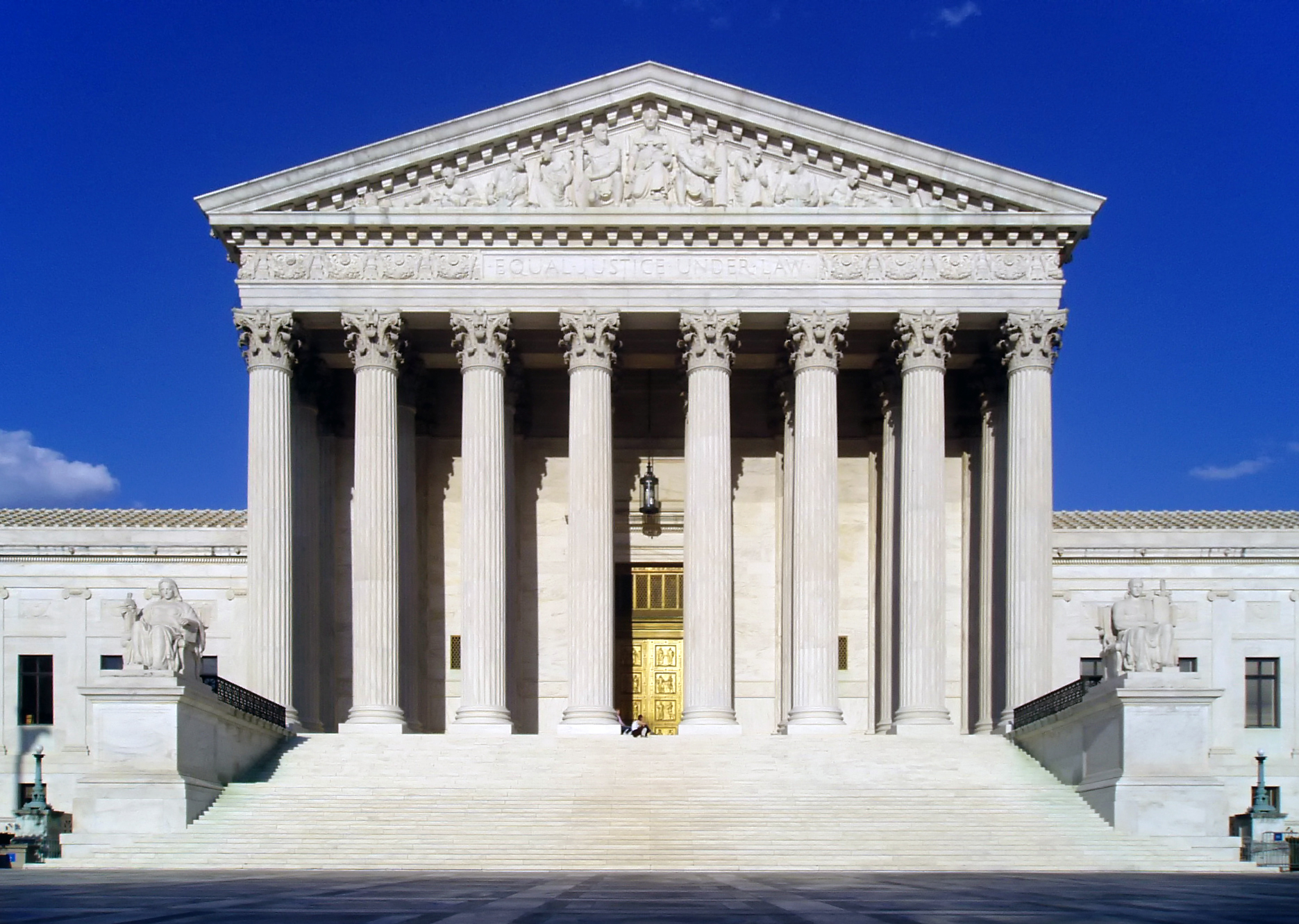
Opinion: The Supreme Court Takes On the AR-15 — and Its Own Legal Test
Opinion: Congress Had a Bipartisan Fix for Soaring Power Bills. The Senate Let It Die.
