Opinion: The Supreme Court Takes On the AR-15 — and Its Own Legal Test
As the justices open a new term, a consolidated challenge to assault-weapons bans will test whether the historical-tradition standard the Court adopted in 2022 can produce a consistent answer — after three federal appeals courts applying it reached three different ones.
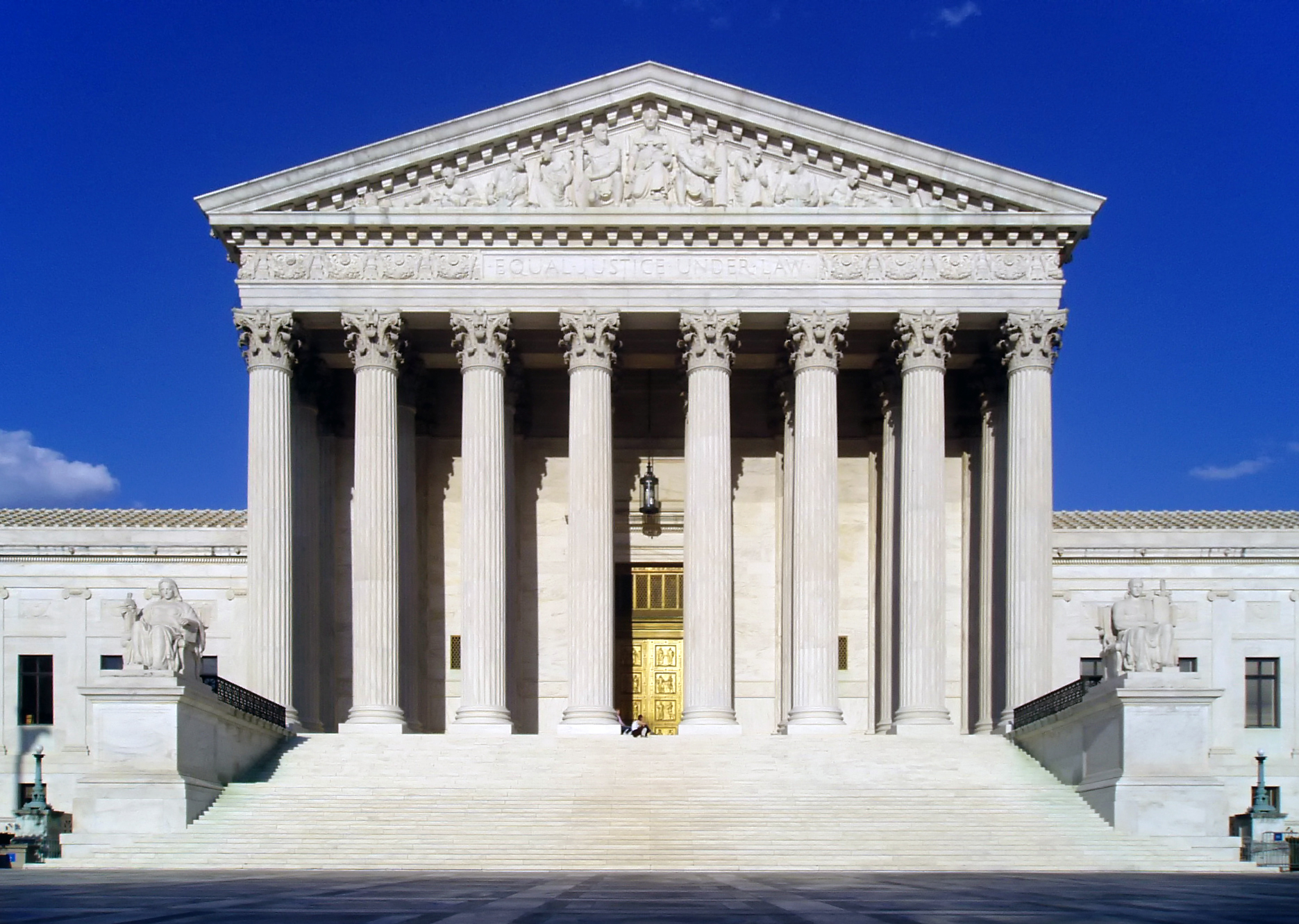
The Supreme Court opens its new term on October 5 carrying the most consequential Second Amendment case since it rewrote the rules for gun regulation four years ago, and the outcome will test the usability of the Court's own doctrine as much as it will settle the fate of assault weapons. On June 30, the justices granted certiorari in the consolidated cases of Viramontes v. Cook County and Grant v. Higgins, agreeing to decide whether the Second and Fourteenth Amendments protect a right to own AR-15-platform rifles and the magazines that feed them. Oral argument is set for December 2, with a decision expected by the end of the term next June.
The case reaches Washington not because the underlying law is settled but because it is not. Three federal appeals courts, applying the identical constitutional test to nearly identical state and local bans, have reached three different answers in the space of a year. That split, more than any single plaintiff's grievance, is what finally forced the Court's hand.
The numbers behind the case
Eleven states and the District of Columbia currently restrict semiautomatic rifles of the AR-15 type, according to a tracker maintained by Everytown for Gun Safety: California, Connecticut, Delaware, Hawaii, Illinois, Maryland, Massachusetts, New Jersey, New York, Rhode Island and Washington. Cook County's ordinance dates to 1996; Connecticut's followed the 2013 Sandy Hook shooting. The Court has consolidated the two challenges for a single hour of argument, and the docket has already drawn dozens of amicus briefs from state attorneys general, gun-rights organizations and the federal government. An analysis of shootings from 2015 to 2022 found that incidents in which four or more people were killed resulted in more than twice as many deaths when an assault weapon was used, the kind of figure both sides now cite to opposite ends.
How one test produced three answers
The doctrinal root is the Court's 2022 ruling in New York State Rifle & Pistol Association v. Bruen, which discarded decades of tiered constitutional scrutiny for gun laws and replaced it with a single instruction: a regulation survives only if it is consistent with the nation's historical tradition of firearm regulation. The theory was that history would supply a more disciplined, less subjective answer than balancing tests had. The assault-weapons litigation has shown the opposite.
The U.S. Court of Appeals for the Seventh Circuit, ruling on Cook County's ordinance, held that AR-15s and high-capacity magazines sit outside Second Amendment protection altogether because they are closer in kind to machine guns and other military ordnance than to the handguns at issue in the Court's earlier cases. The U.S. Court of Appeals for the Second Circuit, upholding Connecticut's law in August 2025, reasoned that the right to bear arms "is not unlimited" and that weapons "uniquely designed to create mayhem" fall outside it, while noting the law left ample room for self-defense. Then, on July 17 this year, the Third Circuit broke the pattern: sitting en banc, it voted 10 to 5 in Cheeseman v. Platkin to strike down New Jersey's near-identical assault-weapons and magazine limits as unconstitutional, in an opinion by Judge Arianna Freeman. It was the first time a federal appeals court had invalidated a state ban of this kind, and it instantly nationalized a dispute that state legislatures had mostly managed on their own terms for thirty years.
Three panels, one historical test, three outcomes. That is not a sign the test is working as designed; it is a sign the test leaves enough room for judges to find whatever historical analogue suits their conclusion.
The immediate parties are narrow — a handful of gun owners in Illinois and Connecticut, two local governments defending their statutes — but the ruling will bind every one of the eleven states with similar laws on the books, along with any legislature weighing a new one. Residents of those states, roughly a fifth of the country by population, would see their bans fall in a single stroke if the Court sides with the challengers. Law enforcement officials in those states, who have spent years defending the statutes in court, would have to rewrite enforcement guidance overnight. Gun manufacturers and retailers, who have watched state-by-state restrictions chip away at a market for the most commonly sold rifle platform in the country, have an obvious commercial stake as well. And because the Justice Department has now weighed in formally, the outcome also doubles as a marker of how far the current administration is willing to push the Court's gun jurisprudence beyond Bruen itself.
Who has a stake, and what they are saying
Connecticut Attorney General William Tong, who will help defend his state's law, cast the stakes in blunt terms in a statement released after the cert grant:
"Connecticut's assault weapon ban is lawful, lifesaving, and broadly supported. The gun lobby has flooded the courts in states across the country to get an assault weapons case up to this Supreme Court. We are prepared for this fight, and we are going to go in with everything we've got to keep these weapons of war off our streets, out of our schools, and away from our families."
Cook County State's Attorney Eileen O'Neill Burke struck a similar note, writing that her office "will not back down from defending Cook County's long-standing ban on assault weapons," which she described as weapons "designed to inflict the maximum amount of carnage and destruction". On the other side, Second Amendment Foundation executive director Adam Kraut welcomed the cert grant as overdue clarity, arguing that the rifles at issue are among the most commonly owned firearms in the country and telling supporters that it is "hard to argue that a type of rifle that potentially outnumbers Ford F-150 trucks in America" falls outside constitutional protection.
What happens between now and June
Briefing is largely complete, and Solicitor General John Sauer has asked to share argument time on December 2 after the Justice Department filed a brief backing the challengers, a sign the federal government intends to press for the broadest possible reading of the right to own semiautomatic rifles. A ruling for Cook County and Connecticut would preserve the current patchwork and effectively bless the Seventh and Second Circuits' approach to sorting weapons into protected and unprotected categories. A ruling for the challengers would not just strike down two ordinances; it would likely doom the assault-weapons bans in every other state that has one, collapsing three decades of state-level policy into a single opinion.
Either outcome will answer a narrower but more durable question than the one on the Court's docket: whether the historical-tradition test adopted in Bruen can actually produce a predictable rule, or whether it simply hands each new panel of judges a different excuse to reach the result it already favored. The justices spent four years insisting history, not judicial preference, would decide these cases. The AR-15 is about to test whether that was ever true.
Opinion: Washington's drug-boat strikes have outlived their own justification
Opinion: Congress Had a Bipartisan Fix for Soaring Power Bills. The Senate Let It Die.

Opinion: The Fed's watchdog cleared Powell. The pressure campaign already did its damage.
