Opinion: The Justice Department Says These School Districts Don't Need Watching Anymore. Its Own Docket Says Otherwise.
The mass dismissal of 57 decades-old school desegregation orders is being sold as bureaucratic housekeeping, but the legal process behind it — and evidence from the Justice Department's own cases — suggests many of these districts have not actually finished the work Brown v. Board demanded.
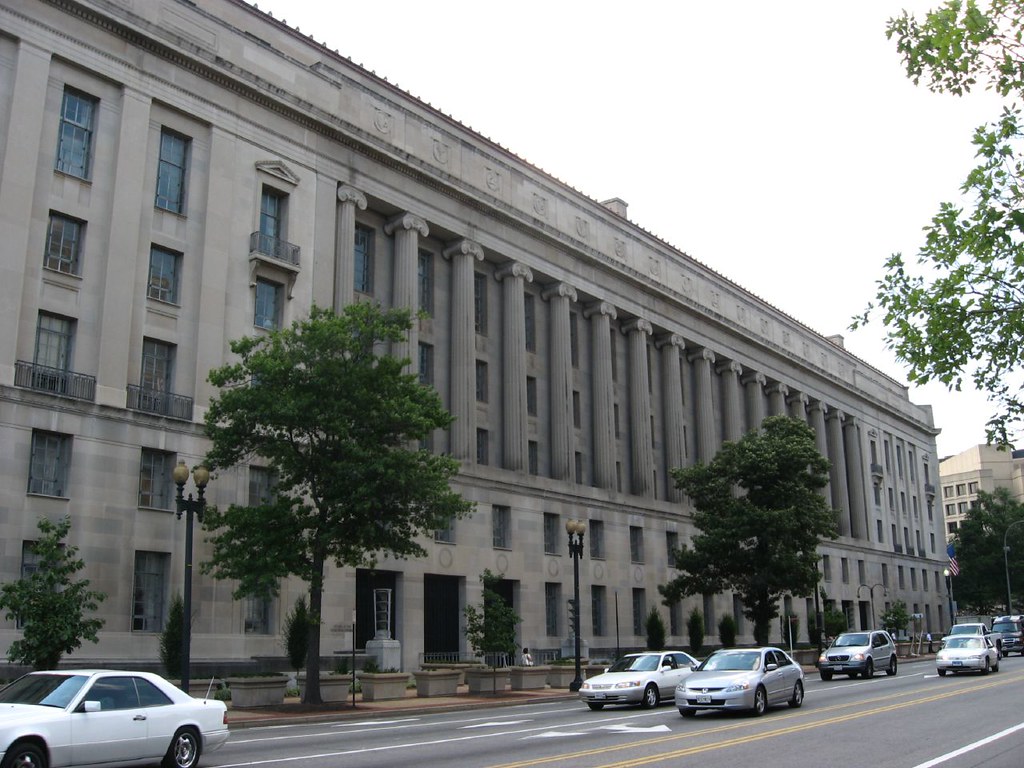
On Sept. 24, the Justice Department's Civil Rights Division announced that it had dismissed more than 50 school desegregation cases in a single sweep, closing out consent decrees that in some instances had bound local districts to federal oversight for more than 60 years. Assistant Attorney General Harmeet Dhillon framed it as simple modernization: the arrangements were "onerous and outdated," she said, and ending them meant districts could "redirect taxpayer dollars back to benefitting students." According to a tally of Justice Department records, 57 such orders have now been lifted since the start of President Trump's second term, nearly 80 percent of them in five Southern states.
There is a real legal argument for closing these cases, and the Supreme Court has made it. The trouble is that the process now being used to close them is drifting away from what that argument actually requires — and the department's own docket, read closely, undercuts the claim that the classrooms in question have moved on.
A Docket Cleared, Not a Standard Demonstrated
The scale here is not in dispute. The cases trace back to lawsuits filed in the 1960s and 1970s against districts that had operated dual, racially segregated school systems in open defiance of Brown v. Board of Education. Georgia accounted for 15 of the latest dismissals, Mississippi 13, Louisiana 11, Alabama five and South Carolina one, spanning districts from Waterbury, Connecticut, to Flagler County, Florida. The Justice Department describes its method as a "case-by-case review," concluding dismissal only after a district has reached what the law calls "unitary status."
That phrase is doing a lot of work, and it is worth being precise about what it means.
What "Unitary Status" Was Supposed to Require
The Supreme Court addressed exactly this question in Board of Education of Oklahoma City v. Dowell in 1991 and again in Freeman v. Pitts a year later. The court held that desegregation decrees were never meant to run in perpetuity, but it did not treat termination as a formality. A district earns release only by showing good-faith compliance over a reasonable period and by eliminating, "to the extent practicable," the vestiges of its prior segregation — a factual determination a court is supposed to make, district by district, on the record.
That is not, in practice, what is happening in every one of these dismissals. In Louisiana's Concordia Parish, a case first filed in 1965, the district and the Justice Department did not ask a judge to find that segregation's vestiges had been eliminated. They simply filed a joint stipulation of dismissal. A district court balked, but the Fifth Circuit ordered the case closed anyway, ruling that under Federal Rule of Civil Procedure 41, once both parties agree to dismiss, a judge has no authority to keep the docket open to ask whether unitary status was actually reached. The oversight ended not because a court found the work done, but because the two parties who wanted it ended agreed that it should be.
The Same Docket Tells a Different Story
That matters because, elsewhere on the same kind of docket, judges who have looked have found the work is not done. In St. James Parish, Louisiana — a case whose federal appellate record stretches back to the same 1965 vintage — a federal judge refused this year to end oversight, finding that "vestiges of segregation persist at schools across the district." St. Louis Academy in that parish is more than 95 percent Black; Sixth Ward Elementary is 80 percent Black; the district's elementary-age population as a whole is roughly 62 percent Black, and the consent order's own standard calls for schools to fall within a 45-to-75-percent band. That is not ancient history. It is a live finding, months old, in a case with the same origin date as many of the ones the department is now closing en masse.
The research on what happens after oversight lifts points the same direction. Sean Reardon's widely cited "Brown Fades" study, tracking more than 200 districts released from court supervision between 1991 and 2009, found that racial segregation reliably increases after release — most sharply in Southern districts, in elementary grades, and in districts that looked relatively integrated at the moment oversight ended. Students currently enrolled in the districts losing supervision this month are, in other words, entering exactly the conditions under which the research says segregation tends to creep back.
"This administration's relentless campaign to dismantle work done to end racial segregation in our nation's public schools is a stain on our democracy," Kristen Clarke, a former head of the department's Civil Rights Division, told CBS News.
The Fair Objection, and Its Limits
None of this means every one of these decrees deserved to survive forever, and the administration's defenders have a legitimate point buried inside the overreach. Alabama's attorney general, Steve Marshall, called the latest round "just the beginning" and said his state would keep pressing to end what he considers unnecessary federal supervision. It is fair to ask whether a court order entered in 1965, still binding a school board's hiring and busing decisions six decades later, is really the least intrusive way to guarantee equal schooling in 2026. Dowell itself worried about decrees becoming a permanent federal receivership over local schools, divorced from present-day facts. A school district that has, in fact, integrated its faculty, its facilities and its student assignments has a real claim to running its own schools again.
But that argument is an argument for rigorous, individualized review — not for treating a large number of closed cases as an accomplishment in itself, and not for a dismissal process that lets the government's own litigating position substitute for a judge's findings of fact. House Education and Workforce Committee Democrats put it more bluntly, writing that "schools are just as segregated today as they were in the late 1960s." That is an overstatement nationally, but it is close to literally true in the specific parish a federal judge examined this year. The existence of even one St. James Parish, sitting on the same kind of docket as the 57 cases being closed, is reason enough to doubt that "unitary status" is being verified with the rigor the Supreme Court's own standard demands.
What Should Happen Now
The docket for these cases belongs to the courts, not to a press release. If the Justice Department believes a district has genuinely eliminated the vestiges of its segregated past, it should be willing to make that case to a judge and let the judge make findings — the way the court in St. James Parish was able to say no. Where the department instead relies on stipulated dismissals under Rule 41 to avoid that inquiry, as it did in Concordia Parish, it is choosing a process almost guaranteed to under-detect exactly the problem the decrees exist to catch. Congress, for its part, could require the department to publish the specific factual findings supporting each unitary-status determination rather than a national count of cases closed.
The plaintiffs and the Black families these orders were written to protect are the ones who bear the risk if that review is skipped. Sixty years is a long time for a federal court order to bind a school board, and no one should want it to run forever on inertia. But the record so far suggests the department is choosing speed over the individualized scrutiny that its own legal authority for closing these cases depends on — and the country will not know which of the 57 was more St. James Parish than Concordia Parish until it is too late to matter.

Opinion: 'The Agency Wants Everyone Arrested': What a Federal Judge Found Inside ICE's Warrantless-Arrest Paperwork

Opinion: The Fed chair Trump picked to cut rates just raised them
A Voter Database With a Documented Error Rate Should Not Have Been Rushed Back Online
