A Voter Database With a Documented Error Rate Should Not Have Been Rushed Back Online
The justices let a retooled citizenship-check system return to voter-roll purges five weeks before the midterms, even though the state that has used it most aggressively found that a flagged voter was five times more likely to be a wrongly accused citizen than an actual noncitizen.
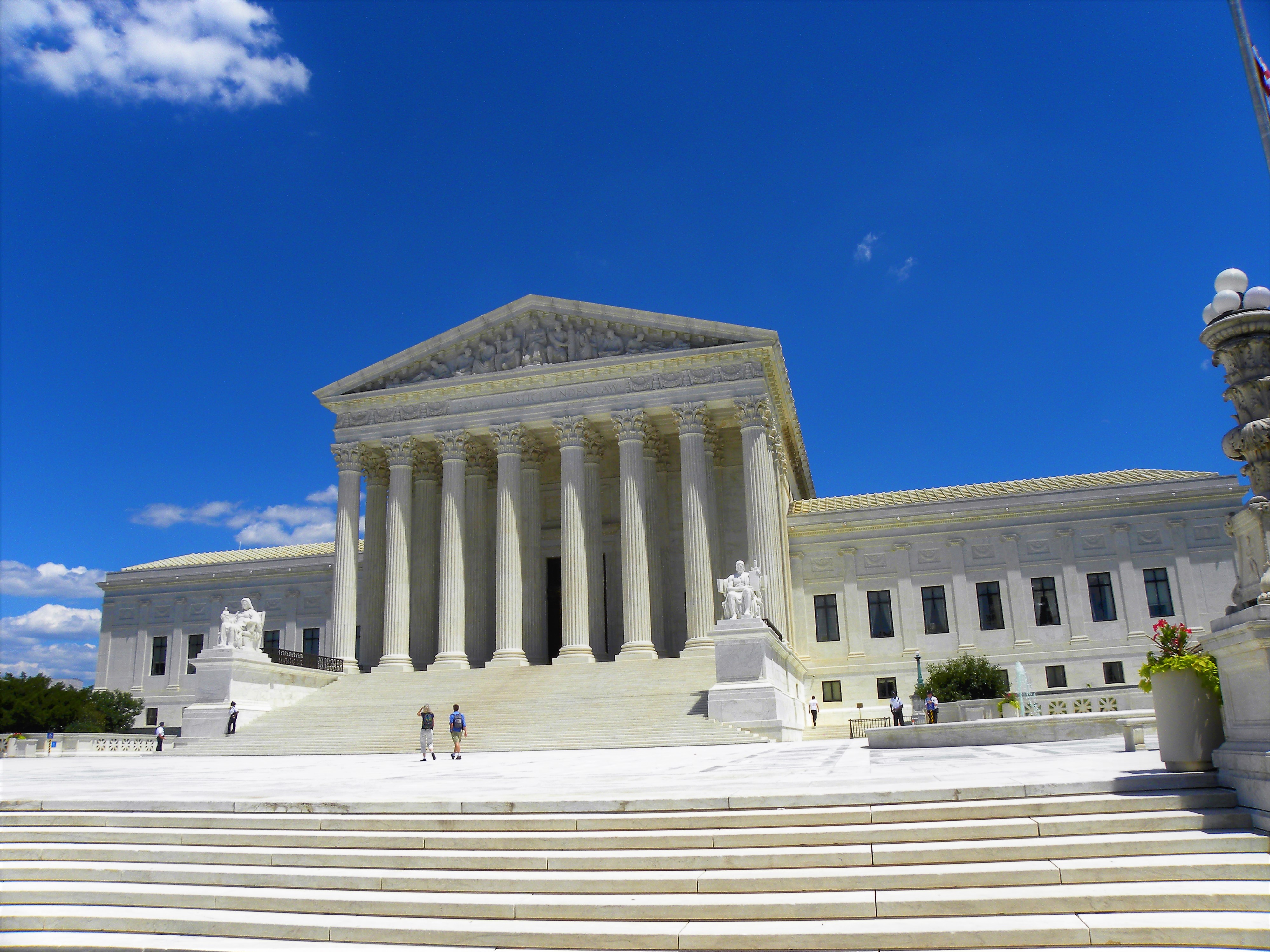
On Friday, the Supreme Court allowed the Trump administration to resume using a revamped federal database to hunt for noncitizens on state voter rolls, over the objection of three dissenting justices who warned that the tool has already cost eligible citizens their registrations. The 6-3 order in Department of Homeland Security v. League of Women Voters, catalogued on the Court's own docket as No. 26A308, stayed a district court injunction and cleared the way for states to again run millions of voter records through the Systematic Alien Verification for Entitlements system, known as SAVE, just five weeks before the midterm elections.
The numbers underlying the dispute are not in serious contention, because they come largely from the government's own filings and from a state that has already run the experiment. Solicitor General D. John Sauer told the Court that since May 2025 the modified SAVE system has verified more than 65 million voters across 26 states and flagged 28,635 of them as potential noncitizens. Texas, which ran its full 18-million-voter roll through the system, flagged 2,724 people. According to the Texas secretary of state's own accounting, roughly one in five of those flagged voters was later confirmed to be a citizen and reinstated, while only 4.2 percent of the flagged names were referred for investigation as possible noncitizen voting.
A Benefits Tool Repurposed for Ballots
SAVE has existed for four decades as a narrow instrument: agencies used it to confirm immigration status for people applying for public benefits. What changed, and what triggered this lawsuit, is that the Department of Homeland Security last year linked SAVE for the first time to Social Security Administration records covering most of the adult population, and opened it to bulk queries so that states could upload entire voter rolls rather than checking individuals one at a time. The stated purpose was to help states purge noncitizens ahead of the midterms and to support an executive order directing federal agencies to compile state-by-state lists of adult citizens.
U.S. District Judge Sparkle Sooknanan blocked the retooled system in June, finding, according to reporting on her ruling, that combining and redistributing that much sensitive personal data violated the Social Security Act, the Privacy Act and the Administrative Procedure Act. A federal appeals panel declined to stay her order by a 2-1 vote. The administration then went to the Supreme Court on an emergency basis, and a six-justice majority agreed that the government was likely to prevail on the merits, relying on a 1996 immigration-law provision that it said authorizes DHS to share citizenship data, including Social Security information, with the states.
The People Caught in the Middle
The people most directly affected are not the noncitizens the program is designed to catch but the naturalized and native-born citizens the program has already misidentified. SAVE has repeatedly struggled to confirm citizenship for people who acquired it later in life, including through naturalization, and county officials who receive a SAVE flag typically send the named voter a letter demanding proof of citizenship within 30 days, after which the registration can be canceled if there is no response. Texas's own data shows that process swept up hundreds of citizens alongside a much smaller number of people whose eligibility was genuinely in question. One of them, Anthony Nel, was profiled by NBC News in its account of the ruling and later gave a declaration in the federal lawsuit describing his own wrongful removal from the rolls.
Election administrators are also affected, since they now must again process bulk flags from a system whose error rate the government has not published in full, while operating inside the 90-day window before a federal election during which the National Voter Registration Act ordinarily forbids systematic list purges. The majority's answer was that the district court's injunction had gone too far by blocking even "individualized inquiries," which the law permits during that window, and that this hampered "the Federal Government's efforts to assist state and local agencies in the proper administration of the midterm elections."
A Narrow Legal Question, a Large Practical Risk
That framing understates what is actually at stake. The individualized-inquiry exception in federal law was written for a world of one-off checks, not for a system built to run entire state voter files in bulk against a still-undisclosed error rate. Texas's own figures, generated by the very state that has embraced this tool most aggressively, show that a flagged voter was roughly five times more likely to turn out to be a wrongly accused citizen than to be an actual case worth referring for investigation. Treating that ratio as consistent with "individualized" review requires a fairly generous reading of the word.
"The harm caused by burdening or disenfranchising even a few lawful voters outweighs the nonexistent harm that the Government experiences when it is prevented from taking an action that it likely lacks the authority to take," Justice Ketanji Brown Jackson wrote in dissent, joined by Justices Sonia Sotomayor and Elena Kagan.
The government's position, laid out by DHS in the days after the ruling and echoed in coverage from CBS News, is that election integrity requires exactly this kind of aggressive cross-checking, and that the litigation itself is evidence of how hard it has been to use ordinary government records for an ordinary government purpose. That argument has genuine force in the abstract. Noncitizen voting is rare but not imaginary, and states have a legitimate interest in keeping their rolls accurate. The trouble is that the remedy the Court just allowed back into service is not a scalpel. It is a blunt instrument that, on the government's own numbers, misfires roughly four times more often than it hits, and it is being redeployed five weeks before people vote, under a stay that by design skips the deliberate, fully briefed merits review the underlying privacy and data-sharing claims deserve.
What Comes Next
The stay is not the end of the case. Judge Sooknanan's district court still has to resolve the underlying claims that the SAVE overhaul violated federal privacy and administrative law, and the plaintiffs, including the League of Women Voters and the Electronic Privacy Information Center, said through their counsel that they intend to keep pressing that case, as detailed in reporting on Texas's own reinstatement of wrongly flagged voters. A separate legal fight in Maryland over the administration's related project of compiling state-by-state citizen lists is also unresolved, and a federal judge there has already pressed the Justice Department for a firm timeline it has not been able to provide.
None of that will be settled before November. What will happen instead is that states can now resume feeding voter rolls into a system that, by its own operator's admission, has an error rate the public still cannot see in full, at the exact moment when the cost of a mistake, a wrongly canceled registration, is highest and hardest to undo. The Court may yet be proven right on the narrow statutory question of what the 1996 law authorizes. It has not been shown to be right about the wisdom of letting this particular tool run at this particular time, and that distinction should not be lost in the celebration or condemnation now surrounding the ruling.

Opinion: Rejecting Iran's Offer Wasn't Strength. It Was a Refusal to Let a War Congress Never Authorized End.
Opinion: A year after Charlie Kirk's killing, colleges are still failing the free-speech test

Opinion: A Republican Senator Wants Don Jr. Subpoenaed Over a Russian-Funded Wedding. Watch Whether His Own Party Answers.
