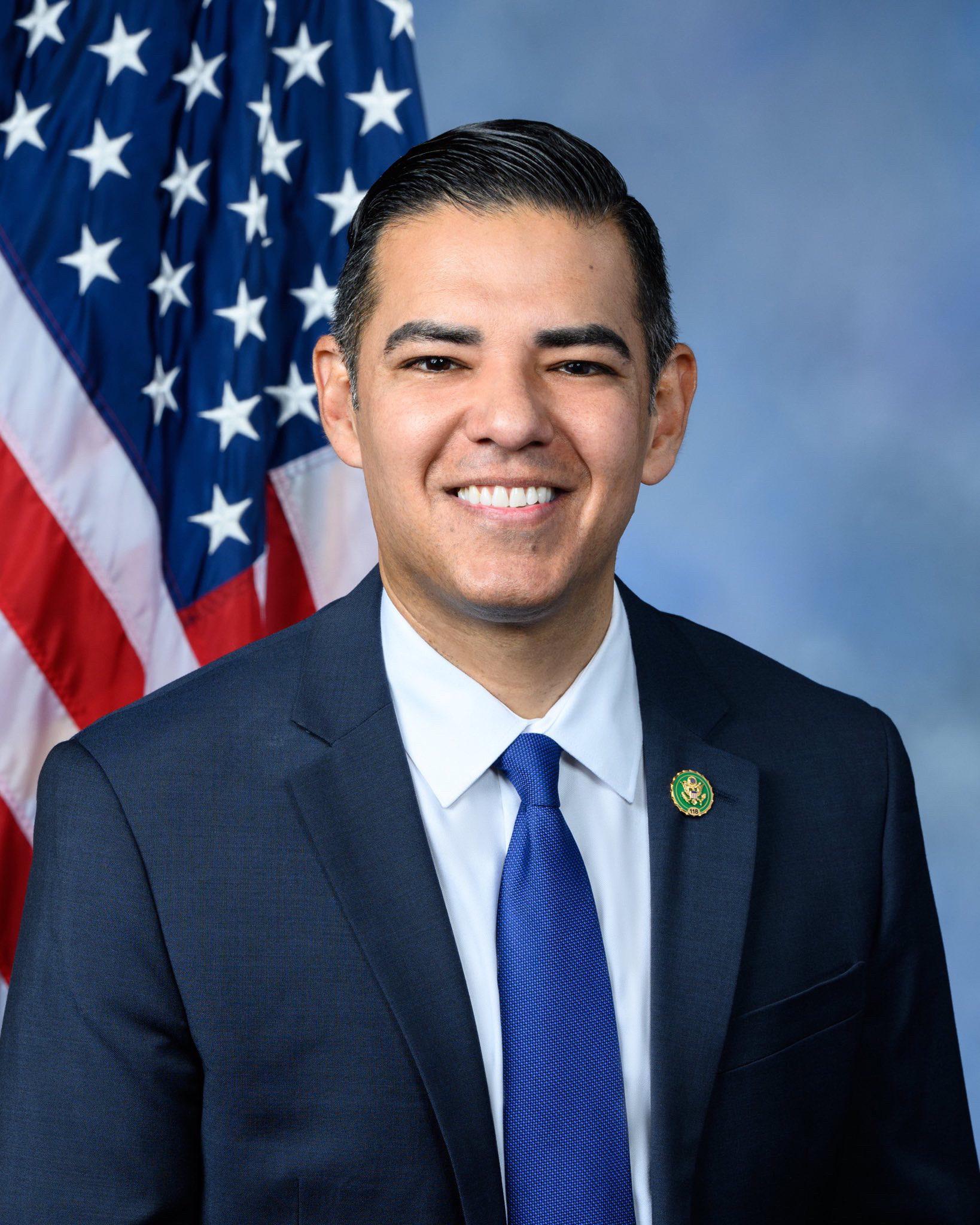
House Ethics Panel Finds Gomez Made Unwelcome Sexual Advances Toward Staffer, Setting Up Early Exit
A bipartisan report released Monday concludes the California Democrat, who already lost his bid for reelection amid the allegations, violated House rules against unwelcome sexual advances; he says he will resign Dec. 1 rather than finish his term.

The House Committee on Ethics said Monday it has found "substantial evidence" that Rep. Jimmy Gomez, D-Calif., engaged in sexual misconduct toward a congressional staffer, closing out a seven-month investigation with a bipartisan finding that a sitting member violated the chamber's Code of Official Conduct. The panel's 19-page committee report, adopted by the committee on November 19 and released publicly four days later, concludes that Gomez made unwelcome sexual advances and had unwanted sexual contact with a House aide, and that his conduct "could constitute criminal misdemeanor sexual abuse" under District of Columbia law.
Gomez, in a statement reported by PBS NewsHour, said he has "strong disagreements with the Committee's report and its conclusions" but will leave Congress on December 1, roughly five weeks earlier than planned. He had already been a lame-duck lawmaker after losing his bid for a sixth term this month to a fellow Democrat, Angela Gonzales-Torres, amid the pending investigation.
What the committee found
According to the committee's statement, signed by Chairman Michael Guest, R-Miss., and Ranking Member Mark DeSaulnier, D-Calif., investigators interviewed ten witnesses, including Gomez himself, after public reports in April surfaced that he had been seen kissing a congressional staffer at a party. Gomez initially told the committee, through counsel and under a certified statement, that he had engaged in only "one sole occasion" of "consensual kissing" with a House employee. Under subsequent questioning, he acknowledged he had in fact made "sexual contact" with her.
The report describes two specific episodes. The first occurred outside a bar near the Capitol on the night of February 29, 2024, where the committee found Gomez made sexual contact with the staffer after she told investigators she "felt that he was coming on pretty strong" and wanted the encounter "to just end." The second took place five months later in Gomez's congressional office, when the same staffer said he grabbed her, pressed her against him and tried to kiss her as she attempted to leave; she told the committee she said "no" and had to push him off before she "just ran out." Gomez disputed her account of both encounters as non-consensual, but the committee found her testimony "sufficiently credible" and his own recollections inconsistent.
House Rule XXIII, the Code of Official Conduct, bars members from "unwelcome sexual advances or conduct" toward any House employee, a standard the committee has said applies "even when not rising to the level of sexual harassment, precisely because of the power dynamics at play." The panel concluded Gomez violated that clause, as well as the Code's broader requirement that members behave in a manner that reflects creditably on the House. The investigation began after the committee opened a formal inquiry in April under Committee Rule 18(a), months after it had already warned, in an earlier statement on workplace conduct, that "there should be zero tolerance for sexual misconduct, harassment, or discrimination in the halls of Congress."
Much of the report turns on a credibility dispute between Gomez and the staffer, identified only as "Witness 1." Gomez told investigators that during the February 2024 encounter he asked for consent before touching her and that "she did not say no, she did not push me away." The committee rejected that account, finding his version "improbable" and noting that his recollection of that single exchange was unusually precise compared with hazier testimony about the rest of the evening. A third witness who was present that night gave an account closer to the staffer's, testifying that it appeared Gomez and the staffer had kissed both inside and outside the bar.
Why no sanction was recommended
Despite the findings, the committee stopped short of recommending that the full House take disciplinary action, such as censure or reprimand. The report notes that Gomez's electoral defeat left "not enough time for it to pursue an adequate House sanction" before his term ends, but says the panel nonetheless chose to adopt and publish the report "so that the House is aware of Representative Gomez's misconduct and so that the House may determine, in its judgment, whether to sanction" him. The decision leaves any further action, formal or otherwise, effectively moot once Gomez departs.
"This is not acceptable," the committee wrote of the toxic workplace culture the staffer described on Capitol Hill, adding that "the House should take whatever action it deems appropriate in light of the Committee's findings."
The report also states that Gomez's conduct "contributed to her decision to leave House employment altogether" and caused her "significant and ongoing distress," while faulting him for failing "to appreciate the inherent power imbalance between House Members and House staff," even though the aide did not work directly for his office.
Part of a broader pattern on the Hill
The Gomez report was one of three the Ethics Committee released on the same afternoon, alongside separate reports on allegations involving Rep. Mike Collins, R-Ga., and Rep. Troy Nehls, R-Texas, neither of which the committee's accompanying statements summarized publicly. The committee has issued a string of findings against members this year over workplace conduct, part of what it has repeatedly described as an effort to confront "a broader culture of sexual misconduct and toxic working conditions in some Capitol Hill offices." In the Gomez report itself, the panel cited its own recent finding against another member for inappropriate comments and gifts to young female staffers, as well as decades-old precedents, including a 1989 case in which a lawmaker's apology letter was deemed sufficient punishment for unwanted touching. The committee pointedly rejected that lighter standard here, writing that "this is not 1990, and an apology would not suffice."
Gomez, who has represented California's 34th District, covering much of central and northeast Los Angeles, since winning a 2017 special election to succeed Xavier Becerra, is serving his fifth full term, according to the Office of the House Historian. He lost the November 3 general election to Gonzales-Torres, a Democratic Socialist who trailed him by roughly 15 points in the June primary before the ethics allegations became national news; she went on to win decisively, according to local projections that had her ahead 59 percent to 41 percent.
What happens next
Gomez's early resignation, effective December 1, will leave the seat vacant for roughly five weeks until the new Congress convenes in January, when Gonzales-Torres is set to be sworn in for the next term. Because the vacancy falls so close to the end of the current Congress, after the close of the nomination period in the final year of the term, California law gives the governor discretion over whether to call a separate special election at all.
For the House, the matter is now effectively closed as a disciplinary one. With Gomez gone before the chamber could act on any sanction, the report stands instead as a historical finding — the kind of document the Ethics Committee has used in past cases to put "other Members on notice," as it noted in citing a similar unwelcome-advances case from the 1980s. The committee's statement reiterated that it is seeking further witnesses in other sexual-misconduct matters and pledged to keep confidential the identities of those who come forward.
For the staffer at the center of the case, identified in the report only as "Witness 1," the committee's findings represent vindication after what she described to investigators as a pattern on Capitol Hill in which, in her words, "people get handsy" and employees learn to "back off" rather than report it. The committee's acknowledgment that her departure from government service was a direct consequence of Gomez's conduct is likely to add pressure on House leaders of both parties to revisit how complaints against members are handled before, rather than after, a lawmaker leaves office.

Appeals Court Reopens Trump's Bid to Move Hush-Money Case to Federal Court

Longtime North Carolina Republican concedes House seat after recount, cementing Democrats' biggest majority since 1992

Trump's third meme-coin dinner draws fewer takers as token's value collapses