Missouri voters reject bid to repeal abortion rights, ban gender-affirming care
Two years after enshrining a right to abortion, Missourians turned back a legislature-backed amendment that would have rolled it back and placed new restrictions on transgender minors in the state constitution.
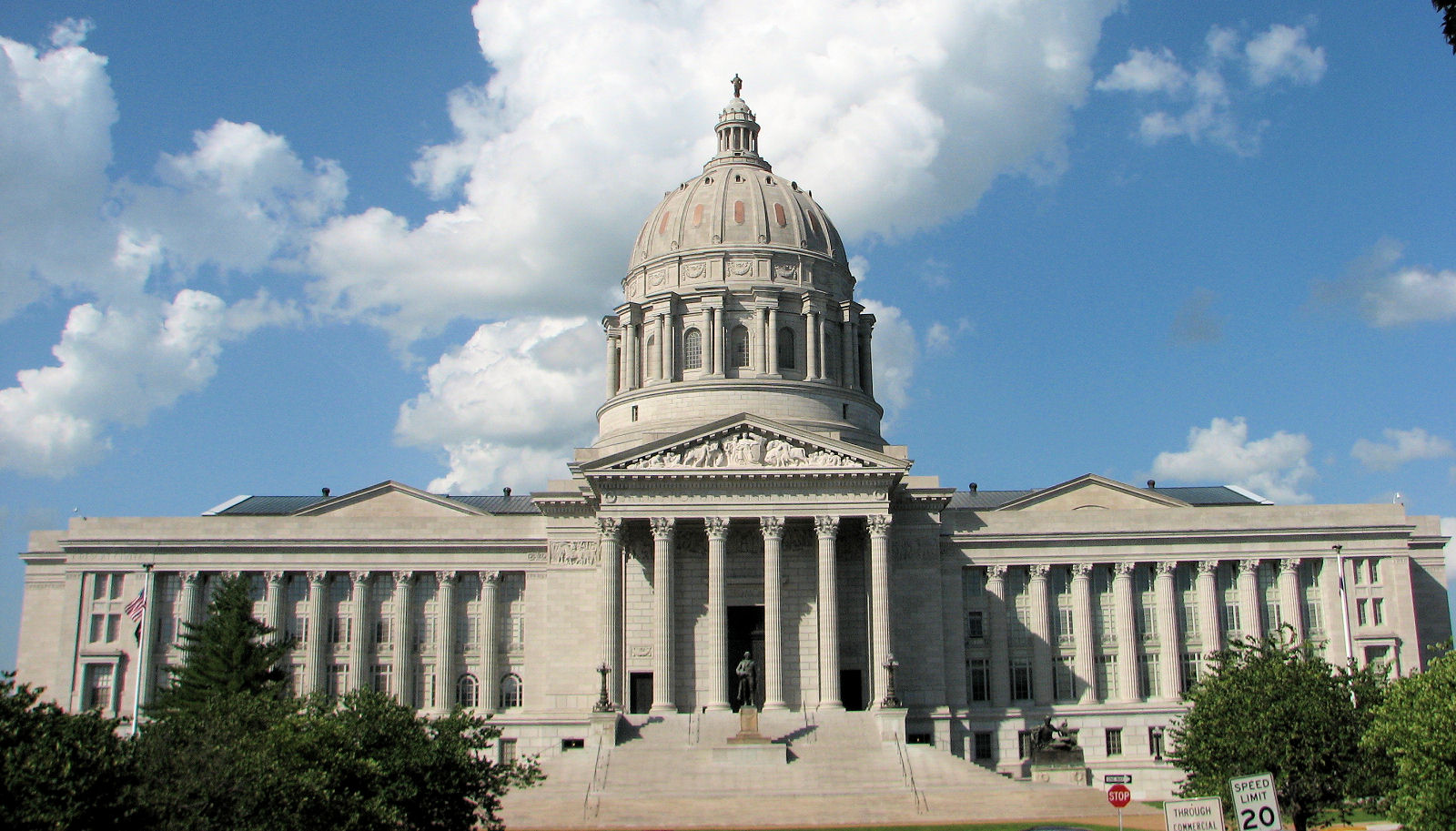
Missouri voters on Tuesday rejected a Republican-backed constitutional amendment that would have repealed the state's two-year-old right to abortion and written a ban on gender-affirming care for minors into the state constitution, handing abortion-rights supporters a second straight statewide win in Missouri and keeping the state's 2024 reproductive-rights amendment intact.
The Associated Press called the race on Amendment 3 at 10:19 p.m. Tuesday. With about 99 percent of expected votes counted, unofficial returns tracked by NBC News showed the measure failing by roughly 11 percentage points, 55.4 percent against to 44.6 percent in favor. Missouri's secretary of state, whose office oversees the official record of the amendment's ballot language and certification, has not yet announced a final certified count, a process state law allows to extend for several weeks after an election.
A second vote, a different outcome
Tuesday's result was the second time in two years that Missourians voted on abortion rights, and the second time abortion-rights supporters prevailed. In November 2024, voters narrowly approved a separate Amendment 3 that restored a right to abortion up to fetal viability, overturning a near-total ban that had been in place since the overturning of Roe v. Wade, by a margin of about 51.6 percent to 48.4 percent.
Missouri's Republican-controlled legislature moved quickly to undo that result. In April and May of 2025, the House and Senate passed House Joint Resolution 73, a measure that bypassed the governor's desk and went directly to voters, as resolutions proposing constitutional amendments do under Missouri law. The official House summary of the resolution describes a new constitutional section that would permit abortion only in cases of medical emergency, fetal anomaly, or rape or incest within 12 weeks, while allowing the legislature to regulate the procedure and requiring parental consent for minors.
The path to the ballot was contested at nearly every step. Abortion-rights advocates sued Secretary of State Denny Hoskins over the summary language voters would see, arguing it obscured the fact that a "yes" vote would strip away rights granted just a year earlier. A Cole County judge ordered the wording rewritten, and an appeals court later ordered a second rewrite. Missouri Attorney General Catherine Hanaway announced on October 8, 2025, that a circuit court had rejected the remaining legal challenges to the measure, clearing it for the ballot. "This ruling represents a sweeping victory for the people of Missouri and a resounding affirmation of the rule of law," Hanaway said in a statement from her office at the time.
Abortion and transgender care, paired on one ballot line
Unlike the measure it sought to repeal, the 2026 version of Amendment 3 combined abortion restrictions with a separate, unrelated policy: a permanent constitutional ban on gender-transition procedures for minors, including puberty blockers, cross-sex hormones and surgery. Missouri already restricts those treatments by statute under a law known as the SAFE Act, part of which is due to expire in 2027. Supporters said placing the restriction in the constitution would make it durable regardless of future legislatures or courts. Opponents argued the pairing was a deliberate strategy to attach an unpopular abortion rollback to a more politically potent issue for Republican voters, while also drawing transgender Missourians and their families into a fight over reproductive rights.
The two campaigns combined to raise more than $36 million, by far the most spent on any of the statewide measures on Missouri's November ballot. The anti-amendment coalition, organized under the name Stop the Ban and backed in part by a donation from the American Civil Liberties Union Foundation, reported raising more than $26 million, according to reporting by KCUR, Kansas City's NPR member station. The pro-amendment group, Her Health, Her Future, led in part by first lady Claudia Kehoe, raised roughly $8.6 million.
Reaction on both sides
Opponents of the measure, who spent months warning that the stated exceptions for rape, incest and medical emergencies would be difficult for doctors and patients to apply in practice, celebrated the result as a second popular mandate for the 2024 amendment.
"Politicians thought they could silence us, overturn our votes, and take away our rights to our own bodies and lives," said Mallory Schwarz, executive director of Abortion Action Missouri, in comments reported by Missouri's KOMU-TV after the race was called.
Emily Wales, president and chief executive of Comprehensive Health of Planned Parenthood Great Plains, said decisions about pregnancy "belong with patients," according to the same report. Luz María Henríquez, executive director of the American Civil Liberties Union of Missouri, said "politicians should not be able to overturn the will of voters."
Advocates for transgender Missourians, who had largely focused their campaign on the gender-affirming care provisions, also claimed a share of the outcome. Katy Erker-Lynch, executive director of the LGBTQ-rights group PROMO, said the win "shows what is possible when voters hear directly from trans Missourians, whose very lives are at stake."
Supporters of the amendment, including Republican Gov. Mike Kehoe, who campaigned across the state in the measure's final days, and U.S. Sen. Josh Hawley, did not immediately claim the loss would end their push. Tom Estes, a pastor allied with Her Health, Her Future, told supporters at an election-night gathering, "We came up short today, but this is a battle in a war, so we are definitely going to keep going on forever," according to KOMU's account of the event.
What happens next
Missouri's result arrived alongside a mixed national picture on abortion ballot measures this cycle. Voters in Nevada and Virginia approved separate measures enshrining abortion rights in their state constitutions, while a similar proposal in Idaho fell short. Missouri's vote was distinct from all three in that it was the only measure asking voters to take back a right they had already granted themselves at the ballot box, rather than to grant or deny one for the first time — a dynamic that advocacy groups on both sides have said could shape how other states approach abortion politics heading into 2028.
For now, the practical effect in Missouri is to leave the 2024 amendment's protections through fetal viability in place, along with the state's current, statutory restrictions on gender-affirming care for minors, unchanged by Tuesday's vote. Legal fights over abortion clinic regulations and licensing requirements that have continued in Missouri courts since 2024 are expected to proceed separately from the ballot outcome. Organizers on the losing side said, per KOMU's report, that they intended to review the final certified tally before deciding whether to pursue the issue further in a future legislative session or a new statewide vote.

Michigan utilities sue to block voter-approved ban on political giving

Trump's civil rights chief at DOJ resigns in first senior exit since midterm defeat

Republican lawmaker vows to force a new Hegseth impeachment vote as GOP blames Iran war for midterm rout
