National debt tops $40 trillion, arriving months ahead of forecasters' expectations
Treasury data showed federal debt crossing $40 trillion on August 18, doubling in less than a decade and pushing net interest costs above $1 trillion a year.
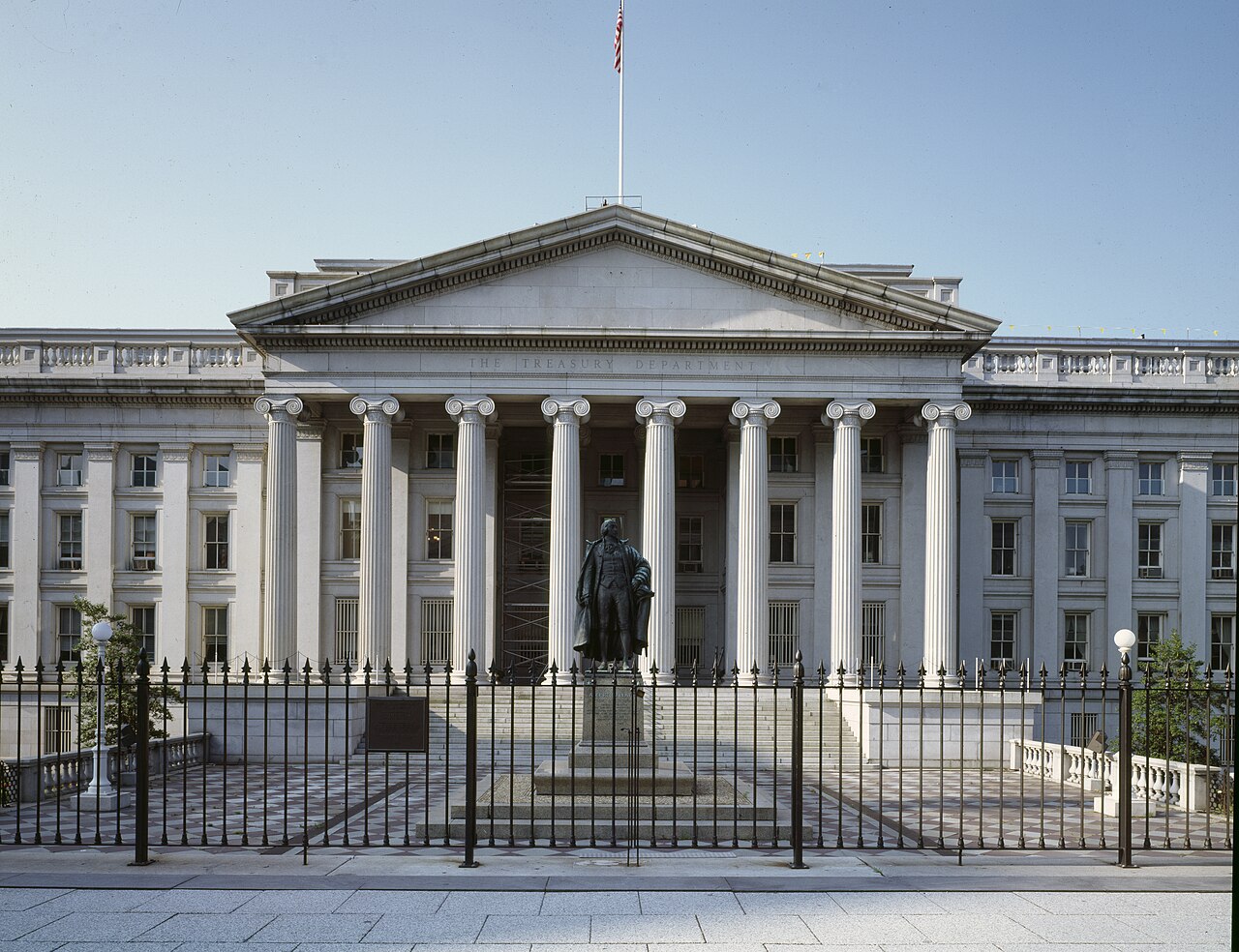
The federal government's total debt crossed $40 trillion on Tuesday, according to Treasury Department figures, a threshold that budget analysts had not expected to be reached for several more months.
The milestone, drawn from the Treasury's daily "Debt to the Penny" report, marks the point at which the debt has doubled in less than a decade. It arrived alongside rising yields on government bonds, which have pushed up the government's own borrowing costs even as the total amount it owes keeps climbing, a dynamic CBS News detailed in its own review of the Treasury data.
The numbers
Total outstanding federal debt stood at $40.05 trillion as of the Treasury's Wednesday release, according to reporting on the data. That works out to roughly $117,000 for every person living in the United States. The federal government is now borrowing about $6 billion a day, and more than half of that daily borrowing goes toward interest payments on debt already on the books rather than new spending. Net interest costs are projected to exceed $1 trillion in 2026, a sum larger than the federal government spends on national defense and larger than everything in the budget except Social Security and Medicare.
The pace of accumulation illustrates how much faster debt is piling up relative to the country's early history. It took the United States close to two centuries to accumulate its first $1 trillion in debt, a threshold crossed in the early 1980s. The government now adds that same amount in under five months.
Context: how the debt got here
The debt has grown because federal spending has consistently outpaced federal revenue, forcing the Treasury to borrow the difference every year, a pattern that has held under both parties for more than two decades. Chairman Jodey Arrington of the House Budget Committee marked the milestone by invoking James Madison's warning that "a public debt is a public curse," and used the occasion to renew his call for states to invoke Article V of the Constitution to force a convention on a balanced-budget amendment, since Congress itself, he argued, lacks the political will to change course.
The run-up in debt reflects a combination of factors that have accumulated across several administrations: tax cuts that reduced federal revenue relative to the size of the economy, emergency spending during the COVID-19 pandemic that was never fully unwound, growth in mandatory spending on Social Security and Medicare as the population ages, and, more recently, a higher-interest-rate environment that has made it more expensive for the government to roll over maturing debt into new bonds. Michael Peterson, chief executive of the Peter G. Peterson Foundation, a nonpartisan group that tracks federal fiscal policy, said the country has been "running deficits for the last 26 years" and has largely "ignored a lot of the structural challenges" driving them, rather than confronting entitlement and revenue questions that both parties have generally avoided.
Who is affected
- Taxpayers, who ultimately cover interest payments through general revenue, a cost now competing directly with other federal priorities in annual budget negotiations
- Federal beneficiaries, since rising interest costs increase pressure on lawmakers to look at Social Security, Medicare and other mandatory programs when searching for savings
- Borrowers across the economy, because Treasury yields help set benchmark interest rates that affect mortgages, auto loans and business credit
- Financial markets, where analysts have pointed to elevated bond yields as a sign investors are demanding more compensation to hold U.S. debt over the long term, a concern also raised in Al Jazeera's explainer on who holds U.S. debt
That unease has shown up beyond the bond market too. Gold prices have extended a rally past $4,500 an ounce in recent sessions, a move traders have linked in part to mounting concern over the sustainability of federal borrowing.
Reaction
Reaction split along familiar lines in Washington. Fiscal hawks in both parties pointed to the milestone as evidence Congress needs to revisit both spending levels and the tax code, though there was no consensus on which side of the ledger should move. Arrington's committee has pushed the Article V route as an alternative to relying on Congress to police itself, a position that remains a minority view even among Republican budget hawks, most of whom favor spending cuts negotiated through the normal legislative process instead of a constitutional convention, an approach some conservative legal scholars have also warned could be difficult to limit in scope once convened.
"We've been running deficits for the last 26 years, and we've basically ignored a lot of the structural challenges."
Democrats largely responded by pointing to the 2025 tax legislation and defense spending increases as bigger drivers of the shortfall than any single entitlement program, arguing that revenue increases on high earners and corporations should be part of any serious deficit-reduction package. White House officials have downplayed the significance of the specific dollar threshold, arguing that debt as a share of the overall economy, rather than a round number, is the more meaningful measure of fiscal health, while still pointing to administration economic growth projections as a path toward stabilizing that ratio over time.
What happens next
There is no legal mechanism that is triggered automatically by the debt reaching $40 trillion, unlike the statutory debt ceiling, which requires separate congressional action to raise and which the Treasury Department's debt limit page notes was last addressed earlier in the current Congress. Barring new legislation, the Congressional Budget Office's most recent long-term projections show the debt continuing to grow faster than the economy for the foreseeable future, driven largely by interest costs and mandatory spending growth rather than annual appropriations, which make up a shrinking share of the budget. Lawmakers face a busy fall legislative calendar that includes government funding deadlines, and some members on both sides of the aisle have said they hope to use those deadlines to force a broader conversation about long-term fiscal policy, though similar efforts in prior years have repeatedly stalled short of structural change.

DNC and Common Cause sue Trump administration over taxpayer-funded ad campaign

Rubio Declines to Address Guilfoyle Misconduct Allegations

Trump pitches his Florida golf club as a future "presidential retreat"