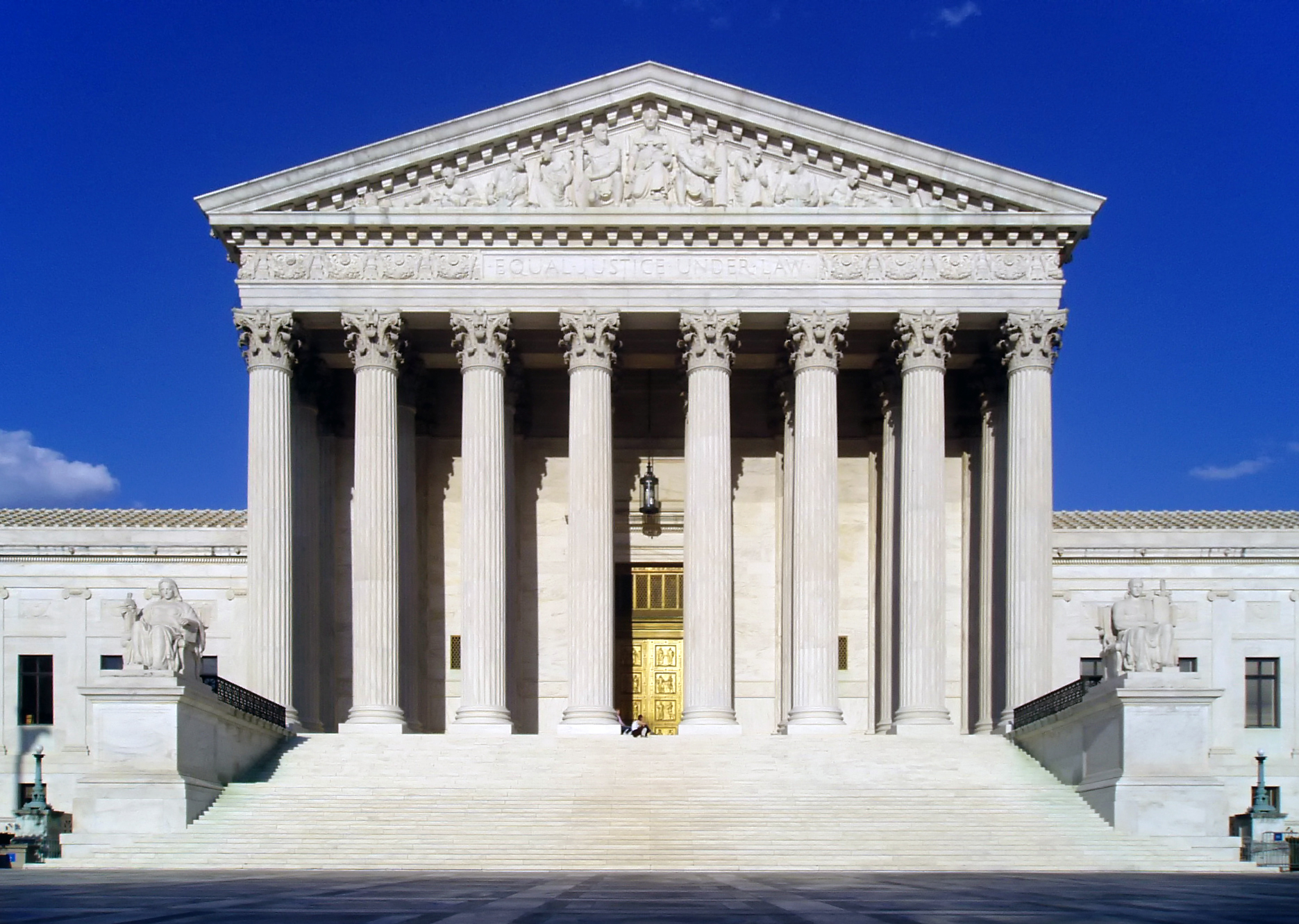
Supreme Court lets White House ballroom construction resume while legal fight continues
Chief Justice John Roberts issued a temporary stay Friday freezing a lower-court injunction that had halted above-ground work on President Trump's 90,000-square-foot ballroom, without ruling on whether the project itself is lawful.

The Supreme Court cleared the way Friday for construction crews to keep working on President Trump's White House ballroom, temporarily freezing a lower-court order that had blocked above-ground building on the site of the demolished East Wing.
Chief Justice John Roberts signed the one-sentence administrative stay shortly after 5 p.m., pausing an injunction issued by a federal district judge and upheld by a federal appeals court. The docket entry gives no reasoning and sets no timetable for when the full Court will decide whether to grant a longer stay while the underlying case proceeds. For now, work that had been ordered halted can resume, as first reported by NPR shortly after the order was posted.
What the order does, and does not, do
The stay is procedural, not a ruling on the merits. It does not decide whether Trump had legal authority to demolish the East Wing and build a 90,000-square-foot ballroom without congressional sign-off — the question at the heart of the lawsuit brought by the National Trust for Historic Preservation. It simply lets construction continue while the justices decide what to do next, reversing the practical effect of injunctions issued earlier this month by U.S. District Judge Richard Leon and affirmed by the U.S. Court of Appeals for the D.C. Circuit.
Both lower courts found that the Trust was likely to succeed in showing the ballroom project was unlawful without congressional authorization, though they allowed underground and preparatory work, including construction of a below-grade bunker, to continue. The D.C. Circuit gave the government 14 days to seek relief from the Supreme Court, which the Justice Department did on August 14 in an emergency application. The Trust filed its opposition four days later, and Roberts acted on August 21, three days after that.
The numbers behind the dispute
- 90,000 square feet — the footprint of the planned ballroom, roughly twice the size of the existing White House residence
- At least $300 million — the administration's latest public cost estimate, though earlier figures ranged from $200 million to $250 million and some outside estimates run as high as $600 million
- 650 — the number of guests the finished ballroom is designed to seat
- 65% — how far along the project was, according to the government's own court filing, when it asked the Supreme Court to intervene
Solicitor General D. John Sauer told the justices in the government's application that a 250-person construction crew has been working 20 hours a day, seven days a week, and that halting work at this stage would waste money and delay completion of a project he described as driven partly by security needs, a detail first surfaced in SCOTUSblog's account of the filings. The Trust countered in its filing that the pace was no accident, arguing the administration was racing to finish construction "beyond the point of no return" before any court could meaningfully review its legality.
How the fight got to the Supreme Court
The White House first announced the ballroom project in July 2025, framing it as a long-overdue fix for a White House that has had to erect temporary tents on the South Lawn to host state dinners and other large events. Demolition of the existing East Wing, which had housed the first lady's offices since it was expanded in the 1940s, began that fall.
The National Trust for Historic Preservation, a private nonprofit chartered by Congress in 1949 to protect historic federal properties, sued in December 2025, arguing the White House sits on land that the executive branch cannot unilaterally alter in a major, permanent way without lawmakers' approval — an argument grounded in the Constitution's property clause and in statutes governing federal buildings and national park land, since the White House grounds fall under National Park Service jurisdiction. Judge Leon agreed in an injunction issued earlier this year, and the D.C. Circuit affirmed that judgment on August 7, though it modified the scope to permit underground work to proceed.
The case is formally styled National Park Service v. National Trust for Historic Preservation, and it is only one piece of a broader legal fight over the ballroom that has moved through multiple courts since the project began. A separate district court order in the spring had already forced a temporary halt to construction before the appeals court narrowed that ruling, allowing underground work while barring further demolition or above-ground building pending a full hearing.
The East Wing itself had already been substantially rebuilt several times since its original construction in 1902, most notably when a second story was added in 1942 to accommodate wartime staff, including a bunker used by President Franklin Roosevelt. That history has featured on both sides of the legal argument: the government has cited it as evidence that presidents have long modified the White House complex without seeking congressional approval, while the Trust has countered that prior changes were modest renovations rather than the wholesale demolition and replacement of an entire wing with a structure roughly double the size of the existing residence.
Who is affected
The immediate parties are the federal government and the National Trust, but the dispute touches a wider set of interests. Preservationists and former National Park Service officials have warned that allowing a president to demolish and rebuild a portion of the White House complex without legislative approval would set a precedent affecting other federally protected historic sites. Construction unions and contractors working on the project have a direct financial stake in the stay, since a further shutdown would have again idled the crew. Members of Congress from both parties have weighed in as well: some Republicans have defended the project as within presidential prerogative over White House operations, while Democrats on the House Appropriations and Oversight committees have pressed for hearings on funding sources, since Trump has said the project would be paid for by himself and private donors rather than taxpayers, a claim disputed by cost estimates showing federal funds and government resources have also been used.
Reaction
The National Trust said Roberts' order was not a defeat on the substance of its case. In a statement posted to its website after the government's filing, the organization's president and chief executive, Brent Leggs, reiterated that "the Administration has no unilateral legal authority — constitutional, statutory, or otherwise — to build a Ballroom on the site of the now-demolished East Wing, unless and until Congress expressly approves." A Trust spokesperson added following the stay that the order was administrative only and that the group "awaits further action" from the Court.
"To be clear, this is not a final decision on the merits of the government's stay application, and we await further action."
Trump celebrated the ruling on his social media platform, describing the project in characteristically expansive terms as a showcase addition to the White House complex. White House officials have repeatedly cast the ballroom as filling a practical need for a venue that can host large state functions indoors, pointing to the tents previously erected on the grounds for major events as evidence of the shortfall.
Critics, including several architectural historians who filed amicus briefs supporting the Trust, argue the dispute is less about square footage than about whether a sitting president can permanently reshape a national landmark using emergency-style legal maneuvering to outpace judicial review. Polling cited in CBS News' coverage of the fight has found a majority of Americans disapprove of the project as designed, though opinion is split along partisan lines. CNN's report on the order noted that the stay drew swift praise from congressional Republicans and equally swift criticism from Democrats on the House Oversight Committee.
What happens next
Roberts' stay is temporary and administrative — a placeholder while the full nine-member Court decides whether to grant the government's broader request to keep the injunction lifted throughout the appeals process, or whether to let Judge Leon's order snap back into effect. No date has been set for that decision. Separately, the underlying case continues before Judge Leon, who will eventually have to rule on the merits of whether the ballroom project violated federal law — a process that could take months and could still result in an order to modify or even remove parts of the structure, depending on how the litigation unfolds. Construction, for now, continues on the site while lawyers on both sides await the Court's next move.
NPR — Supreme Court allows Trump's ballroom construction to continue for now
SCOTUSblog — Supreme Court allows White House ballroom construction to continue for now
CBS News — Supreme Court temporarily allows White House ballroom construction to continue
CNN — Supreme Court temporarily allows construction of White House ballroom to continue

DNC and Common Cause sue Trump administration over taxpayer-funded ad campaign

Rubio Declines to Address Guilfoyle Misconduct Allegations

Trump pitches his Florida golf club as a future "presidential retreat"