Supreme Court to Decide Whether DOGE Must Open Its Records to the Public
The justices agreed Tuesday to hear the Trump administration's appeal seeking to shield the Department of Government Efficiency from the Freedom of Information Act, taking up a transparency fight that has already reached the Court once before.
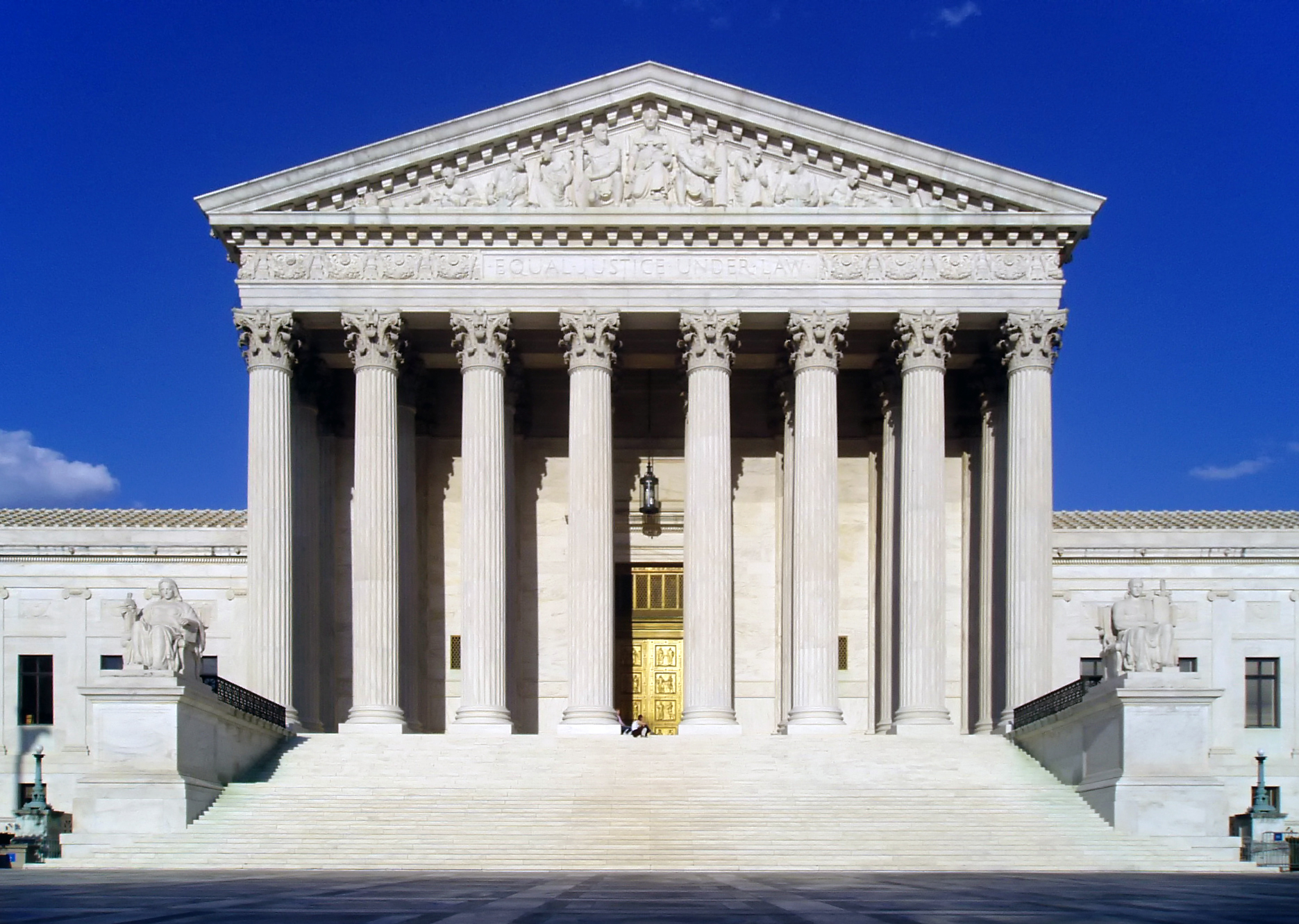
The Supreme Court agreed on Tuesday to decide whether the Department of Government Efficiency, the Trump administration office that led a sweeping campaign of federal layoffs and contract cancellations, must comply with the Freedom of Information Act like any other federal agency. The justices granted a petition for certiorari in U.S. DOGE Service v. U.S. District Court for the District of Columbia, taking up an appeal the Trump administration filed after losing repeatedly in lower courts.
The case grows out of a lawsuit by Citizens for Responsibility and Ethics in Washington, known as CREW, a nonpartisan watchdog group that has spent more than a year trying to pry loose internal DOGE communications, staffing records and guidance documents. The administration has argued throughout the litigation that DOGE functions purely as a presidential advisory body and therefore falls outside the disclosure requirements Congress wrote into federal law. CREW counters that DOGE wielded real decision-making power over agency budgets and personnel, which under long-standing case law is what makes an entity a covered "agency."
What the Justices Will Decide
The grant, listed on the Court's order list for Tuesday, October 13, sets up a ruling on the merits of a question the justices had previously sidestepped. Last year the Court used its emergency docket to pause discovery in the case without resolving whether DOGE counts as an agency at all. This time the question is squarely presented: can an office created inside the Executive Office of the President, staffed in part by temporary advisers and private-sector volunteers, be treated the same as a cabinet department when the public asks to see its paperwork.
Solicitor General D. John Sauer is representing the administration. He has told the justices that forcing disclosure, and the discovery process needed to decide the disclosure question, intrudes on confidential deliberations between the president and his advisers. CREW's lawyers have said the records they are still pursuing concern DOGE's instructions to agencies on canceling contracts and dismissing employees, not communications with the president himself.
The Numbers
CREW filed its lawsuit on February 20, 2025, roughly a month after DOGE began operating. A district judge ruled by March 10, 2025, that DOGE is likely covered by FOIA and ordered expedited processing of the group's requests. The fight then moved through a D.C. Circuit panel that unanimously sided with CREW on discovery, a full appeals court that declined to rehear the case, a Supreme Court stay in June 2025 that paused but did not end the discovery, and a second government petition filed on March 18, 2026. That petition sat for roughly seven months before Tuesday's grant. Briefing and argument are expected in the term that opened this month, with a decision likely by the end of June 2027.
How the Fight Reached the Supreme Court
DOGE was created in the opening days of President Trump's second term and quickly became one of the most consequential and contested offices in the federal government. Under Elon Musk's early leadership, teams of DOGE staffers gained access to payment systems at the Treasury Department, personnel databases at the Office of Personnel Management, and procurement records across dozens of agencies, using that access to drive mass firings of probationary employees and to cancel billions of dollars in federal contracts and grants. Musk departed his government role months into the effort, and Amy Gleason has since served as DOGE's administrator, but the office continued operating under the formal name U.S. DOGE Service.
That scale of influence is precisely why transparency advocates sued so quickly. CREW's original complaint argued that an office with that much practical authority over federal spending and staffing cannot plausibly be dismissed as a purely advisory council exempt from public-records law. Lower courts largely agreed with that framing, which is part of why the administration kept appealing rather than litigating the underlying FOIA requests on the merits.
Who Is Affected
The immediate parties are CREW and the government, but the ruling will reach further. Other watchdog and press-freedom groups, including American Oversight, have filed related suits over DOGE records and have been watching this case as a likely template for their own litigation. Federal employees whose jobs were eliminated during DOGE's push, outside contractors whose agreements were canceled, and reporters covering the office's operations have all been unable to obtain the underlying paperwork while the FOIA question remains unresolved. More broadly, the ruling will shape how future presidents can structure advisory bodies that exercise operational authority while attempting to keep records confidential, a question that outlasts any single administration.
Reaction
CREW has consistently framed the administration's repeated appeals as an effort to run out the clock rather than defend DOGE's legal position on the merits.
"Lower courts have uniformly ruled against DOGE," CREW lawyer Nikhel Sus said, adding that the organization will "continue to pursue transparency for the American people."
The White House did not respond to a request for comment on the cert grant, a pattern consistent with its approach throughout the litigation. The Solicitor General's office has not issued a public statement beyond its filings with the Court, which maintain that DOGE's advisory structure places it outside FOIA's reach regardless of the practical influence it exercised over federal operations.
What Happens Next
The discovery that CREW has sought for more than a year, including internal guidance documents and communications about specific contract cancellations, remains on hold while the case proceeds. The Court has not yet set an argument date, but cases granted in October are typically argued between January and April, with a decision issued before the term ends in late June. Whatever the justices decide will not only resolve CREW's own records fight; it will set the governing standard for whether other White House-adjacent offices created without congressional authorization can claim the same exemption DOGE has invoked for the past year and a half.
Obama and Trump both plunge into Ohio's toss-up Senate race with three weeks to go

Trump says leakers 'should be shot,' then turns on reporters at Arizona rally

OCC finds all nine largest U.S. banks debanked customers over politics or religion
