A common salt mineral could preserve signs of life inside Enceladus's ocean, study finds
Laboratory experiments recreating the freezing chemistry of Saturn's icy moon show that natron, a sodium carbonate mineral, traps pockets of liquid as it crystallizes — a finding researchers say should shape where future spacecraft look for evidence of life.

Scientists working at a British synchrotron facility have shown, for the first time in laboratory conditions, that a common salt mineral predicted to exist on Saturn's moon Enceladus can trap and seal tiny pockets of liquid as it freezes out of a briny solution. The finding, published online this month in Communications Earth & Environment, strengthens the case that the mineral, called natron, could preserve a literal sample of Enceladus's hidden ocean, chemistry and all, somewhere a spacecraft could reach it.
The study was led by researchers at Diamond Light Source, the UK's national synchrotron facility at the Rutherford Appleton Laboratory in Didcot, working with colleagues at the University of Greenwich, the Friedrich-Alexander-Universität Erlangen-Nürnberg and Indiana University. None of the team has been to Enceladus. Instead, they built a stand-in for it on a laboratory bench.
Freezing a miniature ocean
The researchers mixed a solution of sodium chloride and sodium carbonate meant to approximate the salty water inside Enceladus, then cooled it while watching it freeze with intense X-ray beams. Using combined synchrotron X-ray computed microtomography, which builds a three-dimensional picture of a sample's interior, and X-ray diffraction, which identifies which minerals are present, they tracked the solution as it crystallized.
Natron, chemically Na2CO3·10H2O, is a hydrated sodium carbonate already thought to form both on Enceladus's surface and within its ice shell, based on earlier analysis of material from the moon's plumes. The team found that as natron crystals grew, many of them trapped small pockets of the leftover liquid inside themselves. Of nearly 3,800 separated grains examined, only about 3% contained these so-called fluid inclusions overall. But every one of the 29 grains in the largest size category did, and bigger crystals tended to hold more fluid as well as being more likely to hold any. The experimental solution was about five times more concentrated in salts than estimates drawn from NASA's Cassini spacecraft data, giving the team a range of conditions to compare against the real moon.
Why a salt matters this much
Enceladus has drawn intense scientific interest since NASA's Cassini spacecraft found evidence of a global subsurface ocean beneath the moon's icy crust, with plumes of water vapor, ice and organic compounds erupting from fissures nicknamed "tiger stripes" near its south pole before Cassini's mission ended in 2017. Researchers consider Enceladus a leading candidate for life beyond Earth because its ocean appears to have liquid water, an energy source likely tied to hydrothermal activity on the seafloor, and the basic chemical elements associated with biology.
What has been missing is a clear idea of how, if anything biological is in that ocean, a trace of it might survive to be sampled from orbit or the surface. The new study argues that natron could be the answer: because it forms before or after the bulk of the ice depending on how concentrated the brine is, any pocket of fluid it traps should preserve a record of water chemistry close to the ocean's actual composition, whichever freezing pathway it followed. The authors say the shape of the resulting crystals could even help researchers work out which scenario applies to any given sample.
The idea fits with other recent findings about how Enceladus's freezing chemistry behaves. A separate study published in Science Advances in September, led by Frank Postberg of the Freie Universität Berlin, re-examined Cassini's archived ice-grain data and ran its own freezing experiments, finding that Enceladus's ocean droplets separate their dissolved salts and organics into layers as they freeze on the way up through the moon's vents, concentrating that material into individual ice grains.
"The oceanic constituents are separated from each other and simultaneously concentrated into individual ice particles," Postberg said of that related work.
Taken together, the two lines of research point toward the same conclusion: Enceladus's own freezing process may act like a natural packaging system, sealing chemical — and potentially biological — information into discrete grains small enough for a spacecraft to collect and analyze.
Guiding the next mission
No spacecraft is currently at Enceladus, and none is likely to arrive for decades. NASA's Planetary Science and Astrobiology Decadal Survey ranked a flagship mission known as Orbilander, which would combine an orbiter and a lander, as a top priority, and NASA's own concept study envisions a mission reaching Enceladus around 2050. Separately, the European Space Agency is studying its own L4 mission to Enceladus, intended to sample the moon's plumes and make direct measurements on its surface, with a tentative launch date of 2042.
The study's authors argue that whichever mission flies first should be equipped to find this evidence. They recommend that future spacecraft carry sensitive near-infrared instruments capable of identifying natron from orbit, and that any sampling system prioritize fresh deposits near active plume vents, where natron should be most abundant and least degraded by years of exposure to radiation and vacuum at the surface.
- Nearly 3,800 natron grains were examined in the laboratory experiment; about 3% held fluid inclusions overall, but all 29 of the largest grains did
- Natron is a hydrated sodium carbonate mineral already predicted to occur both on Enceladus's surface and within its ice shell
- The experimental brine was roughly five times saltier than levels estimated from NASA's Cassini spacecraft data
- No confirmed mission to Enceladus currently exists; NASA's Orbilander concept and ESA's L4 mission are both still in the study phase, with notional arrivals in the 2040s and 2050s
Several questions remain open. The authors acknowledge that whether natron can actually capture and preserve biological material, as opposed to simple dissolved salts, has not been tested; they suggest the surrounding mineral structure could in principle shield organic matter from radiation, but that remains speculative. It is also not yet confirmed that natron exists on Enceladus's surface in detectable quantities, rather than only within the ice shell inferred from models. Resolving both questions will likely require either new laboratory work simulating longer-term radiation exposure or an actual spacecraft instrument capable of detecting the mineral directly — the gap the study's authors say their recommendations are meant to help close.

NASA's Roman telescope sharpens its focus, outperforming its own design requirements

New York City's natural gas losses traced to furnaces and boilers, not pipeline leaks, study finds
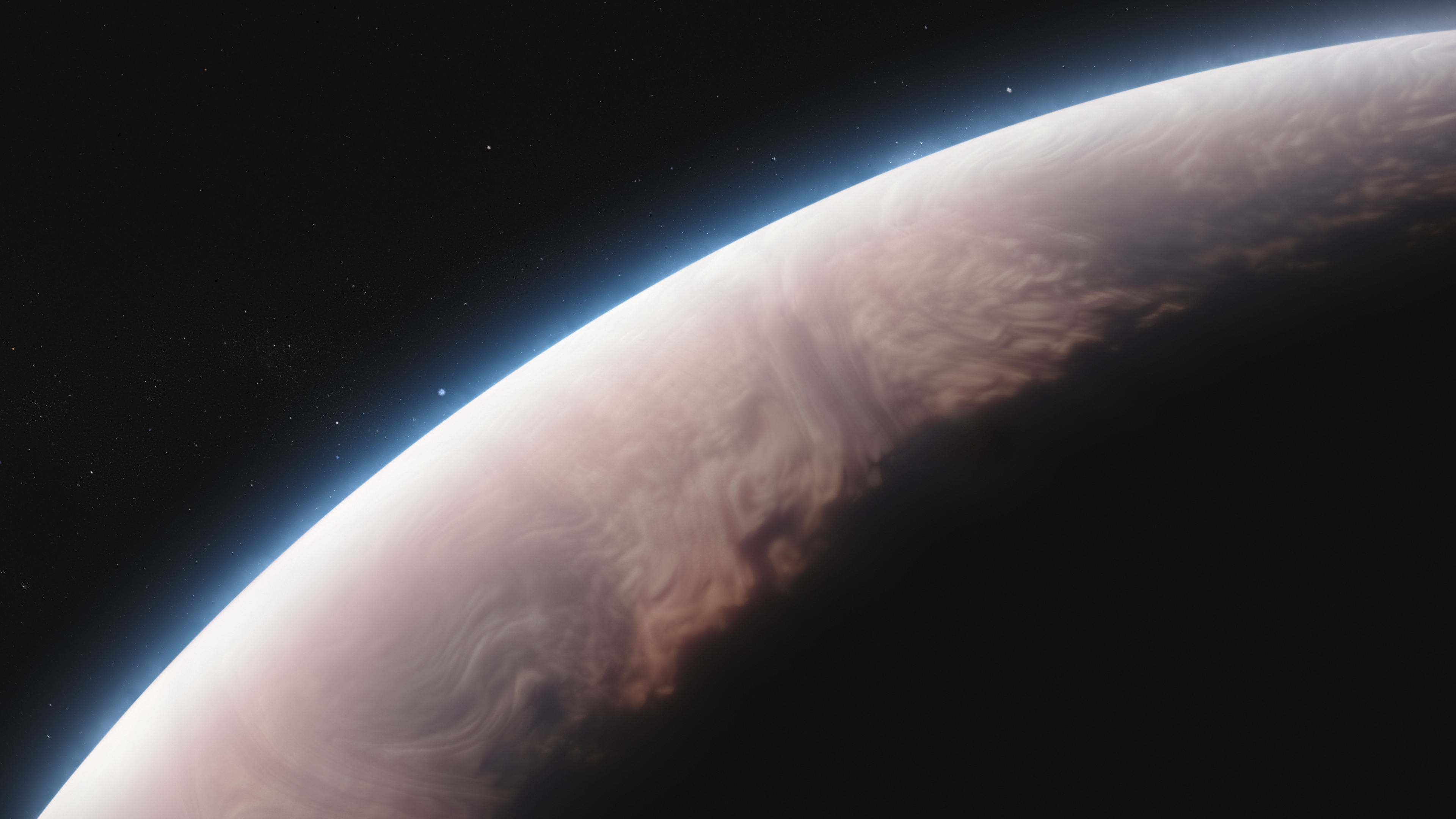
James Webb telescope maps a lopsided exoplanet atmosphere for the first time
