Amateur Astronomer's Campsite Search Uncovers 390-Million-Year-Old Crater
A circular feature spotted on satellite maps by a Quebec camper has been confirmed as one of Earth's largest known impact craters, dated to the Devonian period.
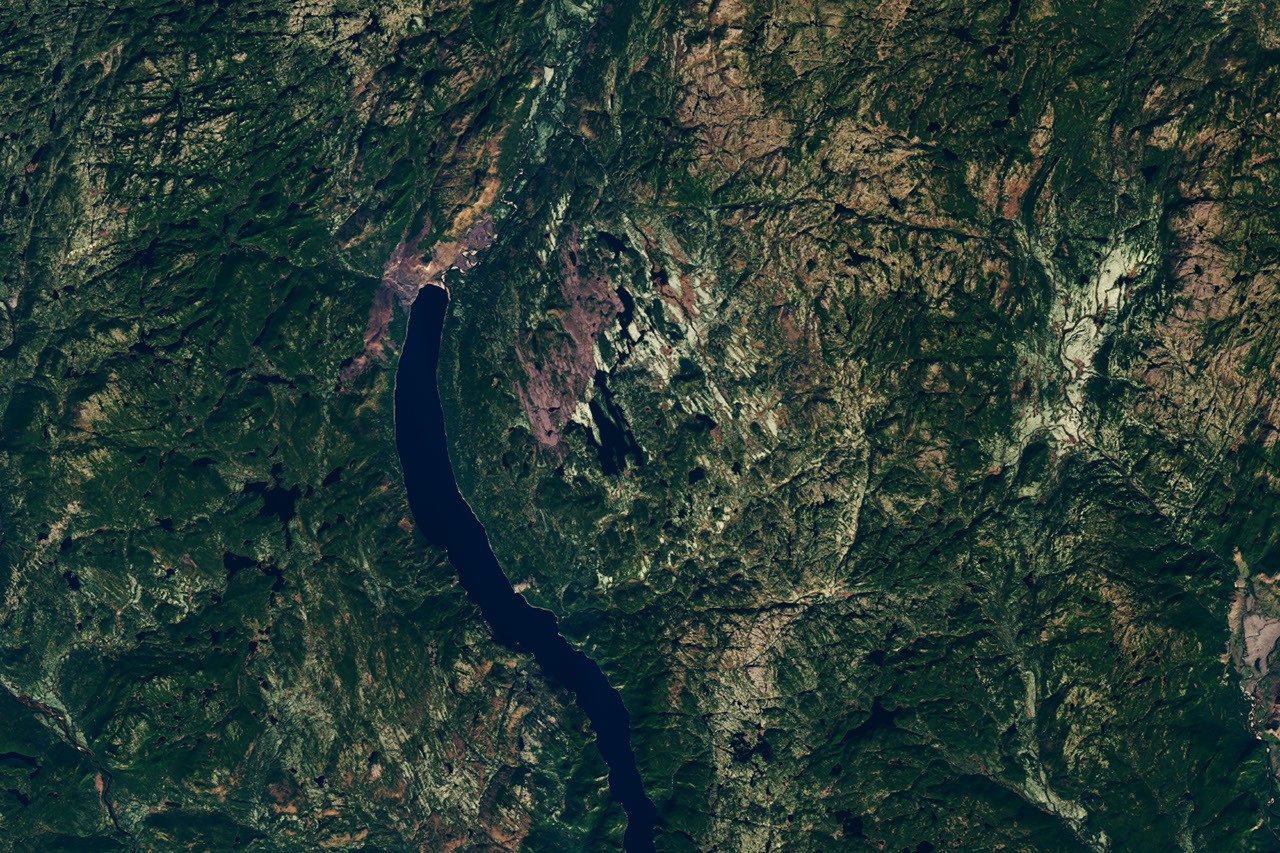
A 25-kilometer-wide impact crater hidden in a remote stretch of Quebec for roughly 390 million years has been confirmed by planetary scientists, after an amateur astronomer scouting satellite maps for a campsite stumbled on the circular scar in 2024.
The structure, provisionally named Uhackatik, sits in Quebec's Côte-Nord region near the Labrador border, with Lake Marsal occupying much of its center. According to a project description published by NASA's Earth Observatory, the feature was first flagged by Joël Lapointe, who was studying satellite imagery in 2024 to plan a canoeing and camping trip when he noticed an unusually regular ring in the landscape and began contacting geologists in Europe and North America to ask whether it might be an impact site.
A difficult expedition confirms the find
That tip eventually reached Gordon Osinski, a planetary geologist at Western University in Ontario who studies impact craters and trains NASA astronauts in field geology. Osinski organized an expedition to the site in October 2025, traveling by floatplane and then on foot through swampy terrain to reach outcrops around the lake. Researchers collected rock samples that were later analyzed for shatter cones and shock-melted rock, both diagnostic signatures of a hypervelocity impact rather than ordinary volcanic or glacial processes.
The team, led by researchers including Osinski, Jérôme Gattacceca and Pierre Rochette, dated the structure to approximately 390 million years old, in the Devonian period, based on paleomagnetic and uranium-lead analysis of the melt rock, and detailed sheets of that melt rock up to 50 meters thick at the site. The findings were presented this month as a conference abstract, posted through the Lunar and Planetary Institute, at the 88th Annual Meeting of the Meteoritical Society. Formal naming recognition from the society's nomenclature committee is still pending, though researchers involved describe the impact origin as effectively confirmed.
The structure is now catalogued in Western University's Impact Earth database, which tracks confirmed and candidate impact sites worldwide. At 25 kilometers across, Uhackatik is the largest impact crater identified anywhere since the 31-kilometer Hiawatha structure was reported beneath Greenland's ice sheet in 2018, according to researchers involved in the project, cited by ScienceDaily.
Osinski told the CBC that despite his role training astronauts on lunar geology, he does not expect visitors to reach Uhackatik easily given the difficulty of the terrain. Researchers plan further fieldwork to map the crater's full extent and search for additional shock-metamorphosed material that could refine its age and origin.
Fewer than 200 confirmed impact structures are known on Earth, far fewer than the thousands visible on the airless surfaces of the moon or Mars, because erosion, vegetation and plate tectonics steadily erase the evidence on our own planet. Scientists say the discovery underscores how much of the geological record, even in well-surveyed regions of North America, has still not been closely examined on the ground.
Experimental Blood Test Catches Early Pancreatic Cancer 87% of the Time
Astronomers find earliest known ancestor of a galaxy supercluster
Scientists Find Tens of Thousands of Organic Molecules Packed Inside Two Meteorites
